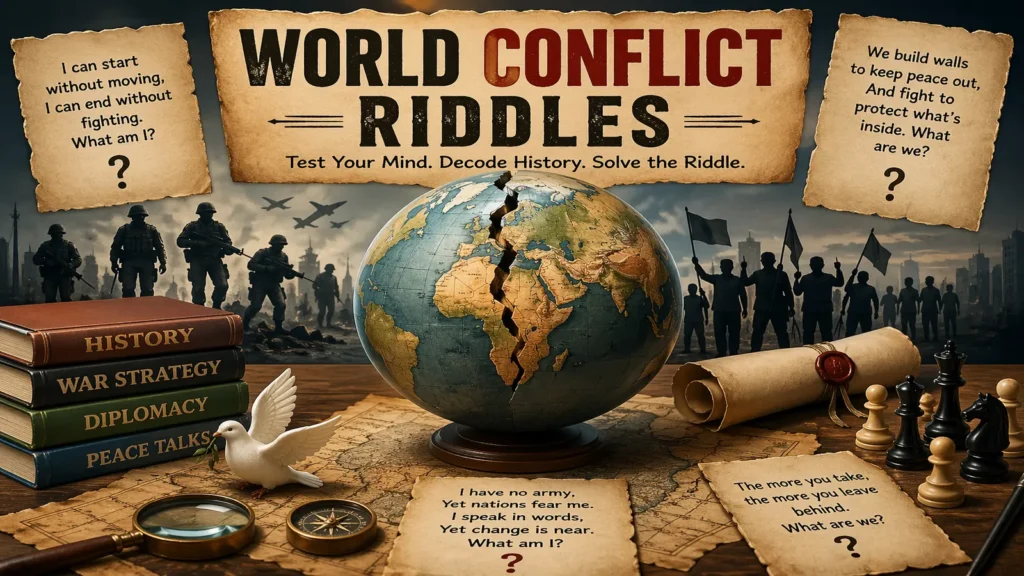
If you enjoy puzzles with a history twist, this guide is for you. It helps teachers, parents, students, and trivia fans use the theme in a smart way. Here, world conflict riddles means clues about causes, alliances, strategy, secrets, and peace. The goal is thoughtful fun, not shock value.
Quick Answer
World conflict riddles are brain teasers built around history, strategy, and human choices. They work best when the clues stay respectful, clear, and suitable for the reader.
TL;DR
• Best when centered on ideas, not harm
• Great for classes, game nights, and quizzes
• Easy clues fit kids and beginners
• Strategy clues suit older readers well
• Peace-themed endings keep the tone balanced
What World Conflict Riddles Really Are
World conflict riddles use a serious topic in a careful way. They turn big ideas into short clues that invite thought.
Good ones focus on pressure, planning, teamwork, and resolution. They do not need graphic details to feel interesting.
• Clues built around history and logic
• Answers often name roles or ideas
• Best when simple and fair
• Strong fit for themed trivia rounds
• Helpful for classroom warm-up games
• Easy to pair with discussion prompts
• Can use maps, treaties, or codes
• Work in print or spoken form
• Often rely on wordplay and inference
• Better with a clear answer reveal
• Should match the reader’s age
• Can teach while entertaining people
Why These Riddles Are So Engaging
People like these riddles because they mix knowledge and surprise. You have to notice patterns, not just memorize facts.
They also create a nice bridge between learning and play. As a result, they fit many settings.
• They reward careful listening
• They turn facts into active play
• They spark group conversation quickly
• They suit short attention spans
• They make review sessions livelier
• They add variety to history topics
• They challenge memory without pressure
• They invite creative guessing
• They feel smart without feeling stiff
• They work across many age groups
• They support team-based solving
• They leave room for discussion
How to Keep the Theme Thoughtful
This topic needs care from the start. A good clue should make readers think, not feel uneasy.
So, keep the focus on causes, choices, and outcomes. Also, use neutral language whenever possible.
• Lead with context, not shock
• Choose respectful answer words
• Avoid graphic scene descriptions
• Skip real suffering as a punchline
• Favor symbols over violent detail
• Keep classroom use in mind
• Use calm, plain language
• Frame events with sensitivity
• Test clues for age fit
• Balance tension with resolution
• Prefer learning over spectacle
• Review wording before publishing
Riddles About the Causes of Conflict
Cause-based riddles feel strong because they ask why something started. They also invite readers to connect clues with bigger patterns.
You can build these around fear, borders, pride, trade, or scarce resources. Keep the clues broad enough to stay accessible.
• Use sparks, pressure, and buildup
• Hint at rivalry before action
• Frame borders as dividing lines
• Mention shortages without naming sides
• Use pride as a hidden clue
• Show mistrust growing slowly
• Let one trigger start the answer
• Focus on choices under strain
• Tie resources to rising tension
• Keep answers short and direct
• Make clues symbolic, not heavy
• End with a clean reveal
Riddles About Alliances and Sides
Alliance riddles are fun because they involve shifting relationships. One clue can point to loyalty, support, or sudden change.
These work well in groups. Readers often enjoy debating which side a clue describes.
• Use promises made under pressure
• Hint at partners joining forces
• Show strength through combined effort
• Contrast friends with former rivals
• Use chain reactions as clues
• Suggest safety in shared numbers
• Let one move reshape teams
• Add flags or map references
• Keep side labels easy to follow
• Use pact language sparingly
• Build suspense through shifting loyalty
• Reveal answers with simple wording
Riddles About Strategy and Planning
Strategy riddles feel more like mental games. They ask readers to think about timing, movement, and trade-offs.
That makes them perfect for older kids, teens, and adults. Meanwhile, the wording can still stay clean and easy.
• Compare plans to chess moves
• Use timing as the hidden key
• Frame delay as a tactic
• Hint at sacrifice for gain
• Use terrain as a clue
• Show planning before action
• Suggest feints and distractions
• Reward readers who think ahead
• Build clues around limited options
• Keep every hint purposeful
• Let outcomes follow smart choices
• End with an “aha” moment
Riddles About Codebreaking and Secrets
Secret-based riddles bring mystery into the theme. They feel fresh because they focus on messages instead of force.
This section also works well for classrooms. Students enjoy decoding, spotting patterns, and finding hidden meaning.
• Hide answers in plain sight
• Use letters, numbers, and symbols
• Hint at messages between lines
• Build suspense around secrecy
• Make clues feel like puzzles
• Let silence carry meaning
• Suggest locks without using doors
• Use intercepts as soft hints
• Reward detail-focused readers
• Keep patterns easy to trace
• Tie solving to discovery
• Reveal with satisfying clarity
Riddles About Peace Talks and Endings
Not every riddle in this theme should end with tension. Peace-based clues give the article a wiser balance.
They also remind readers that conflict includes resolution. Because of this, the tone feels fuller and more useful.
• Use tables, pens, and signatures
• Frame talking as brave action
• Hint at bridges over distance
• Let silence become agreement
• Show endings through shared terms
• Use handshakes as soft symbols
• Contrast noise with calm
• Build clues around compromise
• Tie hope to final choices
• Keep answers warm and clear
• Suggest rebuilding after strain
• Close with a sense of relief
World Conflict Riddles for Kids and Classrooms
For younger readers, gentler is better. The theme should feel educational and safe from start to finish.
Teachers can use short clues, group solving, and follow-up questions. That approach keeps the activity active and clear.
• Choose easy answer words first
• Use simple history references
• Keep each clue under control
• Swap fear-based words for neutral ones
• Turn solving into partner work
• Add map or timeline support
• Use riddles as lesson starters
• Let students explain their guesses
• Keep sessions short and upbeat
• Pair each answer with context
• Encourage teamwork over competition
• End with reflection questions
World Conflict Riddles for Teens and Adults
Older readers can handle denser clues and layered ideas. Even then, clarity still matters most.
A harder riddle should feel clever, not unfair. So, mix one tricky hint with one grounding hint.
• Add subtle historical references
• Use double meanings carefully
• Raise challenge through abstraction
• Keep answers guessable from clues
• Blend logic with context
• Let wording stay conversational
• Use one twist per riddle
• Avoid overloading the setup
• Reward background knowledge lightly
• Test difficulty with real readers
• Mix quick wins and stumpers
• Keep reveals concise and strong
How to Write Your Own World Conflict Riddles
Writing your own is easier than it looks. Start with one answer word, then build clues around it.
Next, decide the mood. You can aim for classroom-friendly, clever, dramatic, or light.
• Pick one answer before drafting
• Choose a clear point of view
• Use three clues, not ten
• Start broad, then narrow
• Hide the answer with imagery
• Read the clue aloud
• Remove extra filler words
• Test for one best answer
• Keep rhythm smooth and natural
• Add one surprising detail
• Make the reveal feel earned
• Revise until the clue clicks
Common Mistakes to Avoid
Even strong ideas can fail with weak wording. Usually, the problem is either vagueness or overload.
A simple cleanup solves most issues. For example, shorter clues often land better.
• Making clues too long
• Using answers nobody knows
• Repeating the same setup
• Adding too many hint words
• Forgetting the reader’s age
• Turning facts into lectures
• Making tone feel insensitive
• Hiding the answer unfairly
• Using five clues that conflict
• Writing reveals that feel flat
• Copying patterns too often
• Skipping a final proofread
FAQs
What makes a world conflict riddle different from a regular riddle?
It uses themes like causes, alliances, planning, secrets, or peace. However, it still follows the same basic rule: give fair clues and one clear answer.
Are world conflict riddles okay for kids?
Yes, when the wording stays gentle and age-appropriate. For younger readers, focus on teamwork, maps, choices, and peace rather than harm.
Can teachers use these riddles in class?
Yes, they work well as warm-ups, review games, and discussion starters. In addition, they can help students connect facts with ideas.
How hard should these riddles be?
That depends on the audience. Kids need simple clues, while teens and adults usually enjoy one twist or hidden layer.
Should every riddle be based on a real event?
No, not at all. Some of the best ones use broad ideas like pressure, promises, secrets, and endings.
Conclusion
World conflict riddles can be smart, respectful, and fun at the same time. When handled well, they help readers think about choices, patterns, and human behavior. They also fit many settings, from classrooms to family game nights. Keep the clues clear, keep the tone balanced, and your world conflict riddles will feel both memorable and useful.

Christopher McLagan is a celebrated riddle maker known for crafting clever brain teasers and mind-bending puzzles. His work blends classic riddles, logic challenges, and lateral thinking brain teasers designed to spark curiosity and critical thinking. Widely admired in online puzzle communities, McLagan creates engaging riddle questions and answers for both kids and adults. His signature style delivers surprising twists, clean humor, and satisfying “aha” moments that keep readers coming back for more.