
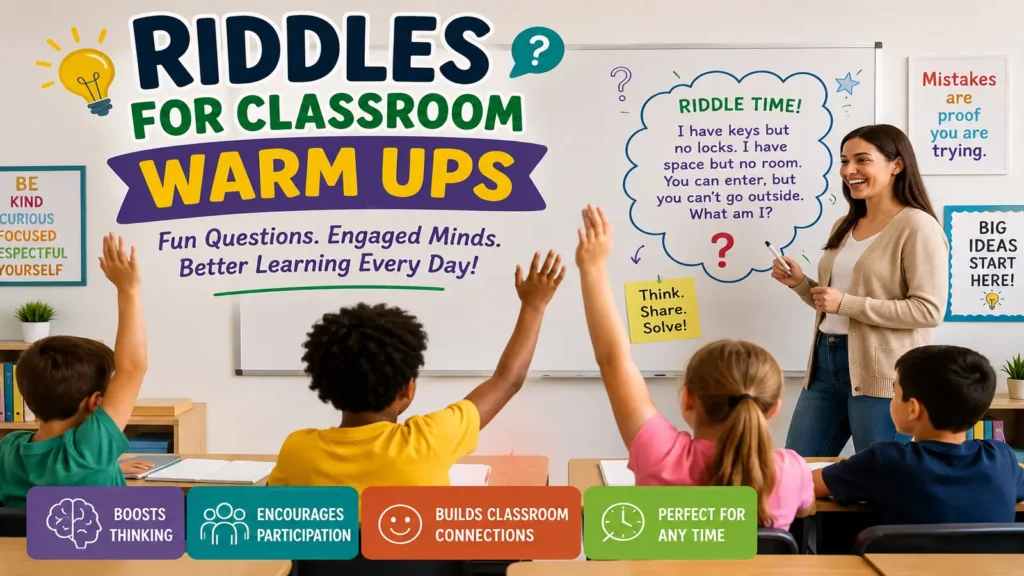
Every teacher needs simple ways to grab student attention quickly. Warm-up riddles work because they feel playful, yet students still learn valuable thinking skills. Even quiet classrooms become more active after one clever question.
Many teachers now use riddles during morning meetings, transitions, and lesson openings. These short activities encourage discussion without adding stress. Best of all, riddles for classroom warm ups fit almost any grade level or subject area.
Quick Answer
Riddles for classroom warm ups are short brain teasers that help students focus before lessons begin. They improve participation, encourage teamwork, and create a positive classroom mood.
TL;DR
• Riddles boost classroom attention within minutes
• Short brain teasers reduce awkward silence
• Students practice reasoning through playful challenges
• Morning riddles improve daily classroom energy
• Team guessing builds stronger peer connections
• Quick activities fit busy teaching schedules
Why Riddles Work So Well in Classrooms
Riddles turn passive students into active thinkers. Because of this, classrooms often feel more focused afterward. Students also enjoy guessing without fearing wrong answers.
• Encourages quick thinking during lesson openings
• Builds confidence through low-pressure participation
• Sparks discussion between classmates naturally
• Improves listening during teacher instructions
• Helps sleepy students become mentally alert
• Creates positive classroom routines daily
• Supports vocabulary growth through wordplay
• Strengthens memory with repeated practice
• Gives shy learners easier speaking opportunities
• Breaks tension before difficult lessons
• Promotes curiosity across many subjects
• Keeps transitions smoother between activities
Best Times to Use Classroom Warm-Up Riddles
Timing matters when using classroom riddles. Short activities work best before energy drops. Meanwhile, longer puzzles fit slower classroom moments.
• Start homeroom with one quick challenge
• Use during transitions between subjects
• Add before quizzes to reduce stress
• Fill extra minutes before announcements
• Calm noisy classrooms after lunch periods
• Begin virtual classes with shared guessing
• Use during substitute teacher lesson plans
• Add after recess for smoother refocusing
• Include before group project discussions
• Introduce lessons with themed riddles
• Wrap up Fridays using fun brain teasers
• Prepare students before testing sessions
Easy Riddles for Elementary Students
Younger students enjoy simple clues and funny answers. Short riddles also help early readers stay engaged. Clear language keeps frustration low.
• What gets wetter while drying?
• Which room lacks doors and windows?
• What has hands without fingers?
• What grows shorter while aging?
• Which month contains twenty-eight days?
• What belongs to others more often?
• What has one eye yet sees nothing?
• Which object travels while staying cornered?
• What breaks before anyone uses it?
• Which animal jumps higher than buildings?
• What becomes bigger after removal?
• Which word becomes shorter with additions?
Clever Riddles for Middle School Students
Older students prefer trickier clues and hidden meanings. Therefore, logic riddles often create stronger classroom discussions. Friendly competition also increases participation.
• What appears once every minute only?
• Which invention contains many useless keys?
• What runs endlessly without moving anywhere?
• Which item loses head while becoming shorter?
• What can fill rooms without touching walls?
• Which question never receives honest answers?
• What remains ahead while always behind?
• Which letter appears most in school?
• What becomes sharper through constant use?
• Which object contains cities without houses?
• What rises yet never truly returns?
• Which thing breaks silently every morning?
Funny Riddles That Break Classroom Tension
Humor helps students relax before difficult lessons. In addition, laughter encourages reluctant students to participate. Silly riddles can shift classroom energy quickly.
• Why did pencils visit the principal?
• Which school supply dances during recess?
• Why do math books look worried?
• Which classroom pet loves homework most?
• Why was the clock always hungry?
• Which teacher never loses patience completely?
• Why did paper avoid the classroom?
• Which backpack sings loudly every morning?
• Why did the ruler feel proud?
• Which notebook tells amazing bedtime stories?
• Why was the whiteboard feeling nervous?
• Which crayon becomes class president yearly?
Fast Brain Teasers for Busy Teachers
Many teachers need warm-ups requiring little preparation. Thankfully, riddles work almost anywhere. They also fit short class schedules easily.
• Keep one daily riddle near attendance sheets
• Project puzzles during student arrival time
• Write clues directly on classroom boards
• Rotate student volunteers for answer reveals
• Use timers to maintain classroom pace
• Reward teamwork instead of speed only
• Store favorite riddles inside lesson binders
• Print weekly puzzle strips for desks
• Pair riddles with simple movement breaks
• Challenge students using themed clue days
• Save backup riddles for early finishers
• Let students vote on favorite puzzles
Morning Meeting Riddles Students Enjoy
Morning meetings feel more welcoming with playful challenges. As a result, students often participate earlier in lessons. Shared guessing also builds classroom trust.
• Begin circles using one mystery question
• Invite students to explain their reasoning
• Celebrate creative guesses before answers appear
• Rotate student leaders every single week
• Match riddles with classroom themes monthly
• Keep clues visible throughout discussions
• Encourage respectful disagreement among classmates
• Add partner talks before final guesses
• Use seasonal riddles during special months
• Create classroom charts tracking solved puzzles
• Offer silent thinking time before sharing
• Connect clues with upcoming lesson topics
Bell-Ringer Riddles for Focused Starts
Bell-ringer riddles help students settle quickly after entering class. Meanwhile, teachers can handle attendance smoothly. Calm starts usually improve lesson flow.
• Display riddles immediately before students arrive
• Use short clues for faster transitions
• Limit guessing time to five minutes
• Allow notebook responses before discussion starts
• Pair puzzles with calming background music
• Change difficulty levels throughout each week
• Connect riddles with current classroom units
• Encourage students to explain clue evidence
• Use visual riddles for younger learners
• Review previous answers during warm-up routines
• Keep classroom expectations consistent daily
• End discussions before lessons lose momentum
Team-Based Riddle Activities
Group riddles encourage teamwork without heavy preparation. Students often share ideas more confidently in pairs. Cooperative games also reduce classroom pressure.
• Divide classrooms into balanced discussion teams
• Use whiteboards for shared group answers
• Rotate team captains every classroom session
• Award points for creative explanations too
• Encourage quiet students during partner discussions
• Mix easy clues with difficult puzzles
• Create relay-style guessing competitions occasionally
• Allow students to challenge opposing teams
• Use countdown timers for added excitement
• Let teams write clues for classmates
• Include movement between guessing rounds sometimes
• Celebrate teamwork rather than winning alone
Critical Thinking Riddles for Deeper Learning
Riddles support reasoning skills beyond simple guessing games. Because of this, teachers often connect them with problem-solving lessons. Students learn to examine clues carefully.
• Ask students why answers make sense
• Encourage evidence before accepting final guesses
• Compare multiple possible interpretations together
• Pause discussions before revealing solutions completely
• Model thoughtful reasoning during difficult puzzles
• Highlight clue words carrying hidden meaning
• Use science-themed riddles during experiments
• Connect logic puzzles with math lessons
• Explore language clues during reading blocks
• Discuss how assumptions affect wrong answers
• Challenge students to defend unusual guesses
• Praise persistence during harder classroom puzzles
Ways to Make Students Create Their Own Riddles
Student-created riddles encourage creativity and writing practice. Furthermore, students enjoy challenging classmates using original ideas. Writing riddles also strengthens vocabulary naturally.
• Start with familiar classroom object clues
• Model simple riddle patterns before writing
• Encourage playful descriptions without obvious answers
• Allow partner brainstorming before final drafts
• Create bulletin boards featuring weekly riddles
• Use notebooks for ongoing riddle collections
• Let students illustrate their puzzle clues
• Challenge classes using subject-based riddles
• Celebrate unique answers during sharing sessions
• Practice editing clues for stronger mystery
• Turn finished riddles into classroom games
• Invite families to solve student puzzles
Common Mistakes Teachers Should Avoid
Warm-up riddles should feel fun, not frustrating. However, some classroom habits reduce participation quickly. Small adjustments usually improve student engagement.
• Avoid overly confusing clues for beginners
• Never embarrass students after incorrect guesses
• Skip riddles requiring advanced background knowledge
• Prevent dominant students from controlling discussions
• Avoid repeating identical puzzle formats constantly
• Keep explanations short after answer reveals
• Do not rush quieter student thinkers
• Limit difficult riddles during stressful weeks
• Avoid activities lasting beyond planned timing
• Skip jokes students may misunderstand easily
• Prevent side conversations during group guessing
• Balance humor with meaningful classroom focus
Digital Tools for Classroom Riddle Games
Technology makes classroom riddles easier to organize. In many schools, teachers already use digital displays daily. Online games can also support remote learning.
• Use presentation slides for daily riddles
• Add countdown clocks during guessing rounds
• Share puzzles through classroom learning platforms
• Create polls for final answer voting
• Use random name pickers fairly
• Display visual clues on smartboards clearly
• Save favorite riddles inside shared folders
• Build digital riddle libraries for substitutes
• Encourage virtual breakout room discussions online
• Post weekly puzzles inside classroom newsletters
• Use classroom tablets for collaborative guessing
• Record student-created riddles using video clips
Seasonal and Holiday Warm-Up Riddles
Seasonal riddles keep classroom routines feeling fresh. Students also connect more easily with familiar topics. Holiday themes can increase excitement during long semesters.
• Use autumn clues during October mornings
• Add snow-themed puzzles during winter months
• Create spring riddles about growing plants
• Share beach clues before summer break
• Include patriotic riddles during July lessons
• Match puzzles with school spirit weeks
• Use sports themes during tournament seasons
• Celebrate reading month through book riddles
• Add Earth Day nature-themed brain teasers
• Include kindness clues during community projects
• Create birthday riddles for classroom celebrations
• Rotate themes monthly for stronger variety
Tips for Keeping Riddles Inclusive
Inclusive warm-ups help every student feel comfortable participating. Therefore, teachers should balance challenge levels carefully. Supportive routines encourage stronger classroom trust.
• Offer thinking time before calling names
• Read clues aloud for all learners
• Use visual supports alongside spoken riddles
• Encourage pair sharing before whole-group answers
• Accept creative reasoning beyond exact wording
• Avoid culture-specific clues without explanations
• Rotate participation opportunities fairly each week
• Keep classroom laughter respectful and supportive
• Use accessible vocabulary for younger readers
• Provide hints when students feel stuck
• Celebrate effort as much as accuracy
• Adapt puzzle difficulty for different groups
FAQs
How long should classroom warm-up riddles last?
Most warm-up riddles work best within five minutes. However, longer discussions may fit middle school classrooms. Short activities usually keep student attention stronger.
Are riddles good for classroom management?
Yes, riddles often improve classroom focus quickly. Students enter lessons with clearer attention afterward. Predictable routines also reduce noisy transitions.
What grades benefit most from riddles?
Nearly every grade level enjoys classroom riddles. Younger students prefer simple clues, while older students enjoy logic puzzles. Teachers can adjust difficulty easily.
Can riddles support academic learning?
Riddles strengthen vocabulary, reasoning, and listening skills naturally. Many teachers also connect riddles with reading and science lessons. Students learn while having fun.
How often should teachers use riddles?
Daily riddles work well for many classrooms. Still, even weekly warm-ups can improve participation. Consistency matters more than frequency.
What makes a classroom riddle effective?
Good riddles feel challenging without becoming confusing. Clear clues and surprising answers keep students interested. School-safe humor also increases engagement.
Conclusion
Classroom warm-ups do not need complicated planning. Simple riddles can build focus, teamwork, and stronger participation within minutes. Students also remember playful learning moments longer. Teachers across many grade levels use riddles because they work quickly and flexibly. Whether you teach elementary or middle school students, riddles for classroom warm ups can create a more welcoming learning environment every day.

Joseph Morgan is an enigmatist known for creating clever and mysterious riddles. Born in Scotland, he spent his life challenging people to think deeply through puzzles and brainteasers. He became famous for his creative mind and love of mystery.