
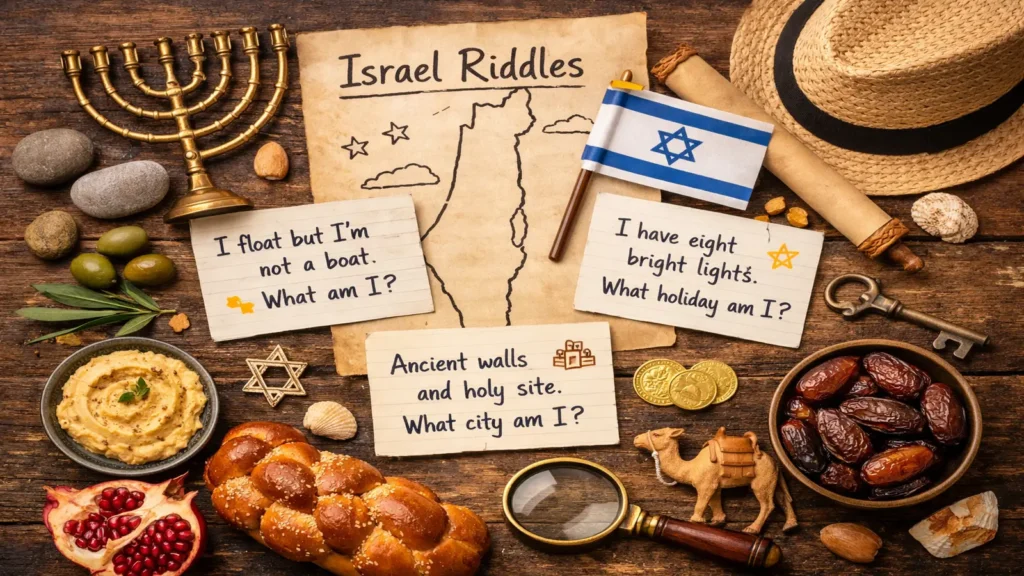
Israel riddles work best for curious readers who enjoy wordplay, learning, and family games. They can fit a classroom, a holiday table, or a casual quiz night. Because of that, the topic reaches kids, parents, teachers, and puzzle fans at once. This guide helps you understand what Israel riddles usually include and how to make them fun. It also shows which clue styles feel clear, respectful, and easy to solve.
Quick Answer
Israel riddles are playful clues about places, culture, food, holidays, Bible stories, and famous symbols tied to Israel. Usually, the best ones feel vivid, fair, and easy to picture. For most readers, strong Israel riddles sound more like clever mini-puzzles than dry quiz questions.
TL;DR
• Mix place clues with cultural details
• Keep each answer easy to picture
• Use simple wording for wider appeal
• Save obscure facts for harder rounds
• Choose respectful humor over edgy jokes
• Write answers before drafting clues
What Israel Riddles Usually Mean
When readers search this topic, they rarely want one narrow type of puzzle. Instead, they want a mix of geography, culture, religion, food, and famous symbols. Because of that, a strong collection feels broad but still easy to follow.
Also, good riddles feel different from trivia. Trivia asks for recall, while a riddle points toward an answer through images and hints.
• City clues with ancient walls
• Desert scenes and dry valleys
• Sea-based puzzles with floating hints
• Market sounds and spice references
• Sacred sites known worldwide
• Olive trees and stone pathways
• Holiday lamps and candle imagery
• Bread, fruit, and table details
• Coins, language, and everyday words
• Stories tied to kings and judges
• Family game night question formats
• Travel-style clues with mystery
Places That Make Great Israel Riddles
Place-based riddles are often the easiest to enjoy. Readers can picture a city, a shoreline, or a desert much faster than an abstract idea. As a result, landmark clues usually feel lively and memorable.
For example, a good place riddle hints at one visual detail first. Then it adds one stronger clue that narrows the answer quickly.
• Jerusalem with layered history
• Tel Aviv and beach energy
• Dead Sea with salt clues
• Negev with wide silence
• Galilee and gentle hills
• Haifa on a hillside
• Eilat by warm waters
• Masada above desert stone
• Old City gate imagery
• Carmel views and greenery
• Sea of Galilee references
• Market alley atmosphere
Bible Themes That Shape Many Israel Riddles
Many readers connect Israel riddles with biblical stories right away. That makes sense, because ancient Israel appears in stories many Americans already know. Still, the clearest riddles stay simple and avoid heavy sermon language.
Meanwhile, biblical clues work best when the answer is famous. Readers solve faster when they recognize the story before the final line.
• Samson and the lion
• Solomon and wise judgment
• David with sling imagery
• Moses and desert wandering
• Jericho and falling walls
• Joseph through dream language
• Elijah on a mountain
• Ruth in harvest fields
• Jonah and storm pictures
• Daniel through mystery signs
• Ark references with caution
• Covenant themes in plain words
History Clues Readers Recognize Fast
History-themed riddles can be fun without becoming a textbook. The trick is to choose details most readers already know. Otherwise, the puzzle turns into a history test.
However, broad markers work very well. Think of old cities, scrolls, kingdoms, and trade routes rather than complicated dates.
• Ancient kingdom references
• Desert fortresses and endurance
• Scroll discoveries near caves
• Stone ruins from empires
• Pilgrimage roads and routes
• Port cities with long memory
• Temple-era visual hints
• Roman echoes in streets
• Kingdom split clue sets
• Exile and return motifs
• Archaeology through buried layers
• Shepherd past turned legend
Holiday Themes That Fit Light Riddles
Holiday riddles feel warm and social. They fit family meals, school events, and seasonal games with very little setup. In addition, they give writers easy symbols to use.
You can build these riddles around sounds, foods, objects, or repeated actions. That keeps them festive without making them hard.
• Hanukkah lights across nights
• Passover table question clues
• Purim costume surprise hints
• Sukkot outdoor shelter ideas
• Shabbat candles before rest
• Rosh Hashanah apple notes
• Yom Kippur reflective tone
• Tu Bishvat tree imagery
• Haggadah-themed table puzzles
• Dreidel motion wordplay
• Matzah texture clue lines
• Honey sweetness as signal
Food Clues That Add Humor
Food clues make riddles feel friendly right away. People love guessing something they have tasted, smelled, or seen on a holiday table. Because of this, food riddles often land well with both kids and adults.
Still, the answer should stay recognizable. A clue works better when the dish has one clear trait, like shape, texture, or serving style.
• Challah with braided shape
• Hummus in shared bowls
• Falafel as crispy bites
• Shakshuka in red sauce
• Pita with pocket hints
• Dates with desert sweetness
• Olives from hardy branches
• Pomegranate seed abundance
• Sesame-coated bread imagery
• Latkes through sizzling sound
• Tahini as creamy drizzle
• Sweet tea beside snacks
Hebrew Words That Readers Know
A few Hebrew words can strengthen a riddle. They add flavor and help clues feel more rooted in real speech. Even so, too many unfamiliar words can push readers away.
So, choose terms many Americans have heard before. Then use enough context that the answer still feels fair.
• Shalom as greeting clue
• Shekel for money answers
• Menorah in symbol riddles
• Kibbutz for community settings
• Shabbat in weekly clues
• Torah for text references
• Mitzvah as good deed
• Challah in meal puzzles
• Dreidel during winter play
• Seder as story meal
• Kosher in food hints
• Abba in family wording
Easy Israel Riddles for Kids
Kids solve better when clues feel concrete. They do well with colors, shapes, sounds, and famous objects they can imagine quickly. Next, they need short lines and one likely answer.
Simple riddles also feel more fun when the answer appears in books, songs, or family talk. That helps children feel smart instead of stuck.
• Use one image per clue
• Pick famous answers first
• Keep wording plain and direct
• Choose objects before abstract ideas
• Add rhythm without forcing rhyme
• Avoid layered historical references
• Prefer animals, foods, and cities
• Give three clues, not ten
• Let the final clue confirm
• Test on one child first
• Offer answers right below
• Celebrate partial guesses too
Tricky Israel Riddles for Adults
Adult riddles can carry more depth. They can blend geography, history, symbolism, and wordplay in one puzzle. However, hard does not mean impossible.
The best harder clues still give readers a path forward. They hide the answer, yet they never depend on private knowledge.
• Layer two clue categories
• Use contrast for surprise
• Hide answer in metaphor
• Start broad, then tighten
• Add one misleading detail carefully
• Keep every hint truthful
• Avoid cheap trick wording
• Build tension through pacing
• Reward cultural familiarity gently
• Use sound-based echoes sparingly
• End with sharp resolution
• Make reveal feel satisfying
Ways to Use Israel Riddles at Home or in Class
Riddles are flexible, which is part of their appeal. They can fill five minutes or anchor a full lesson. Meanwhile, they work for quiet groups and loud ones.
You can also scale the challenge fast. Just switch the clue length, topic, or answer bank.
• Warm up a lesson
• Open family dinner conversation
• Break up long presentations
• Create team relay rounds
• Pair clues with maps
• Add cards to stations
• Use them in car rides
• Print them for holidays
• Mix easy and hard sets
• Let players write answers
• Turn misses into discussion
• End with a bonus round
How to Write an Original Israel Riddle
Writing your own riddle is easier than it sounds. First, choose one answer that people can picture. Then build clues around what makes it unique.
After that, remove any clue that gives the answer away too soon. Finally, read the riddle out loud and check the flow.
• Choose one clear answer
• List five obvious traits
• Keep only strongest details
• Lead with the least obvious
• Save signature clue for last
• Cut facts that sound textbook-like
• Use sensory language often
• Read it aloud slowly
• Check fairness with fresh eyes
• Revise for shorter lines
• Match challenge to audience
• Write the answer separately
Mistakes That Make Riddles Fall Flat
Even fun topics can become dull if the clue design is weak. Many riddles fail because they explain too much or too little. As a result, readers either feel bored or confused.
Also, tone matters. A playful puzzle should sound inviting, not smug or showy.
• Too many clues at once
• Answers nobody can recognize
• Facts copied from encyclopedias
• Rhymes that feel forced
• Jokes that distract meaning
• Repeating the same pattern
• Giving away the answer early
• Hiding the answer unfairly
• Using niche terms without context
• Mixing trivia with weak imagery
• Writing for yourself alone
• Forgetting the intended age
How to Keep Tone Respectful and Clear
This topic touches culture, religion, history, and identity. Because of that, light handling matters. A respectful riddle can still be funny, but it should not sound careless.
For broad audiences, clarity matters just as much. Familiar words and simple clues help more people join the fun.
• Choose warm, neutral wording
• Avoid mocking sacred symbols
• Skip loaded political framing
• Prefer shared cultural touchpoints
• Explain rare words gently
• Keep humor rooted in clues
• Respect family reading settings
• Watch for accidental stereotypes
• Let curiosity lead tone
• Use broad audience language
• Stay playful, not flippant
• Aim for welcome and wonder
FAQs
What is the difference between Israel riddles and Israel trivia?
Israel riddles use clues, images, and wordplay to guide the reader toward an answer. By contrast, trivia usually asks for a direct fact with no puzzle structure.
Are Israel riddles okay for kids?
Yes, they can work very well for kids. However, the best child-friendly versions use simple places, foods, objects, and holiday symbols.
Do Israel riddles always need biblical themes?
No, not at all. You can build strong riddles around cities, landscapes, markets, food, music, or family traditions instead.
How long should an Israel riddle be?
Shorter is usually better. In most cases, three to five clue lines give enough mystery without making the answer feel buried.
What makes a hard riddle still fair?
A fair hard riddle gives truthful hints and one clear path to the answer. Even if the puzzle is tricky, the reveal should feel earned.
Can I use Hebrew words in a general audience riddle?
Yes, but use only familiar terms or add context. Otherwise, readers may feel shut out before they can enjoy the puzzle.
Conclusion
Israel riddles work best when they feel vivid, fair, and easy to imagine. A strong clue points toward a place, story, food, or symbol without turning into a dry fact list. Because of that, the most memorable puzzles are usually the simplest ones. You can write them for kids, adults, classrooms, or family tables. Start with one clear answer, shape the clues with care, and let curiosity do the rest. When done well, Israel riddles invite people to learn, laugh, and look closer. That makes them more than a guessing game. They become a friendly way to share culture, memory, and imagination.
Christopher McLagan is a celebrated riddle maker known for crafting clever brain teasers and mind-bending puzzles. His work blends classic riddles, logic challenges, and lateral thinking brain teasers designed to spark curiosity and critical thinking. Widely admired in online puzzle communities, McLagan creates engaging riddle questions and answers for both kids and adults. His signature style delivers surprising twists, clean humor, and satisfying “aha” moments that keep readers coming back for more.