
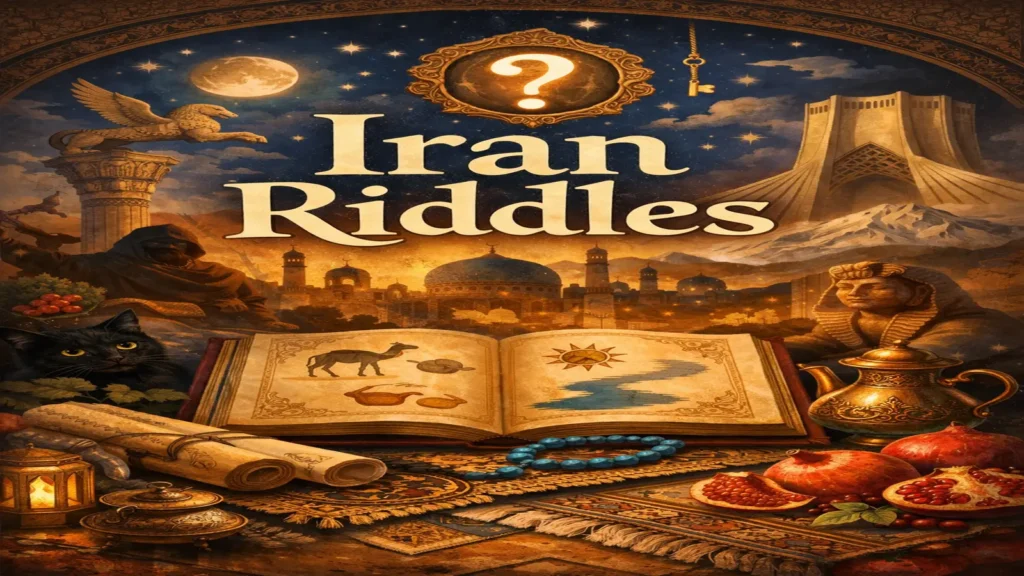
Iran riddles can mean two things online. Some people want country trivia, while others want Persian-style riddles rooted in language and folklore. This guide is for readers in the United States who want the second kind, plus a few fun puzzle ideas inspired by Iranian culture. You will get clear definitions, original examples, and simple ways to enjoy them.
Quick Answer
Iran riddles usually refer to Persian-style riddles, often called chistan, or to quiz questions about Iran. In this article, Iran riddles means clever, culture-inspired puzzles that use images, metaphor, and everyday objects. They are fun, memorable, and great for readers who enjoy language and logic.
TL;DR
• Iran riddles often blend wit and imagery
• Many online results are really trivia pages
• Persian-style riddles use metaphor and misdirection
• Easy versions work well for kids and classes
• Harder versions reward careful reading
• You can write your own with simple steps
What Iran Riddles Really Mean
When people search this phrase, they often get mixed results. Some pages offer quiz facts, while others share Persian-style brain teasers. So it helps to define the term early.
In this guide, the focus is on original riddles inspired by Persian storytelling habits. That means clear images, playful twists, and answers that feel smart, not random.
• Often confused with country trivia quizzes
• Better understood as Persian-style word puzzles
• Usually short, vivid, and easy to share
• Many start with a direct question
• Some rely on everyday household objects
• Others point to nature or time
• A strong answer feels obvious later
• Good riddles hide truth in plain sight
• They reward patience more than speed
• The best ones sound simple first
• They can teach culture through play
• They work in English adaptations too
Why Persian Riddles Still Matter
Riddles stay popular because they do more than entertain. They train attention, sharpen memory, and invite people into a culture without a lecture.
They also travel well across languages. Because of that, readers in the United States can enjoy them even without knowing Persian.
• They make learning feel less formal
• They turn culture into active play
• They help readers notice small details
• They spark group conversation quickly
• They suit classrooms and family nights
• They cross age groups with ease
• They encourage slower, careful thinking
• They reward imagination and logic together
• They invite laughter after the reveal
• They build interest in Persian language
• They connect stories with daily objects
• They stay memorable after one reading
Common Themes in Iran Riddles
Many riddles draw from ordinary life. That keeps them easy to picture and fun to solve.
At the same time, the best ones carry a wider mood. You may notice themes of wisdom, patience, beauty, and contrast.
• Sun, moon, night, and day
• Water, wells, rain, and rivers
• Gardens, flowers, and fruit
• Fire, warmth, and light
• Doors, keys, and locks
• Animals with symbolic traits
• Hands, eyes, and voice
• Travel, roads, and distance
• Bread, tea, and shared meals
• Mirrors, shadows, and reflection
• Silence, secrets, and hidden meaning
• Kings, poets, and old tales
How Iran Riddles Are Usually Built
A strong riddle feels balanced. It gives enough clues, yet it never gives away the answer too soon.
Most of these puzzles depend on one surprising image. Then they guide the reader toward a new way of seeing it.
• Begin with one striking visual clue
• Add a second clue that shifts meaning
• Use contrast to deepen the puzzle
• Keep the answer concrete and clean
• Avoid too many moving parts
• Make each line carry weight
• Hide the answer behind metaphor
• Let rhythm support memory
• Save the clearest clue for last
• Use everyday things in uncommon ways
• Make the reveal feel earned
• End before the wording grows heavy
Language Clues Inside Persian-Style Riddles
Language matters as much as logic. A small change in wording can make a puzzle dull or delightful.
Persian-style riddles often sound musical. Even in English, you can keep that feeling through contrast, balance, and echo.
• Repeated sounds make lines stick
• Opposites sharpen the hidden answer
• Short clauses increase dramatic tension
• Familiar images create faster recall
• Tiny exaggerations add charm
• Personification makes objects feel alive
• Parallel wording keeps clues neat
• Gentle rhythm helps spoken delivery
• Concrete nouns beat vague language
• One surprise verb can transform meaning
• Sensory words make puzzles stronger
• Clean endings improve the reveal
Easy Iran Riddles to Start With
These easy riddles are warm-up puzzles. They suit beginners, kids, and casual game nights.
Read each one slowly before you peek at the answer. Usually, the simplest clue matters most.
• I rise in gardens after rain — a flower
• I hold hot comfort in small cups — tea
• I follow you in bright courtyards — a shadow
• I open paths but never walk — a key
• I shine at night above old roofs — the moon
• I sleep by day and wake by dusk — a lantern
• I carry words without a voice — a letter
• I cool the room yet own no ice — a breeze
• I show your face yet have none — a mirror
• I burn with light but never eat — a candle
• I fall from clouds without feet — rain
• I mark the hour without a pen — a clock
Medium Iran Riddles for a Better Challenge
Now the clues get tighter. These riddles ask for one extra step of thought.
Still, each answer stays fair. If the image lands, the solution soon follows.
• I have a mouth, yet drink no tea — a river
• I wear white in winter, brown in dust — a mountain
• I break each day and make no sound — dawn
• I dance in fire and vanish fast — smoke
• I travel city streets without a heartbeat — a bus
• I guard a house but own no eyes — a lock
• I carry stories bound in silence — a book
• I cross the room but own no legs — light
• I grow in heat, yet fear the blade — bread dough
• I speak with steam before the pour — a kettle
• I hide in stone and bloom in art — turquoise
• I am chased by night, yet never tire — the sun
Hard Iran Riddles for Serious Puzzle Fans
Hard riddles work best when they stay elegant. A puzzle should challenge the reader, not punish them.
These examples lean on layered images. So the answer may appear only at the end.
• I have no roots, yet cities rise around me — history
• I am carried by lips, yet weigh nothing — a name
• I arrive unseen, then fill the whole room — scent
• I own no garden, yet I blossom in memory — a poem
• I can divide a hall with one soft sound — silence
• I am born in thought, then trapped in ink — an idea
• I travel centuries in one human breath — a story
• I stand still, yet lead pilgrims onward — a map
• I die each second, though clocks keep me alive — time
• I cover kings and children just the same — sleep
• I open old wounds without any knife — memory
• I vanish when held too tightly — trust
Riddles Inspired by Iranian History
History-based riddles should stay inviting. They work best when they hint at heritage rather than test dates.
That approach keeps the article readable. It also helps casual readers stay engaged.
• I was Persia before I was Iran — a name
• I outlive empires without lifting a sword — culture
• I survive in verse when walls are gone — poetry
• I crown no ruler, yet shape a nation — memory
• I change with time, but keep old echoes — language
• I rest in ruins, yet speak to crowds — stone
• I carry the past through family tables — tradition
• I am rebuilt in books, not brick — history
• I march through centuries without feet — heritage
• I guard forgotten names in quiet halls — an archive
• I turn old grief into lasting lessons — remembrance
• I keep yesterday alive in today — identity
Riddles Inspired by Iranian Places and Nature
Place-inspired riddles feel vivid right away. Readers can picture deserts, gardens, mountains, and city lights.
Because of that, these are excellent for visual learners. They also work well in classrooms.
• I bloom where water meets patience — a garden
• I move like gold across open heat — sand
• I cut through stone without a blade — wind
• I cool the heart in shaded walls — a courtyard
• I rise beyond roads and village roofs — a peak
• I carry stars in a city stream — reflections
• I whisper under arches at noon — an echo
• I turn dry land into green relief — irrigation
• I welcome spring with color and scent — a blossom
• I stretch wide, yet hide tiny life — a desert
• I frame the skyline with ancient calm — a dome
• I glow at sunset, then soften to blue — the sky
Iran Riddles for Kids, Classrooms, and Game Night
Riddles become better when shared. A simple puzzle can turn a quiet room lively in seconds.
That makes them useful beyond reading. Teachers, parents, and hosts can all use them.
• Start with easy clues first
• Read each riddle aloud once
• Pause before giving any hint
• Let teams discuss short answers
• Use objects as visual prompts
• Mix culture notes with the reveal
• Keep rounds under ten minutes
• Rotate readers for more energy
• Reward funny guesses, not only winners
• Save harder puzzles for later rounds
• Invite kids to draw answers
• End with one original class riddle
How to Write Your Own Iran Riddles
You do not need rare knowledge to write a good riddle. You need one clear object and one fresh angle.
Start small and revise often. Usually, the shortest version sounds strongest.
• Choose one object with clear traits
• List five things it can do
• Replace literal details with images
• Hide the most obvious clue
• Add one contrast for surprise
• Keep the answer singular when possible
• Remove any extra descriptive fluff
• Test it on one other person
• Fix clues that confuse unfairly
• Sharpen weak verbs and nouns
• Read it aloud for rhythm
• End on the smartest clue
FAQs
What is the difference between Iran riddles and Iran trivia?
Iran trivia usually asks fact questions about the country. Iran riddles, as used here, are short puzzles inspired by Persian language, imagery, and storytelling.
What does chistan mean?
It is a Persian word often used for a riddle. In simple terms, it points to a puzzle that asks, “What is it?”
Are Persian-style riddles good for English readers?
Yes, because the best ones depend on clear images and smart wording. You do not need to know Persian to enjoy adapted versions.
Can kids enjoy Iran riddles too?
Absolutely. Easy riddles help kids notice patterns, compare clues, and practice patient thinking.
Do these riddles need historical knowledge?
Not usually. The strongest examples use universal objects and feelings, even when the mood feels culturally specific.
How can I use these riddles in a blog or newsletter?
Group them by difficulty or theme. Then add short answers and a brief note that explains the image.
Conclusion
Iran riddles are fun because they do several jobs at once. They entertain, teach, and open a small door into Persian-style imagination. They also fit modern readers well. You can use them in a classroom, at home, or inside a culture-focused blog post. Most of all, Iran riddles reward careful attention. That is why they stay fresh, even after the answer appears.

A playful wordsmith with a knack for misdirection, I craft riddles that tease the brain. My puzzles blend clever clues, clean logic, and a dash of humor—built to challenge beginners and stump seasoned solvers alike. From short, punchy brainteasers to layered mysteries with hidden meanings, I love turning everyday ideas into mind-bending questions that invite curiosity and conversation. When I’m not twisting words into puzzles, I’m collecting strange facts, testing new clue styles, and fine-tuning the art of fair—but fiendish—fun.