
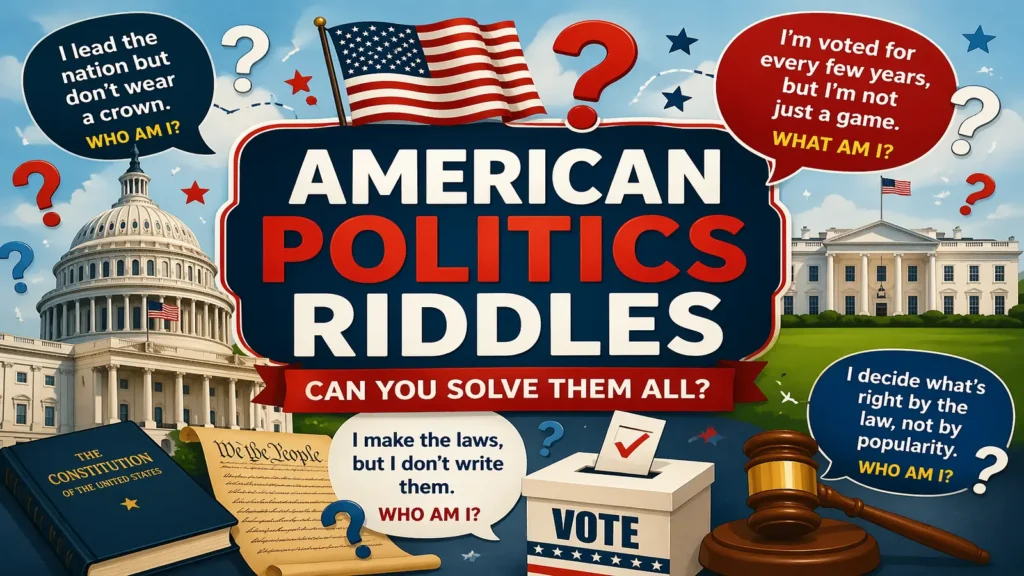
Politics can feel heavy. Riddles make it lighter. They turn big ideas into quick, clever moments people actually enjoy. This guide is for teachers, parents, trivia fans, and casual readers. It explains what makes American politics riddles fun, fair, and easy to share. You will also find topic ideas, writing tips, and ways to use them well.
Quick Answer
American politics riddles are short puzzles built around U.S. leaders, elections, government, and civic symbols. They work best when clues feel playful, clear, and familiar.
The strongest ones teach something small while still making people smile. Good riddles invite curiosity, not conflict.
TL;DR
• Keep clues simple and visual
• Use shared civic symbols first
• Stay playful, not partisan
• Mix easy and harder riddles
• Write answers readers recognize
• Save sharp jokes for later
Why American Politics Riddles Work
American politics riddles blend learning and fun. Because of that, readers stay curious instead of tuning out.
They also give people a softer way into civic topics. A smart clue can open a big idea fast.
• They turn dry topics into play
• They reward quick thinking
• They fit many age groups
• They invite group discussion
• They spark memory through surprise
• They travel well in classrooms
• They work in party games
• They suit short social posts
• They feel less heavy
• They make civics more human
• They encourage friendly guessing
• They create easy icebreakers
What Counts as an American Politics Riddle
Not every political question is a riddle. A true riddle hides the answer behind a clue pattern.
That clue can point to a person, place, role, document, or civic act. Still, the answer should feel fair.
• The answer connects to U.S. politics
• The clue uses indirect wording
• The reader must infer meaning
• It is not plain trivia
• It avoids direct fact dumping
• It hints before it tells
• The answer feels earned
• The wording stays concise
• The image stays easy
• The topic feels recognizable
• The twist lands cleanly
• The finish gives an aha
Best Topics to Use in Political Riddles
Some topics work better than others. Familiar themes usually land faster with broad readers.
Start with subjects people can picture. Then add deeper civic material once readers are engaged.
• Presidents and their roles
• Elections and voting
• Congress and lawmaking
• Courts and judges
• The Constitution itself
• The White House setting
• Capitol building imagery
• Campaign signs and slogans
• Ballots and polling places
• Flags and national symbols
• Rights and freedoms
• Citizens and public service
How to Keep the Tone Light
Tone matters more than many writers think. A good riddle can be sharp without becoming rude.
So, aim for wit instead of insult. Readers usually stay longer when the mood feels open.
• Prefer playful over mocking
• Skip loaded party language
• Avoid personal attacks entirely
• Use civic symbols often
• Lean on common knowledge
• Keep clues broadly relatable
• Choose friendly verbs
• Let surprise carry humor
• Avoid hot-button framing
• Use gentle irony carefully
• Keep targets abstract
• End on curiosity, not anger
Easy American Politics Riddles for Beginners
Beginner riddles should feel welcoming. They need clear images and very familiar answers.
Because of this, famous places and simple roles work well. Complex policy themes can wait.
• Use one clue path
• Pick well-known answers
• Favor visible landmarks
• Keep lines short
• Avoid rare terms
• Name no dates
• Use everyday language
• Let objects carry clues
• Choose one obvious image
• Limit hidden meanings
• Make answers pronounceable
• Test them aloud first
Harder Riddles for History Fans
Some readers want more depth. They enjoy clues with layers, echoes, and hidden angles.
Even then, hard should not mean unfair. The best tough riddles still guide the reader.
• Build two clue layers
• Use era-based hints
• Reference famous speeches lightly
• Suggest symbols, not names
• Hide roles inside metaphors
• Blend place with event
• Reward background knowledge
• Keep one anchor clue
• Avoid obscure minor figures
• Let history sharpen mystery
• Add one misleading image
• Reveal answers cleanly
Presidential Riddles Readers Love
Presidents remain the easiest entry point. Most readers know the office, the home, and the spotlight.
That makes presidential riddles easy to build. However, they work best when the clue feels human.
• Focus on the office first
• Use the White House image
• Hint at leadership duties
• Mention speeches or signatures
• Suggest history without lectures
• Use traditions readers know
• Keep names out of clues
• Let symbols do work
• Balance humor with respect
• Avoid deep biography overload
• Pick broad public moments
• Make the answer recognizable fast
Election Riddles That Feel Timely
Election riddles feel current because voting stays in public view. Yet they can stay evergreen with smart wording.
Focus on the process, not the latest fight. That keeps the piece useful longer.
• Use ballots as symbols
• Point to campaign energy
• Mention lines and polling
• Hint at counting carefully
• Suggest debates indirectly
• Frame voting as action
• Keep party labels optional
• Use suspense in clues
• Avoid breaking-news references
• Make the process understandable
• Let fairness guide tone
• Keep outcomes outside clues
Government Branches as Riddle Material
The branches give writers strong contrast. Each one does something different, so clue writing becomes easier.
Readers also know these roles from school. That shared base helps the answer land.
• Executive clues suggest action
• Legislative clues suggest debate
• Judicial clues suggest judgment
• Use job verbs wisely
• Contrast making and interpreting
• Tie roles to buildings
• Keep duties distinct
• Avoid legal overload
• Use balance as imagery
• Turn process into metaphor
• Connect powers to clues
• Let structure guide difficulty
Patriotic Symbols and Places
Visual symbols make riddles stick. A dome, a gavel, or a flag can do a lot.
Because images travel fast, these themes work online and offline. They also suit broad audiences.
• The Capitol dome stands out
• The White House feels iconic
• The flag adds instant context
• A ballot box feels familiar
• The Constitution feels timeless
• A podium suggests speeches
• A gavel signals authority
• Monuments create vivid clues
• Seals add official tone
• Stars suggest national identity
• Columns imply government spaces
• Maps can frame federal power
American Politics Riddles for Kids and Classrooms
Kids need clarity first. Classrooms also need safe wording and clean answers.
So, the best school-friendly riddles teach without sounding like homework. Fun should come first.
• Choose age-clear vocabulary
• Keep clues nonpartisan
• Use school-safe humor
• Favor common civic words
• Teach one idea each
• Keep answer length short
• Avoid sarcasm in clues
• Use objects before abstractions
• Let students solve aloud
• Pair riddles with discussion
• Invite small group guessing
• Celebrate wrong tries kindly
How to Write Better Political Riddles
Writing gets easier with a simple process. First, choose one answer and one image.
Next, hide that image behind a fresh angle. Then trim every extra word.
• Start with one clear answer
• Pick one central image
• Write three clue versions
• Keep the best surprise
• Cut dull filler words
• Swap facts for hints
• Read the rhythm aloud
• Test on one friend
• Revise weak endings
• Shorten long clue chains
• Match difficulty to audience
• Save your strongest last line
Common Mistakes to Avoid
Many riddles fail for small reasons. Usually, the clue tells too much or too little.
Good editing solves most problems. A fair puzzle almost always reads cleaner.
• Vague clues confuse readers
• Mean tone shrinks appeal
• Long setups kill momentum
• Obscure answers feel cheap
• Repeated images get stale
• Heavy jargon blocks fun
• Too many hints flatten tension
• Too few hints frustrate
• Dates can feel clunky
• Partisan swipes age badly
• Mixed metaphors blur meaning
• Weak answers reduce payoff
Where These Riddles Fit Best
American politics riddles can work in many places. They are flexible, short, and easy to adapt.
That makes them useful for teachers, creators, and event hosts. A strong set can travel far.
• Classroom warm-up activities
• Presidents Day handouts
• Family game nights
• Trivia team tie-breakers
• Youth civic clubs
• Museum activity sheets
• Short-form video scripts
• Newsletter engagement blocks
• Blog post roundups
• Community event icebreakers
• Homeschool discussion starters
• Printable party cards
FAQs
What makes a politics riddle different from political trivia?
A riddle hides the answer behind clues. Trivia asks directly and expects recall. That small difference changes the whole feel.
Are American politics riddles only about presidents?
No, not at all. They can cover elections, Congress, courts, symbols, voting, and civic life too.
Can kids use political riddles in school?
Yes, when the wording stays simple and neutral. Classroom-friendly riddles work best with clear clues and familiar answers.
How long should a good politics riddle be?
Shorter is usually better. Most strong riddles feel sharp, easy to read, and quick to solve.
Should political riddles mention party names?
Usually, that is not needed. Shared civic images often work better and feel more welcoming.
How do I make a hard riddle still feel fair?
Give readers one strong anchor clue. Then add one twist, not five, so the answer still feels reachable.
Conclusion
American politics riddles work because they make civic ideas feel lighter. They invite people to think, smile, and share. They also fit many settings. Teachers can use them in class, and friends can use them for games. When you keep the tone playful and the clues fair, American politics riddles become both fun and memorable. That is what keeps readers coming back for more.

Joseph Morgan is an enigmatist known for creating clever and mysterious riddles. Born in Scotland, he spent his life challenging people to think deeply through puzzles and brainteasers. He became famous for his creative mind and love of mystery.