
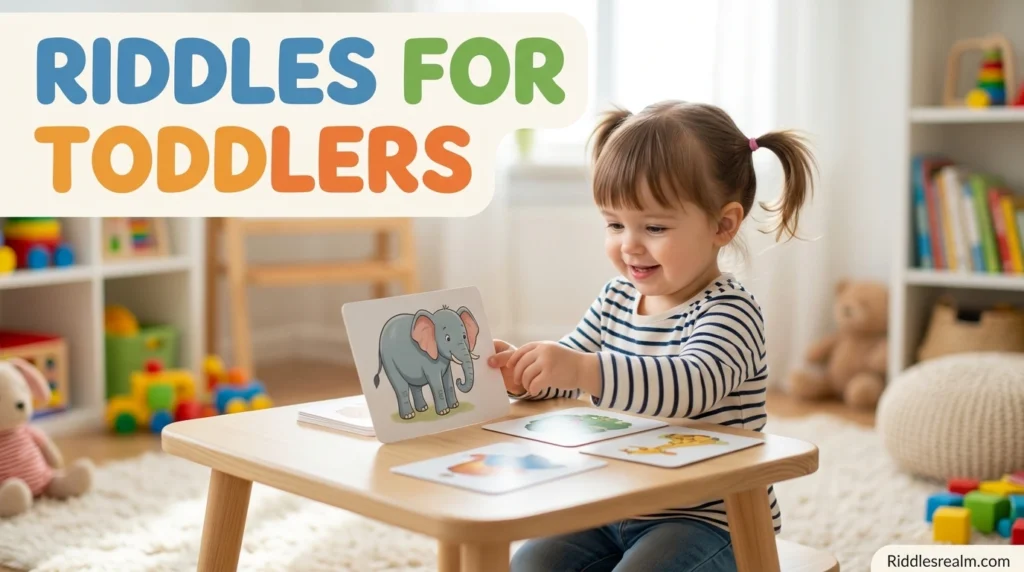
Toddlers are naturally curious. They love asking questions, exploring new ideas, and figuring out how the world works. That is why riddles for toddlers are such a great activity. They combine learning and fun in a simple way that keeps little minds engaged.
Whether you are a parent, teacher, babysitter, or caregiver, toddler riddles can turn an ordinary moment into a fun learning experience. These easy puzzle questions encourage children to think, guess, laugh, and learn at the same time. In addition, they help develop important skills such as critical thinking, problem-solving, vocabulary building, and listening comprehension.
Unlike challenging riddles for older kids or adults, toddler riddles use simple words and familiar objects. Therefore, young children can understand the clues and enjoy the excitement of finding the answer.
In this guide, you will discover fun and educational riddles, benefits of riddle-solving, tips for using riddles with toddlers, and answers that will keep your little ones smiling.
What Are Riddles for Toddlers?
Riddles for toddlers are short and simple guessing games designed for children between the ages of 2 and 5. They typically focus on everyday objects, animals, foods, colors, shapes, and activities that toddlers already know.
These family-friendly riddles use easy clues that encourage children to think about similarities, sounds, colors, and functions.
For example:
Riddle: I am yellow and monkeys love me. What am I?
Answer: A banana.
Because toddlers learn through play, riddles work as educational entertainment that feels more like a game than a lesson.
Why Riddles Are Great for Toddlers
Riddles are much more than funny questions. They provide valuable learning opportunities while keeping children entertained.
Improve Critical Thinking Skills
Toddlers learn to listen carefully and connect clues with what they already know. As a result, they begin developing early reasoning skills.
Build Vocabulary
Many educational riddles introduce new words and concepts. Consequently, children expand their language skills while having fun.
Encourage Problem-Solving
Every riddle presents a small problem that needs solving. Therefore, toddlers learn how to analyze clues and make logical guesses.
Increase Confidence
When children solve a riddle correctly, they feel proud of themselves. This sense of achievement motivates them to keep learning.
Create Family Fun
Riddles are excellent entertainment activities for family gatherings, road trips, classrooms, and party games.
How to Use Toddler Riddles Effectively
Before jumping into the riddles, it helps to know how to make them more engaging.
Keep It Interactive
Allow your toddler enough time to think about the answer. Avoid answering too quickly.
Use Visual Clues
For younger toddlers, show pictures or real objects related to the riddle.
Celebrate Every Guess
Even if the answer is incorrect, praise their effort. Positive reinforcement encourages participation.
Repeat Favorite Riddles
Toddlers love repetition. Therefore, revisiting favorite riddles can strengthen memory and confidence.
Easy Animal Riddles for Toddlers
Animals are often a toddler’s favorite topic. These simple brain teasers are perfect for young learners.
1. Who Says Moo?
Riddle: I am big and give milk. I say moo. What am I?
Answer: A cow.
2. The King of the Jungle
Riddle: I have a mane and a loud roar. What am I?
Answer: A lion.
3. Hopping Friend
Riddle: I hop and have long ears. What am I?
Answer: A rabbit.
4. Farm Friend
Riddle: I lay eggs and say cluck. What am I?
Answer: A chicken.
5. Pink and Muddy
Riddle: I like mud and say oink. What am I?
Answer: A pig.
6. Tall Animal
Riddle: I have a very long neck. What am I?
Answer: A giraffe.
7. Striped Animal
Riddle: I look like a horse with stripes. What am I?
Answer: A zebra.
8. Ocean Giant
Riddle: I live in the ocean and am very big. What am I?
Answer: A whale.
9. Slow Walker
Riddle: I carry my house on my back. What am I?
Answer: A snail.
10. Friendly Pet
Riddle: I wag my tail and bark. What am I?
Answer: A dog.
Food Riddles for Toddlers
Food-themed riddles are both fun and educational.
11. Yellow Fruit
Riddle: I am yellow and monkeys like me. What am I?
Answer: A banana.
12. Crunchy Snack
Riddle: I am orange and rabbits love me. What am I?
Answer: A carrot.
13. Red and Round
Riddle: I am red and grow on trees. What am I?
Answer: An apple.
14. Breakfast Favorite
Riddle: I come from chickens and can be scrambled. What am I?
Answer: An egg.
15. Sweet Treat
Riddle: I am cold and come in many flavors. What am I?
Answer: Ice cream.
16. Green Vegetable
Riddle: I am green and look like tiny trees. What am I?
Answer: Broccoli.
17. Sandwich Helper
Riddle: I am sliced and put in sandwiches. What am I?
Answer: Bread.
18. Juicy Fruit
Riddle: I am orange and full of juice. What am I?
Answer: An orange.
19. Tiny Fruit
Riddle: I am small, purple, and grow in bunches. What am I?
Answer: Grapes.
20. Round Meal
Riddle: I am round, cheesy, and delicious. What am I?
Answer: Pizza.
Color Riddles for Toddlers
Colors are among the first concepts toddlers learn.
21. Color of the Sky
Riddle: I am the color of the sky on a sunny day. What color am I?
Answer: Blue.
22. Grass Color
Riddle: I am the color of leaves and grass. What color am I?
Answer: Green.
23. Fire Truck Color
Riddle: Fire trucks are often this color. What color is it?
Answer: Red.
24. Banana Color
Riddle: Bananas are usually this color. What color is it?
Answer: Yellow.
25. Snow Color
Riddle: Fresh snow is this color. What color is it?
Answer: White.
Shape Riddles for Toddlers
Shapes help children develop early math skills.
26. Round Shape
Riddle: I have no corners and look like a ball. What shape am I?
Answer: A circle.
27. Three Sides
Riddle: I have three sides and three corners. What shape am I?
Answer: A triangle.
28. Four Equal Sides
Riddle: I have four equal sides. What shape am I?
Answer: A square.
29. Long Circle
Riddle: I look like a stretched circle. What shape am I?
Answer: An oval.
30. Rectangle Friend
Riddle: I have four sides, but two are longer. What shape am I?
Answer: A rectangle.
Funny Riddles for Toddlers
Funny riddles add laughter to learning.
31. Sleepy Cow
Riddle: What do you call a sleeping cow?
Answer: A bulldozer.
32. Duck Joke
Riddle: What kind of snack do ducks like?
Answer: Quackers.
33. Teddy Bear
Riddle: Why didn’t the teddy bear eat dessert?
Answer: Because he was stuffed.
34. Silly Fish
Riddle: What fish practices medicine?
Answer: A sturgeon.
35. Happy Bee
Riddle: What do bees brush their hair with?
Answer: A honeycomb.
Nature Riddles for Toddlers
36. Bright Daytime Friend
Riddle: I shine during the day and keep us warm. What am I?
Answer: The sun.
37. Night Light
Riddle: I shine at night but am not the sun. What am I?
Answer: The moon.
38. Rainy Surprise
Riddle: I fall from clouds and help flowers grow. What am I?
Answer: Rain.
39. Colorful Sky
Riddle: I appear after rain and have many colors. What am I?
Answer: A rainbow.
40. Windy Friend
Riddle: You cannot see me, but you can feel me. What am I?
Answer: The wind.
Household Object Riddles for Toddlers
41. Time Teller
Riddle: I have hands but cannot clap. What am I?
Answer: A clock.
42. Bright Helper
Riddle: I light up a dark room. What am I?
Answer: A lamp.
43. Cold Box
Riddle: I keep food cold. What am I?
Answer: A refrigerator.
44. Sit Down
Riddle: You sit on me at the table. What am I?
Answer: A chair.
45. Bedtime Friend
Riddle: You sleep on me every night. What am I?
Answer: A bed.
Educational Benefits of Toddler Riddles
The benefits of riddles go beyond simple entertainment.
| Skill | How Riddles Help |
|---|---|
| Vocabulary | Introduce new words |
| Memory | Improve recall ability |
| Listening | Encourage careful attention |
| Logic | Build reasoning skills |
| Communication | Improve speaking confidence |
| Creativity | Encourage imaginative thinking |
| Social Skills | Promote interaction with others |
Best Times to Use Riddles with Toddlers
During Car Rides
Long drives become more enjoyable with guessing games and puzzle questions.
At Bedtime
Simple riddles create a calm and positive bedtime routine.
During Classroom Activities
Teachers can use educational riddles as brain breaks.
At Birthday Parties
Riddles make excellent party games and group activities.
During Family Gatherings
Family-friendly riddles encourage everyone to participate.
Tips for Creating Your Own Toddler Riddles
You do not always need ready-made riddles. Creating your own can be fun too.
Choose Familiar Objects
Start with things toddlers see every day.
Keep Clues Simple
Avoid complicated language and abstract concepts.
Focus on One Main Feature
Describe a color, sound, shape, or function.
Make It Fun
Add silly clues that encourage laughter and engagement.
Key Takeaways
- Riddles for toddlers combine learning and entertainment.
- They strengthen critical thinking and problem-solving skills.
- Simple clues work best for young children.
- Animal, food, color, and shape riddles are especially popular.
- Riddles can be used at home, school, parties, and during travel.
- Consistent riddle practice helps build confidence and vocabulary.
Frequently Asked Questions About Riddles for Toddlers
What age are toddler riddles suitable for?
Most toddler riddles are ideal for children between 2 and 5 years old. However, younger preschoolers can also enjoy them with some assistance.
How do riddles help child development?
Riddles improve language development, memory, listening skills, critical thinking, and problem-solving abilities.
Are riddles educational?
Yes. Educational riddles teach vocabulary, logic, colors, animals, numbers, shapes, and other early learning concepts.
What are the easiest riddles for toddlers?
Animal riddles, food riddles, and color riddles are generally the easiest because they involve familiar objects.
Can riddles improve communication skills?
Absolutely. Children learn to listen carefully, answer questions, explain their thinking, and express ideas more clearly.
How often should toddlers practice riddles?
A few minutes daily is usually enough. Short sessions keep children interested and prevent frustration.
Are riddles good for preschool classrooms?
Yes. Teachers frequently use brain teasers, guessing games, and fun puzzles to encourage classroom participation.
What makes a good toddler riddle?
A good toddler riddle uses simple language, familiar concepts, and clear clues that children can understand.
People Also Ask
What are some easy riddles for toddlers?
Easy riddles focus on common animals, foods, colors, and household objects. For example: “I say moo and give milk. What am I?” The answer is a cow.
Why are riddles important for toddlers?
Riddles help develop reasoning, vocabulary, memory, and communication skills while making learning enjoyable.
Can toddlers solve brain teasers?
Yes. Age-appropriate brain teasers designed for toddlers use simple clues and familiar subjects that match their developmental stage.
Are guessing games good for preschoolers?
Absolutely. Guessing games encourage observation, critical thinking, and social interaction while keeping children engaged.
How do I make riddles fun for young children?
Use expressive voices, visual aids, rewards, and lots of encouragement. Most importantly, keep the experience playful and interactive.
Conclusion
Riddles for toddlers are one of the easiest ways to combine fun and learning. They encourage curiosity, strengthen problem-solving skills, improve vocabulary, and create memorable moments for families and teachers alike. Moreover, these simple brain teasers help toddlers develop confidence as they learn to think through clues and discover answers on their own.
Whether you use funny riddles, animal riddles, food riddles, color puzzles, or shape guessing games, the benefits remain the same. Children learn while they laugh. Therefore, adding a few riddles to your daily routine can turn ordinary moments into valuable learning opportunities.
Start with the easy riddles in this guide, encourage every guess, and watch your toddler’s imagination and thinking skills grow every day.

Joseph Morgan is an enigmatist known for creating clever and mysterious riddles. Born in Scotland, he spent his life challenging people to think deeply through puzzles and brainteasers. He became famous for his creative mind and love of mystery.