
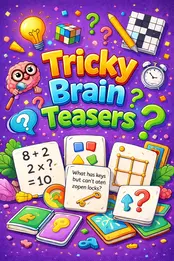
Some puzzles look simple at first. Then they flip your thinking in a second. That is the fun of tricky brain teasers.
This guide is for anyone who wants clever, satisfying challenges without making things feel too heavy. You will find simple ways to enjoy them, choose the right kind, and use them at home, in class, or with friends. Along the way, the goal stays the same: make thinking feel fun.
Quick Answer
Tricky brain teasers are short puzzles that hide the answer behind wording, logic, or misdirection. They make you pause, rethink the clue, and spot what others miss. The best ones feel surprising, fair, and fun to share.
TL;DR
• Tricky puzzles reward slow, careful reading
• Wording often matters more than difficulty
• Kids and adults can both enjoy them
• Logic, math, and visual types feel different
• Group play makes answers even more memorable
What Makes Tricky Brain Teasers So Satisfying
A strong brain teaser gives you a tiny jolt of surprise. Then, once you see the answer, it feels obvious in the best way.
• Tiny clues can hide big twists
• Simple questions create strong suspense
• Wrong guesses make reveals sweeter
• Misdirection keeps every round lively
• Fast puzzles fit short breaks
• Clever answers stick in memory
• Small details change everything quickly
• Solvers enjoy the sudden turnaround
• One puzzle can spark debate
• Shared guesses build instant energy
• Surprises feel fun, not random
• Short formats invite repeat play
Short Tricky Brain Teasers for Quick Fun
Short puzzles work well when time is tight. Also, they are easy to read aloud and easy to remember.
• Use one-line questions first
• Pick clues with everyday objects
• Favor short setups over long stories
• Read once before offering hints
• Try lunch-break puzzle rounds
• Save speedy teasers for car rides
• Choose prompts with one clean answer
• Let players answer without pressure
• Reveal solutions before interest fades
• Keep a few favorites on hand
• Rotate questions to keep things fresh
• End quick rounds with an easy win
Hard Tricky Brain Teasers That Push You Further
Harder brain teasers take more patience. However, they feel especially rewarding when the answer finally clicks.
• Expect more than one false lead
• Look past the first assumption
• Treat every word as a clue
• Recheck numbers before trusting them
• Notice what the prompt skips
• Pause before guessing too early
• Watch for hidden time tricks
• Hard puzzles reward calm thinking
• Break layered clues into pieces
• Test odd answers before rejecting them
• Strong puzzles stay fair underneath
• The last line often matters most
Logic Brain Teasers That Reward Careful Thinking
Logic-based teasers feel cleaner than word tricks. So, they help careful thinkers stay organized while solving.
• Start by listing clear facts
• Remove impossible options first
• Compare each clue side by side
• Follow sequence, order, and placement
• Use paper when clues stack up
• Test one idea at a time
• Look for the strongest constraint
• Check whether facts can coexist
• Search for cause and effect
• Keep guesses separate from evidence
• Confirm each step before moving
• Finish with a full final check
Word Brain Teasers With Sneaky Twists
Word brain teasers love double meanings. Because of that, the answer often hides inside plain language.
• Watch for words with two meanings
• Notice grammar that shifts direction
• Tiny prepositions can mislead readers
• Common sayings often inspire puzzles
• Homophones can change the whole clue
• Spelling may quietly guide answers
• Read awkward phrasing very carefully
• Puns work best in short setups
• Silent assumptions cause many mistakes
• Word order can hide the trick
• Literal thinking sometimes beats cleverness
• Group laughter usually follows the reveal
Math Brain Teasers Without Heavy Stress
Math-based teasers can still feel playful. Instead of long work, many rely on patterns and smart noticing.
• Estimate before doing exact math
• Look for repeated number patterns
• Check units before solving further
• Draw quick shapes when needed
• Reverse the question for insight
• Smaller test numbers can help
• Search for balance and symmetry
• Count carefully around the edges
• Strange answers may signal a trap
• Use reasoning when math feels messy
• Keep the final result sensible
• Focus on structure, not speed
Visual Brain Teasers That Hide the Answer
Visual puzzles make your eyes do extra work. As a result, they are great for groups, posters, and game nights.
• Scan the full picture first
• Then inspect the smallest corners
• Count spaces as well as shapes
• Look for objects near borders
• Compare top and bottom sections
• Trace paths with a finger
• Rotate the image in your mind
• Patterns can hide in plain sight
• Visual clues reward patient eyes
• Fresh breaks improve second looks
• Similar colors can mask answers
• Odd spacing often reveals the key
Tricky Brain Teasers for Kids
Kids usually enjoy puzzle time most when the clues feel clear. In addition, quick answers help keep the fun moving.
• Choose bright and familiar topics
• Keep wording simple and concrete
• Use animals, food, or weather clues
• Read each teaser out loud
• Offer one gentle hint if needed
• Praise smart guessing, not only correctness
• Mix silly and thoughtful prompts
• Keep early rounds very short
• Add pictures for extra support
• Let kids explain their thinking
• Stop before frustration takes over
• End with a cheerful crowd favorite
Tricky Brain Teasers for Adults
Adults often enjoy more subtle traps. Still, the best puzzle sessions stay playful rather than overly serious.
• Use nuanced clues with everyday settings
• Mix solo puzzles with group rounds
• Keep some questions lunch-break friendly
• Try lateral thinking for variety
• Include a few elegant stumpers
• Let answers spark short discussion
• Use puzzles as quick icebreakers
• Rotate styles to avoid fatigue
• Save hardest clues for later
• Encourage reasoning before revealing answers
• Friendly competition can raise energy
• Quiet solvers often spot the trick
Tricky Brain Teasers for Classrooms
Brain teasers can wake up a room fast. Meanwhile, they give students a low-pressure reason to think out loud.
• Open class with one fast teaser
• Use pairs for shared reasoning
• Match puzzle style to age
• Pick clues tied to lessons
• Add visual cards to stations
• Let early finishers tackle extras
• Invite students to create puzzles
• Reward explanations, not speed alone
• Keep answer reveals short and clear
• Use brain teasers during transitions
• Store favorites for later review
• Choose inclusive clues for all learners
Tricky Brain Teasers for Parties and Family Time
A good brain teaser can break the ice in seconds. Also, it works across ages without needing much setup.
• Start with laugh-first questions
• Keep turns quick and fair
• Alternate easy and tricky rounds
• Let teams whisper before answering
• Read clues with extra expression
• Use cards for smoother pacing
• Give one hint per round
• Invite kids to host occasionally
• Avoid puzzles that feel too niche
• Save a final stumper for last
• Mix spoken and visual challenges
• Celebrate clever wrong answers too
How to Solve Tricky Brain Teasers Better
Getting better does not mean rushing more. Instead, it means noticing what the puzzle wants you to miss.
• Slow down before locking answers
• Restate the clue in plain words
• Question your first assumption immediately
• Notice missing facts and hidden limits
• Split long prompts into parts
• Check tense, order, and quantity
• Try the simplest answer first
• Look for ordinary meanings first
• Stay calm through confusing wording
• Learn patterns from old mistakes
• Practice across several puzzle types
• Trust patience more than speed
FAQs
What are tricky brain teasers?
They are short puzzles that use misdirection, wording, logic, or hidden assumptions. The answer often feels obvious only after you see it.
Are tricky brain teasers the same as riddles?
Not always. A riddle often leans harder on wordplay, while a brain teaser can also use logic, math, or visual thinking.
Are tricky brain teasers good for kids?
Yes, as long as the wording fits their age. Shorter clues and familiar topics usually work best for younger solvers.
What makes a brain teaser hard?
Harder teasers often combine more than one trap. They may hide key details, invite wrong assumptions, or require extra patience.
How can I solve tricky brain teasers faster?
Read slowly, question your first guess, and watch for missing information. Over time, you start spotting common traps much sooner.
Where can I use tricky brain teasers?
They work well in classrooms, car rides, parties, family dinners, and short work breaks. Any setting with a few spare minutes can fit them.
Conclusion
Tricky puzzles stay popular for a reason. They are short, clever, and surprisingly good at bringing people together.
Some tease with words. Others hide the answer in logic, numbers, or images. That variety keeps each round fresh.
When you want a quick mental challenge, tricky brain teasers offer an easy way to think, laugh, and share a smart little win.

A playful wordsmith with a knack for misdirection, I craft riddles that tease the brain. My puzzles blend clever clues, clean logic, and a dash of humor—built to challenge beginners and stump seasoned solvers alike. From short, punchy brainteasers to layered mysteries with hidden meanings, I love turning everyday ideas into mind-bending questions that invite curiosity and conversation. When I’m not twisting words into puzzles, I’m collecting strange facts, testing new clue styles, and fine-tuning the art of fair—but fiendish—fun.