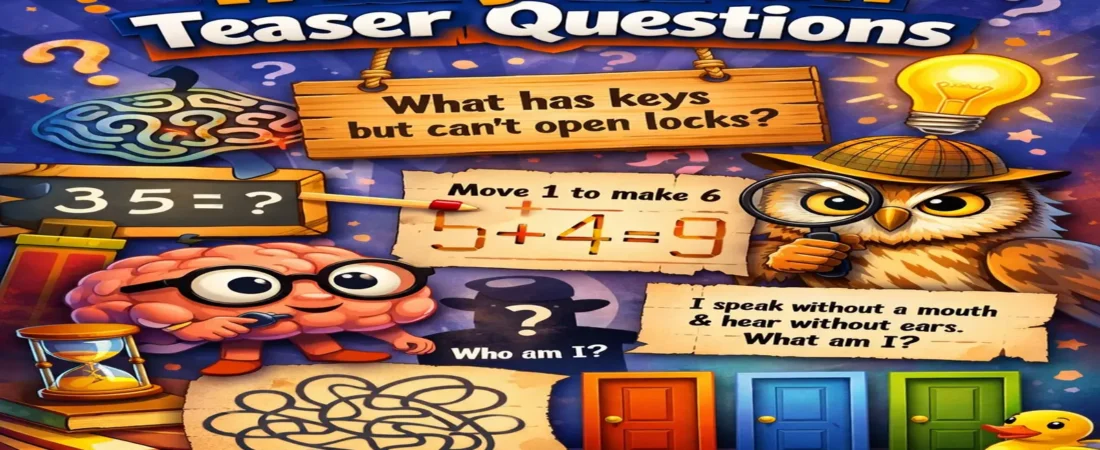
Some questions look easy at first glance. Then they twist your thinking in the best way. That is the fun of tricky brain teaser questions. This guide is for adults, parents, teachers, and anyone who enjoys clever challenges. You will learn what these questions are, why people love them, how to solve them, and where they fit into daily life. Along the way, you will also get ideas for choosing, using, and even writing better ones yourself.
Quick Answer
Tricky brain teaser questions are short puzzles that use logic, wordplay, or surprise to challenge your thinking. The best tricky brain teaser questions feel clever, fair, and fun to solve.
TL;DR
• They reward slow, careful reading
• Good ones hide simple twists
• Funny formats keep challenge light
• Kids need shorter, clearer clues
• Adults often enjoy layered wording
• Practice makes patterns easier
What Tricky Brain Teaser Questions Really Are
These questions are built to make you pause. Usually, they seem simple before the hidden twist appears. Because of that, they feel more playful than straight trivia.
Unlike trivia, they do not depend on memorized facts. Instead, they ask you to notice wording, patterns, or assumptions.
• Short questions with clever turns
• Built around surprise or misdirection
• Often solved through close reading
• Usually have one neat answer
• Depend more on thinking than knowledge
• Can use words, numbers, or logic
• Often look easier than they are
• Reward flexible thinking quickly
• Work well in short sessions
• Fit solo or group play
• Invite guesses before the reveal
• Feel memorable after solving
Why These Questions Feel So Satisfying
A good brain teaser creates tension fast. First, you think you know the answer. Then, a smarter answer appears.
That small surprise feels rewarding. Also, short questions make the payoff arrive quickly.
• They create quick mental suspense
• Answers often feel obvious afterward
• Small wins boost puzzle confidence
• Surprise makes them easier to remember
• They spark playful debate
• Fast formats suit busy schedules
• Twists break boring routines
• Solving feels sharp and satisfying
• Each question offers a tiny challenge
• Friends enjoy comparing guesses
• Clever wording keeps attention high
• They mix fun with effort
Common Types of Tricky Brain Teaser Questions
Not all tricky questions work the same way. Some rely on language, while others depend on logic or hidden details. So, knowing the types helps you pick better ones.
Mixing types also keeps puzzle time fresh. That matters when you use them often.
• Wordplay questions with double meanings
• Logic prompts with hidden rules
• Observation questions about tiny details
• Number twists with misleading setups
• Lateral thinking with unusual answers
• Riddle-style questions with clues
• Pattern questions with repeat structures
• Comparison questions using false assumptions
• Sequence prompts with missing steps
• Everyday object questions with twists
• Time-based questions with wording traps
• Common-sense questions turned upside down
What Makes a Brain Teaser Feel Truly Tricky
Tricky does not mean unfair. In fact, the best questions hide the answer in plain sight. However, they still give enough clues to solve it.
Usually, the challenge comes from assumption traps. A single word can change the whole meaning.
• Hidden assumptions shape the challenge
• Small wording changes create confusion
• Fair clues prevent random guessing
• Strong twists feel earned
• Weak tricks feel cheap instead
• Clean phrasing improves the payoff
• Extra words can hide meaning
• Missing details invite false conclusions
• Familiar ideas make better traps
• Simple answers often work best
• Good questions mislead without lying
• Balance matters more than difficulty
Easy Ways to Solve Them Better
Most people miss the answer because they rush. So, slowing down is often the first fix. A calmer approach makes twists easier to spot.
You do not need fancy methods. Instead, use a few repeatable habits.
• Read every word carefully
• Pause before your first guess
• Question the obvious answer
• Look for hidden meanings
• Notice what is not stated
• Break long clues apart
• Rephrase the question simply
• Test assumptions one by one
• Watch for everyday word traps
• Use paper for harder puzzles
• Learn from missed answers
• Stay patient with slow starts
Tricky Brain Teaser Questions for Adults
Adults often enjoy questions with layered clues. They also tend to like puzzles that work during breaks, dinners, or game nights. Because of this, flexible formats matter.
A strong adult-friendly question does not need to be complicated. It just needs a smart twist.
• Use sharper wording and nuance
• Add logic steps without overload
• Keep answers short and satisfying
• Fit five-minute work breaks
• Work well at dinner tables
• Bring energy to casual gatherings
• Challenge without becoming exhausting
• Mix humor with smart structure
• Let discussion happen after guesses
• Avoid overly childish setups
• Use modern everyday situations
• Keep reveals clean and quick
Tricky Brain Teaser Questions for Kids
Kids enjoy tricky questions when the clue feels clear. Long setups usually lose them fast. That is why short, familiar topics work best.
Play matters more than perfection here. Even wrong guesses can be part of the fun.
• Choose simple words kids know
• Keep clues short and lively
• Use animals, food, or school themes
• Favor funny answers over abstract ones
• Read the question aloud
• Let kids guess without pressure
• Offer hints in small steps
• Use pictures for younger players
• Repeat great questions later
• Keep each round brief
• Praise creative wrong answers
• End while excitement stays high
Funny Questions That Still Make You Think
Humor makes tricky questions easier to share. A funny setup lowers pressure and keeps people engaged. Meanwhile, the twist still does the real work.
Funny questions are great for mixed groups. They feel light, but they still reward smart thinking.
• Silly answers make twists memorable
• Joke-like wording invites quick guesses
• Humor softens hard moments
• Great for family game time
• Good for warm classroom starts
• Useful during party icebreakers
• Easy to retell later
• Surprise laughs boost engagement
• Light questions reduce puzzle stress
• Funny topics feel less intimidating
• Playful clues invite conversation
• Short comic setups work well
Hard Questions for Serious Puzzle Fans
Some readers want tougher challenges. In that case, layered clues and stronger misdirection help. Still, hard should not mean messy.
A hard question works when it stays fair. Clear wording matters even more as difficulty rises.
• Add one extra reasoning step
• Use tighter clue control
• Hide answers behind plain language
• Build around subtle false leads
• Keep logic consistent throughout
• Cut anything that feels random
• Test harder questions on others
• Save deep puzzles for quiet time
• Accept slower solving speed
• Mix hard rounds with easy ones
• Review why each answer works
• Avoid confusing wording for difficulty
Great Uses for Parties, Classrooms, and Teams
These questions are easy to share. They need little setup, and they fit many settings. As a result, they work well for groups.
You can use one question or a full round. Both approaches keep things lively.
• Start meetings with one puzzle
• Open class with a warm-up
• Break silence at parties fast
• Use teams for larger groups
• Let everyone explain their guess
• Reveal hints one at a time
• Rotate question readers each round
• Pick age-appropriate topics carefully
• Keep score only if wanted
• Use short rounds between activities
• Save best questions for the end
• Encourage laughter after wrong guesses
How to Write Your Own Tricky Questions
Writing a good brain teaser starts with a simple idea. Next, you shape the clue so it nudges people the wrong way. Then, the answer lands cleanly.
You do not need to sound fancy. Clear wording usually makes the twist stronger.
• Start with a simple answer
• Build around one false assumption
• Use everyday scenes people know
• Keep the clue shorter than needed
• Remove extra explanation early
• Choose one strong twist
• Test it on a friend
• Rewrite weak or vague parts
• Make sure one answer fits best
• Avoid copying famous questions
• Use plain words with care
• End with a satisfying reveal
Common Mistakes People Make
People often think harder means better. However, messy wording can ruin even a smart idea. Clean structure matters more than showing off.
Another common mistake is rushing. Fast guesses hide the real clue.
• Skimming the question too quickly
• Ignoring tiny wording clues
• Overthinking simple setups
• Assuming facts not given
• Chasing cleverness over clarity
• Writing twists without fairness
• Using too many extra words
• Mixing several tricks at once
• Picking answers with many options
• Turning every round competitive
• Giving hints far too early
• Quitting after one miss
Where to Find Fresh Questions
Fresh brain teaser questions are everywhere once you start looking. Websites, books, apps, and printables all work well. So, try more than one source.
That variety helps match your mood. It also keeps your question pool from feeling stale.
• Puzzle websites with answer pages
• Riddle collections in print
• Game books for family nights
• Classroom activity printables online
• Quiz apps with daily prompts
• Desk calendars with challenge questions
• Party game cards with twists
• Library shelves with puzzle books
• Notes apps for saved favorites
• Newsletters with fun question rounds
• Road trip books for travel
• Homemade lists from past winners
FAQs
What is the difference between a trick question and a brain teaser?
A trick question usually leans harder on wording and surprise. A brain teaser can also include logic, patterns, or reasoning steps. Many questions blend both styles.
Are tricky brain teaser questions good for adults and kids?
Yes, but the best version depends on age. Kids usually need shorter clues and familiar topics, while adults often enjoy layered wording. The format can work for both.
How long should a tricky brain teaser question take?
Most good ones take a few seconds to a few minutes. If a short question drags too long, it may be unclear rather than clever. Fair challenge matters more than time.
What makes a brain teaser feel too hard?
Usually, the problem is weak wording, missing fairness, or too many moving parts. Hard questions should still point toward one strong answer. Confusion alone is not enough.
Where can I find tricky brain teaser questions with answers?
You can find them on puzzle websites, in books, through quiz apps, and inside printable activity sets. Many people like one main source and one backup source. That keeps things simple.
Can tricky brain teaser questions work in groups?
Yes, they are great for groups. They work well in classrooms, meetings, parties, and family time because everyone can guess together. Short questions keep the pace moving.
Conclusion
Tricky questions work because they are small, clever, and easy to share. They challenge the mind without needing much time or setup. That makes them useful in everyday life. Try different styles, notice what makes you smile, and keep your standards high. The best tricky brain teaser questions feel fair, surprising, and worth remembering long after the answer appears.

A modern riddle-maker who builds clever, pocket-sized puzzles with sharp wordplay and elegant misdirection. Her clues are clean, surprising, and designed to make you think twice—then smile when it clicks.