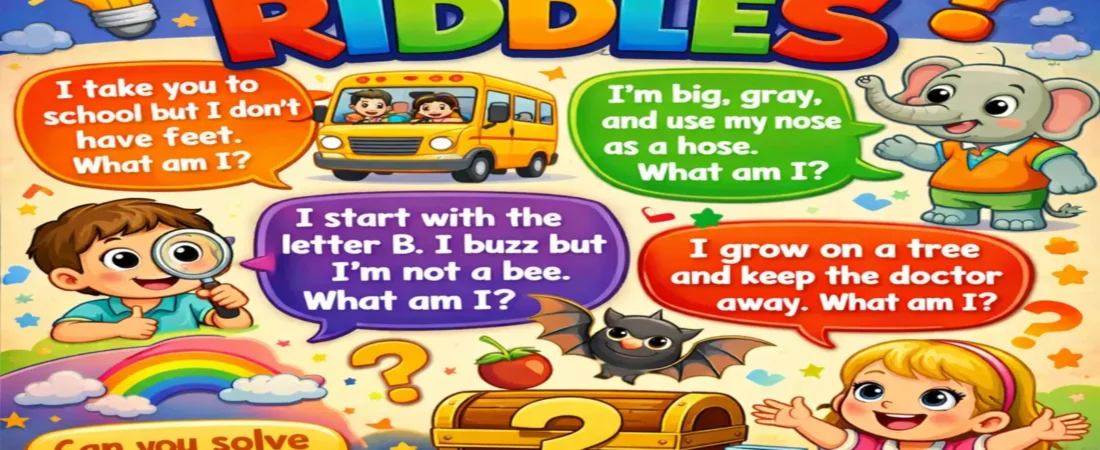
Young kids love games that feel quick, clear, and a little surprising. That is exactly why riddles work so well in kindergarten. A short clue can turn an ordinary moment into a guessing game full of smiles.
This guide is for parents, teachers, and caregivers who want easy ideas that fit real life. Inside, you will find kindergarten riddles grouped by theme, setting, and learning level. So whether you need a circle-time warm-up or a fun car ride activity, you will have plenty to use.
Quick Answer
Kindergarten riddles are short, simple clues made for young learners. They work best with familiar objects, easy words, and clear answers. The right riddle feels playful, fair, and quick to solve.
TL;DR
• Keep clues short and easy
• Use answers kids already know
• Pick fun themes like animals
• Save longer riddles for later
• Use them at home or school
Why Kindergarten Riddles Work So Well
Kindergarteners enjoy games that move fast. A short riddle gives them something to hear, picture, and guess. Because of that, the activity feels fun without getting too hard.
Riddles also fit many parts of the day. You can use one before lunch, during circle time, or in the car. Meanwhile, kids get a little thinking practice along the way.
• They feel playful from the start
• Short clues match young attention spans
• Familiar answers build quick confidence
• Guessing games make listening more active
• Simple twists keep curiosity high
• Group play adds shared excitement
• Kids enjoy fast answer reveals
• Low-pressure fun helps shy kids join
• Everyday topics feel easy to picture
• Tiny wins encourage another round
• Riddles fit quiet transition moments
• They add fun without much prep
What Makes a Good Riddle for Kindergarten
A good kindergarten riddle sounds simple at first. The clue should point to something kids already know well. Then the answer feels satisfying instead of confusing.
Clear wording matters a lot at this age. Also, short clues work better than long setups. When the language stays simple, the fun stays strong.
• Use common objects kids see daily
• Keep words short and familiar
• Choose one main clue at a time
• Make answers easy to imagine
• Skip facts young kids would not know
• Let the twist stay gentle
• Prefer clear pictures over abstract ideas
• Test the clue out loud first
• Keep the answer one word
• Use sounds and colors often
• Stay away from long explanations
• End with a quick reveal
How to Pick Riddles for 5- and 6-Year-Olds
Not every kindergartner likes the same challenge. Some children want quick wins, while others enjoy thinking longer. So it helps to start very easy and build from there.
Try matching the riddle to the moment. Quiet group time may need calm clues. On the other hand, party time may work better with silly answers.
• Start with home and school objects
• Pick visual answers first
• Use animals for instant interest
• Keep rounds short and lively
• Read clues slowly and clearly
• Pause briefly before answering
• Give hints when needed
• Mix easy clues with silly ones
• Watch faces for frustration signs
• Stop before attention fades
• Repeat favorites for confidence
• Let kids guess together sometimes
Easy Kindergarten Riddles for Beginners
These are great first riddles for young kids. Each one uses a common object or idea. As a result, children can guess without feeling lost.
Read them one at a time. Next, wait a moment for hands, voices, or smiles before sharing the answer.
• What has hands, cannot clap? Clock
• What gets wetter while drying? Towel
• What has teeth, never bites? Comb
• What has keys, not locks? Piano
• What has one eye? Needle
• What has a neck, no head? Bottle
• What runs, never walks? Water
• What has legs, cannot move? Table
• What has pages, not feathers? Book
• What can you catch, not throw? Cold
• What has a ring, no finger? Phone
• What has a face, no eyes? Clock
Funny Kindergarten Riddles That Get Giggles
Funny riddles are perfect for this age. Kids love answers that feel silly but still make sense. So this section keeps the mood light and happy.
Use these at snack time, during line-up, or at a birthday party. Even better, many are easy enough to repeat later.
• What room has no doors? Mushroom
• What bow cannot be tied? Rainbow
• What has ears, cannot hear? Corn
• What tree fits in your hand? Palm
• What jumps higher than a house? Frog
• What gets bigger when emptied? Hole
• Why was six scared? Seven eight nine
• What has four wheels and flies? Garbage truck
• Why did teddy skip cake? Stuffed
• What coat gets put on wet? Paint
• What starts with T, ends tea? Teapot
• Why did cookie feel sad? Crumbled
Animal Kindergarten Riddles
Animal riddles work fast because kids can picture them right away. Sounds, colors, and movement make the clues easier to follow. That is why they are great for beginners.
You can even act these out before the answer. A little motion keeps young children focused and excited.
• I bark and wag my tail. Dog
• I purr and chase mice. Cat
• I say moo on farms. Cow
• I hop with long ears. Rabbit
• I quack and like ponds. Duck
• I buzz near flowers. Bee
• I have stripes and roar. Tiger
• I swing in tall trees. Monkey
• I carry a shell around. Turtle
• I am pink and snort. Pig
• I have a very long neck. Giraffe
• I glow in the dark. Firefly
Food Kindergarten Riddles for Snack-Time Fun
Food themes feel familiar and cheerful. Most kindergarteners know these answers from meals and snacks. Because of this, the clues stay easy to picture.
This section works well before lunch or during pretend play. Keep the pace quick for the biggest smiles.
• I am yellow and peel easily. Banana
• I am red and grow seeds outside. Strawberry
• I am cheesy and cut in slices. Pizza
• I am cold, sweet, and scooped. Ice cream
• I pop from corn kernels. Popcorn
• I am orange and crunchy. Carrot
• I am white and poured in cups. Milk
• I am spread on toast. Jam
• I am sweet and made by bees. Honey
• I come in bunches, often purple. Grapes
• I am round and often red. Apple
• I am salty and twisted. Pretzel
Color and Shape Riddles for Early Learning
Colors and shapes are a natural fit for kindergarten. They already show up in books, songs, and classroom games. So riddles can make those ideas feel even more fun.
These clues help children listen for simple details. In addition, they work well with picture cards or objects nearby.
• I am the color of grass. Green
• I am the color of sunshine. Yellow
• I am the color of the sky. Blue
• I am the color of apples. Red
• I have three sides. Triangle
• I am round like a ball. Circle
• I have four equal sides. Square
• I have one long point. Cone
• I have corners and four sides. Rectangle
• I look like an egg shape. Oval
• I sparkle like gold. Yellow
• I match stop signs. Red
Weather and Season Riddles for Kindergarten
Weather clues are easy for young kids to notice. They see rain, sun, wind, and leaves in real life. As a result, these riddles feel connected to their day.
Try this section before outdoor time or during a season unit. Kids often like pointing outside while they guess.
• I shine bright during daytime. Sun
• I fall from gray clouds. Rain
• I blow but stay unseen. Wind
• I cover the ground in winter. Snow
• I rumble during storms. Thunder
• I flash across the sky. Lightning
• I turn leaves red and gold. Fall
• I make flowers bloom again. Spring
• I feel hot and bright. Summer
• I can be cold and frosty. Winter
• I float white overhead. Cloud
• I sparkle on morning grass. Dew
School and Classroom Riddles for Circle Time
School riddles feel extra fun because the answers are close by. Kids can look around the room and make guesses. That makes circle time more active and engaging.
Teachers can use one before a lesson starts. Parents can also use them during homework or pack-up time.
• I write and need sharpening. Pencil
• I hold books on my back. Backpack
• I ring when class changes. Bell
• I erase chalky marks. Eraser
• I measure straight lines. Ruler
• I cut paper carefully. Scissors
• I keep lunch until noon. Lunchbox
• I show the days and dates. Calendar
• I hold pages together. Book
• I stick to metal surfaces. Magnet
• I spin maps of Earth. Globe
• I carry crayons and glue. Supply box
“What Am I?” Riddles for Little Learners
This riddle style is easy to use and easy to love. Each clue adds one more picture to the answer. Then the final guess feels exciting.
These work well in pairs or small groups. They also sound great read aloud.
• I wake you up with beeps. Alarm clock
• I keep drinks cold inside. Fridge
• I cover your feet in shoes. Socks
• I help you brush your teeth. Toothbrush
• I pop open in rain. Umbrella
• I shine in dark rooms. Lamp
• I hold your milk at lunch. Bottle
• I zip around your crayons. Pencil pouch
• I carry pictures on walls. Frame
• I toast bread in mornings. Toaster
• I help you see far. Binoculars
• I keep soup warm longer. Thermos
Smart Ways to Use Riddles at Home and on Trips
Riddles do not need a perfect setup. A few saved favorites can help during busy moments. So keep them simple and ready to use.
They work well in cars, waiting rooms, and quiet family time. Small routines like that make the habit easy to keep.
• Start breakfast with one clue
• Use them during car rides
• Slip one into lunch notes
• Try one before bedtime stories
• Use short rounds in waiting rooms
• Turn dinner into guessing time
• Keep favorites in phone notes
• Make a simple riddle jar
• Let siblings take turns reading
• Use stickers for solved clues
• Bring cards for restaurant waits
• Ask kids to make one too
FAQs
What are good kindergarten riddles?
Good kindergarten riddles use simple words and familiar answers. They should point to things young kids already know, like animals, food, or classroom items. The best ones feel quick, clear, and fun.
Are riddles good for kindergarten classrooms?
Yes, they work very well during circle time, transitions, and short breaks. They also help children listen and guess together. Because the clues are short, they fit busy classroom routines.
What age is best for kindergarten riddles?
Most five- and six-year-olds are ready for them. Some younger children can enjoy them too when an adult reads aloud. What matters most is keeping the clues simple and familiar.
How many riddles should kindergartners do at once?
A short round usually works best. Try three to five riddles, then stop while the group still wants more. That keeps the activity upbeat.
Can kindergarten riddles help with learning?
They can support listening, vocabulary, and careful thinking. Kids also practice waiting, guessing, and noticing clues. Best of all, it still feels like play.
Should I tell the answer right away?
Give kids a brief chance to think first. A small pause makes the puzzle more exciting and gives everyone time to guess. After that, share the answer before anyone gets frustrated.
Conclusion
Kindergarten riddles bring a lot of fun to small moments. They are easy to read, easy to guess, and easy to use almost anywhere. Because of that, they fit home, school, and travel beautifully. Start with very familiar answers and short clues. Then mix in funny, animal, weather, or classroom themes as kids grow more confident. Little by little, the guessing gets even better. Most of all, kindergarten riddles help young kids feel smart and included. Pick a section, read one aloud, and enjoy the smiles.

A modern riddle-maker who builds clever, pocket-sized puzzles with sharp wordplay and elegant misdirection. Her clues are clean, surprising, and designed to make you think twice—then smile when it clicks.