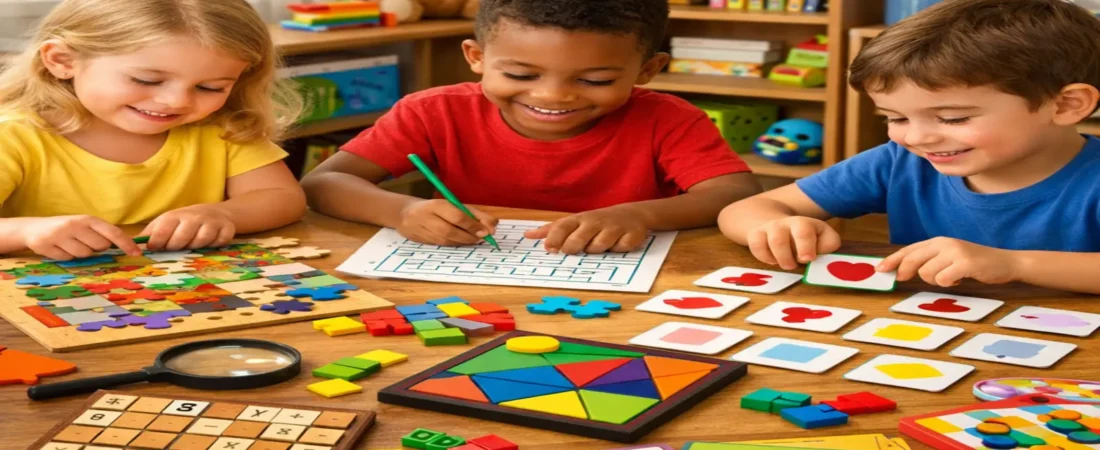
Some games make kids laugh for a minute. Puzzle games can do more than that. They pull children into a challenge, keep hands and minds busy, and make simple play feel rewarding. This guide is for parents, teachers, and caregivers who want easy ideas that actually get used. Inside, you will find kids puzzle games sorted by type, age fit, and everyday setting. So whether you need a rainy-day activity, a classroom brain break, or a quiet travel game, you will have plenty of options.
Quick Answer
Kids puzzle games are play activities that ask children to match, sort, solve, build, or figure something out. They can be digital or screen-free, simple or more challenging. The best ones match a child’s age, patience, and interests.
TL;DR
• Start with simple games kids can finish
• Match puzzle type to age and mood
• Use short rounds for better focus
• Mix screen-free and digital options
• Keep a few travel-friendly favorites ready
Why Kids Puzzle Games Stay So Popular
Puzzle games feel different from many other activities. They give kids a goal, a challenge, and a clear finish. Because of that, children often want to try one more round.
They also fit many moods. Some work well for quiet time, while others are great for teams. Meanwhile, adults like that puzzle games can be easy to set up.
• They give play a clear purpose
• Finished puzzles feel deeply satisfying
• Short rounds fit busy days well
• Kids enjoy spotting patterns quickly
• Challenges can grow with practice
• Quiet games help settle energy
• Many puzzles work solo or together
• Different formats keep boredom away
• Mistakes feel safe and fixable
• Simple rules help kids start fast
• Replays often feel fresh again
• Small wins build steady confidence
What Counts as a Kids Puzzle Game
A kids puzzle game is any game that asks a child to solve something. That can mean matching pieces, following clues, finding patterns, or building the right answer. In other words, the category is wider than many people think.
Some puzzle games happen on paper. Others use cards, blocks, apps, or household objects. So you can choose what fits your space and your child.
• Jigsaw pieces forming one picture
• Mazes with one clear exit
• Matching cards turned face down
• Logic clues with one solution
• Word searches for simple vocabulary
• Number games with playful twists
• Hidden-object scenes full of details
• Shape sorting for younger children
• Rebus puzzles with picture clues
• Tangram builds using few pieces
• Sliding puzzles that need planning
• DIY puzzles made from paper
How to Pick the Right Puzzle Game by Age
Age gives you a starting point, but it is not the whole story. Some children love challenge early, while others need quick success first. So look at both reading level and patience.
Begin with familiar pictures or rules. Then raise the challenge slowly as confidence grows. As a result, kids stay engaged instead of overwhelmed.
• Toddlers need large pieces and simple goals
• Preschoolers enjoy colors, animals, and shapes
• Early readers like picture-based clues
• Older kids handle layered instructions better
• Short games work for restless moods
• Longer puzzles suit calm afternoons
• Choose themes your child already loves
• Start easier than you expect
• Add challenge after repeated success
• Use hints before stepping in fully
• Team play helps mixed-age groups
• Stop while interest stays high
Easy Puzzle Games for Younger Kids
Younger kids do best with fast feedback. They want to see progress right away. That is why simple matching, sorting, and shape games work so well.
Keep directions short and concrete. Also, choose games with bright visuals and clear goals. That makes starting feel easy.
• Shape sorter bins with simple choices
• Chunky peg puzzles with knobs
• Animal matching cards on the floor
• Color sort trays with pom-poms
• Picture dominoes using familiar objects
• Big-piece vehicle jigsaws
• Shadow matching with toy animals
• Sticker path games on paper
• Find-the-same picture boards
• Simple three-piece sequence cards
• Block pattern copy challenges
• Soft felt board matching games
Jigsaw and Picture Puzzle Games
Jigsaw games are classic for a reason. Kids can see the goal and work toward it one piece at a time. Because of this, the format feels both calm and satisfying.
Picture puzzles also help children notice edges, colors, and missing parts. Start small, then move toward more pieces later.
• Begin with border pieces first
• Sort by color before building
• Try wooden puzzles for beginners
• Use floor space for large sets
• Choose favorite animals or vehicles
• Rotate themes to keep interest high
• Snapshot the box for reference
• Work in pairs for teamwork
• Time short rounds for fun
• Store pieces in zipper bags
• Try cut-apart postcard puzzles
• Use foam mats under puzzles
Logic Puzzle Games for Careful Thinkers
Logic games ask kids to slow down and think beyond the first guess. They are great for children who enjoy clues and patterns. Still, the best ones stay fair and clear.
Read the setup slowly. Then let kids test ideas before helping. That pause is part of the fun.
• Grid clues with simple categories
• Which pet belongs to whom games
• Pattern block challenge cards
• Rebus clues with obvious answers
• “Which one fits?” picture logic
• Sequence puzzles with missing steps
• “Odd one out” sorting cards
• Clue cards with color hints
• Mini detective case puzzles
• One-rule-at-a-time deduction games
• Tangram silhouette copy tasks
• Object placement challenge mats
Memory and Matching Puzzle Games
Memory games stay popular because they are easy to learn. Flip, remember, and match. That simple loop works for many ages.
These games also fit short pockets of time. So they are great before dinner, during class transitions, or on road trips.
• Face-down card match races
• Sound matching with hidden containers
• Picture pair trays for preschoolers
• Memory apps with short levels
• Matching socks from laundry piles
• Lid-and-container find-the-pair games
• Shadow and object memory boards
• Letter pair flip cards
• Seasonal symbol matching rounds
• Animal baby-and-parent match sets
• Color memory trays with covers
• Quick-view tray recall games
Maze and Path Puzzle Games
Maze games are easy to start and easy to repeat. Kids can trace, erase, and try again. Because of that, they feel low-pressure.
Path puzzles also teach patience. A child has to plan before moving forward. That small habit helps in many other games too.
• Pencil mazes in activity books
• Dry-erase maze boards
• Tape mazes across the floor
• String path challenges on cardboard
• Marble run path planning
• Road map tracing games
• Dot-to-dot journey sheets
• Find the safe exit pages
• Maze apps with simple controls
• Obstacle path arrows on paper
• Finger-trace laminated maze cards
• Build-your-own hallway maze challenge
Word and Letter Puzzle Games
Word puzzle games work best when they stay playful. Kids do not need long lists or hard vocabulary. Instead, simple searches and picture clues can do the job.
These are especially helpful for readers who like language games. Even so, adults can read clues aloud for younger children.
• Easy word searches with themes
• Letter match bingo cards
• Rhyming pair puzzles
• Rebus clues with pictures
• Alphabet order strip games
• Beginning sound matching boards
• Missing-letter clip cards
• Unscramble simple three-letter words
• Hidden word hunts at home
• Sight word maze sheets
• Category sort by first letter
• Build-a-word puzzle wheels
Math and Number Puzzle Games
Number puzzle games feel lighter when they stay visual. Kids often do better with counters, shapes, or short patterns. So keep the challenge playful.
Try these during homework breaks or morning table time. A quick number puzzle can warm up the brain without feeling heavy.
• Number sequence cards in order
• Count-and-match clip boards
• Shape pattern train puzzles
• Dice total match games
• Missing number ladder cards
• Greater-or-less symbol sort
• Simple sudoku with pictures
• Number maze to target total
• Domino equation matching
• Ten-frame puzzle boards
• Skip-count hop puzzles
• Coin sorting challenge trays
Printable and Screen-Free Puzzle Games
Screen-free puzzle games are handy because they travel well. They also keep setup simple. A printer, pencil, or stack of cards is often enough.
Printable games help adults stay flexible too. You can use one sheet for quiet time, class centers, or restaurant waits. That makes them easy to keep around.
• Print mazes for quick waits
• Pack mini notebooks of puzzles
• Use binder clips for task cards
• Keep crayons with puzzle sheets
• Fold paper for homemade fortune puzzles
• Make cut-and-match picture strips
• Try crossword pages for older kids
• Use clipboards during travel
• Create scavenger hunt clue pages
• Laminate favorites for reuse
• Keep answer keys separate
• Store pages in theme folders
Best Ways to Use Puzzle Games at Home, in Class, and on Trips
A good puzzle game becomes more useful when you match it to the moment. Quiet room? Try a jigsaw. Busy group? Use matching or quick logic cards instead.
Think about mood before type. Also, keep a few low-prep options ready. That way you can use them without much planning.
• Start mornings with one short puzzle
• Use after-school calm-down rounds
• Add puzzles to indoor recess bins
• Keep travel puzzles in seat pockets
• Rotate options every few days
• Pair older and younger siblings together
• Use timers for playful challenge
• Let kids choose the next game
• Build a weekend puzzle basket
• Try puzzle stations at parties
• Use one puzzle as a reward
• End with an easy win
FAQs
What age is best for kids puzzle games?
Most children can start with simple puzzle play very early. Large-piece and matching games work for toddlers, while older kids can handle logic, word, and number challenges. The best pick depends on attention span and interest.
Are puzzle games good for classrooms?
Yes, many puzzle games fit warm-ups, centers, fast-finisher work, and brain breaks. They are often easy to start and easy to stop. That makes them useful during busy school days.
What are the best screen-free puzzle games for kids?
Jigsaws, mazes, matching cards, tangrams, word searches, and simple logic cards are all strong choices. They travel well and need little setup. As a result, they work nicely at home and on trips.
Are online puzzle games safe for children?
Some are, but adults should still choose carefully. Look for simple controls, clear goals, and child-friendly design. It also helps to stick with trusted sites and stay nearby.
How many puzzle games should kids do at once?
A short set usually works best. One or two games can be enough for younger children, while older kids may enjoy a longer session. Stop while the activity still feels fun.
What type of puzzle game helps with careful thinking?
Logic games, mazes, tangrams, and clue-based puzzles are all strong options. They ask kids to slow down, test ideas, and notice patterns. That makes them a good fit for thoughtful players.
Conclusion
Puzzle games do not need to be fancy to work well. A simple maze, matching deck, or jigsaw can create real fun in a small moment. Because of that, they fit daily life better than many people expect. Start with the easiest type your child will actually enjoy. Then add new formats as confidence grows. Little changes keep the activity fresh. Most of all, kids puzzle games give children a chance to play and think at the same time. Pick one type, try a short round, and build from there.

Christopher McLagan is a celebrated riddle maker known for crafting clever brain teasers and mind-bending puzzles. His work blends classic riddles, logic challenges, and lateral thinking brain teasers designed to spark curiosity and critical thinking. Widely admired in online puzzle communities, McLagan creates engaging riddle questions and answers for both kids and adults. His signature style delivers surprising twists, clean humor, and satisfying “aha” moments that keep readers coming back for more.