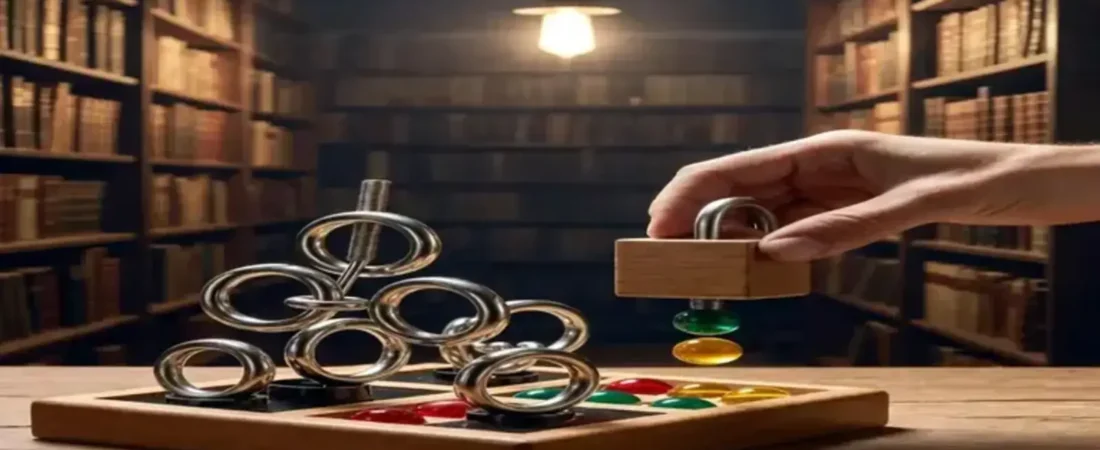
Some puzzles feel fun for a minute. Others make you stop, stare, and rethink everything. That second kind is what this guide is built for. Here, you will get hard logic puzzles with answers, not random trick questions. Each one is meant to test deduction, timing, or careful reading. You can solve them alone, use them for game night, or challenge a friend. Read the setup, pause, and try each puzzle before checking the answer.
Quick Answer
Hard logic puzzles with answers give you a fair challenge, then reward careful thinking. The best ones look confusing at first, yet every clue matters.
TL;DR
• Hard puzzles reward patience over speed
• Strong clues beat random surprises every time
• Write facts down before guessing
• Timing puzzles need order, not luck
• Wording often hides the key detail
What Makes a Logic Puzzle Hard
A hard puzzle does not need fancy words. Instead, it needs clean rules, hidden patterns, and one or two tempting mistakes.
Good hard puzzles also feel fair. Even when the answer surprises you, the clues still support it.
• Fair rules create satisfying difficulty
• Hidden assumptions often cause wrong turns
• Strong puzzles punish lazy reading
• Short clues can carry huge weight
• Timing questions reward smart sequencing
• Statement puzzles test internal consistency
• Visual tasks challenge mental flexibility
• Best puzzles hide simple structures
• Misdirection works when clues stay honest
• Elegant answers feel obvious later
• Hard does not mean impossible
• Clean wording keeps the challenge pure
How to Approach Hard Logic Puzzles
First, slow down. Many hard puzzles are lost in the first ten seconds.
Next, separate facts from guesses. After that, test one small idea at a time until the picture clears.
• Read every condition twice first
• Mark fixed facts before theories
• Sketch simple tables when needed
• Eliminate impossible options early
• Check whether order changes outcomes
• Notice words like always or only
• Pause before reading any solution
• Ask what the puzzle hides
• Try the smallest valid step
• Reframe the problem visually
• Watch for numbers that mislead
• Verify the final answer backward
Puzzle 1: The Mislabeled Boxes
Three boxes sit on a shelf. One holds only apples, one holds only oranges, and one holds both. Every label is wrong. You may take one fruit from one box. Which box should you pick, and how do you relabel them all?
Take a moment before reading on. The trick is to use the one box that cannot be what it says.
• Setup: Three labels are all wrong
• Choices shown: apples, oranges, mixed
• Single action allowed: one fruit draw
• Start with the mixed-labeled box
• That box cannot be mixed
• Suppose you pull an apple
• Then box must contain apples only
• Orange-labeled box cannot be oranges
• So orange label becomes mixed
• Remaining box must hold oranges
• Final relabeling follows by elimination
• Key lesson: wrong labels help
Puzzle 2: The Bridge at Night
Four people need to cross a bridge at night. One takes 1 minute, one takes 2, one takes 7, and one takes 10. They share one flashlight, and only two may cross at once. What is the fastest total time?
This puzzle punishes the obvious plan. You must use the two fastest walkers as helpers.
• Travelers move at 1, 2, 7, 10
• One flashlight must return each time
• Two-person crossings take slower speed
• Fastest pair crosses in 2
• One-minute walker returns alone
• Slowest pair crosses in 10
• Two-minute walker brings light back
• Fast pair crosses again in 2
• Total time becomes 15
• Common error sends ten repeatedly
• Best strategy protects slow crossings
• Order beats raw individual speed
Puzzle 3: Three Switches and One Room
Outside a closed room are three switches. Inside the room is one light bulb. You may set the switches any way you want, but you may enter the room only once. How do you find which switch controls the bulb?
This one uses both sight and touch. Temperature becomes a clue.
• Three switches sit outside door
• One bulb waits inside room
• Only one room entry allowed
• Turn first switch on briefly
• Leave second switch on
• Turn first switch back off
• Enter room after a minute
• Lit bulb matches second switch
• Warm dark bulb matches first
• Cold dark bulb matches third
• Heat becomes the hidden clue
• Physical evidence solves the puzzle
Puzzle 4: The Two Guards and Two Doors
Two guards stand by two doors. One door leads to safety, and one leads to disaster. One guard always lies, and one always tells the truth. You may ask one question to one guard. What should you ask?
This puzzle works because both guards point the same wrong way under one smart question.
• Two doors offer opposite outcomes
• One guard lies every time
• Other guard speaks truth always
• Ask either guard one question
• Use the other guard in wording
• Question: Which door would he indicate?
• Both guards identify the wrong door
• Choose the opposite door instead
• Truthful guard reports liar’s false answer
• Lying guard lies about truthful answer
• Same result appears from either
• Indirect wording creates certainty
Puzzle 5: The Poisoned Drink
A prisoner sees two drinks. One is poisoned, and one is safe. The jailer says, “You choose first, then I take the other.” The prisoner survives every time by switching glasses after the jailer speaks. How?
Look closely at where the poison must be. The danger is not in the drink.
• Prisoner faces two equal glasses
• Jailer lets prisoner choose first
• Jailer then takes remaining glass
• Prisoner survives by switching choices
• Drinks themselves are both harmless
• Poison sits on one rim
• Jailer expects first chosen rim
• Prisoner swaps after contact pattern changes
• Jailer now drinks poisoned edge
• Puzzle hinges on hidden placement
• Surface clues matter as much
• Assumptions about liquid mislead solvers
Puzzle 6: The Five Sisters
Five sisters are busy. Ann is reading, Beth is cooking, Cara is playing chess, Dana is doing laundry. What is the fifth sister, Emma, doing?
This one feels harder than it is because readers rush. Slow down and match activities.
• Five sisters share one home
• Ann reads quietly in corner
• Beth cooks dinner nearby
• Cara is playing chess
• Chess needs a second player
• Dana handles the laundry
• Emma must face Cara
• So Emma plays chess too
• No extra trick is needed
• Careful reading solves everything
• Missing partner is the clue
• Simplicity makes this memorable
Puzzle 7: The Birthday Cake Candles
A girl had a birthday party and put twelve candles on her cake. The wind blew out three, and she removed four more before serving. How many candles remained on the cake?
The puzzle looks numerical, yet it is really about wording. Focus on what “remained on the cake” means.
• Cake starts with twelve candles
• Wind blows out three candles
• Four more get removed manually
• Removed candles leave the cake
• Blown-out candles still stay placed
• Lit candles also remain standing
• Count candles still on cake
• That means eight remained
• Three extinguished plus five lit
• Many people answer three first
• Others wrongly subtract all seven
• Exact wording drives the result
Puzzle 8: The Coin Line Challenge
Ten coins sit in a straight line. Move only one coin to make the line contain five pairs. How can that happen?
Picture the coins differently. A line can still include overlap.
• Ten coins form one straight row
• Only one coin may move
• Goal says create five pairs
• Place one end coin atop another
• Stacked coins count as one pair
• Continue reading line left to right
• You now have paired positions
• Five pair spots become visible
• Puzzle changes shape, not count
• Flat thinking blocks the answer
• Overlap is fully allowed
• Visual flexibility wins here
Puzzle 9: The Island of Knights and Knaves
On an island, knights always tell the truth and knaves always lie. You meet Alex and Blair. Alex says, “We are both knaves.” What are they?
This puzzle turns on self-reference. One sentence destroys one option immediately.
• Knights never make false claims
• Knaves never make true claims
• Alex says both are knaves
• If Alex were knight, impossible
• Knight cannot call self knave
• So Alex must be knave
• Then Alex’s statement is false
• They are not both knaves
• Therefore Blair must be knight
• Final roles: Alex knave, Blair knight
• Self-contradiction exposes the speaker
• Tiny statements can decide all
Puzzle 10: The Missing Dollar Trap
Three friends pay $30 for a room. Later, the clerk realizes it should cost $25 and sends back $5. The bellhop keeps $2 and gives back $1 to each friend. Now each friend paid $9, for $27 total. Add the bellhop’s $2, and you get $29. Where did the missing dollar go?
No dollar is missing. The puzzle adds numbers that should not be added together.
• Original payment totals thirty dollars
• Correct room charge equals twenty-five
• Bellhop keeps two dollars secretly
• Friends receive three dollars back
• Each friend net pays nine
• Their combined net payment is twenty-seven
• That twenty-seven already includes bellhop’s two
• Do not add two again
• Proper split is twenty-five plus two
• Then add three refunded dollars
• Total returns to thirty perfectly
• Bad math creates the illusion
FAQs
What is the hardest type of logic puzzle?
That depends on the solver. Many people struggle most with statement puzzles and timing puzzles because one wrong assumption ruins everything.
Are hard logic puzzles and riddles the same thing?
Not always. Riddles often use wordplay, while logic puzzles lean more on deduction, order, and consistency.
Do I need math skills for hard logic puzzles?
Usually not. Most hard logic puzzles reward careful reading and structured thinking more than calculation.
How can I get better at solving them?
Practice helps, but method matters more. Write down facts, test small steps, and check your answer backward.
Are printable logic grid puzzles harder than short puzzles?
They can be. Grid puzzles often take longer because they require tracking many clues at once.
Why do classic puzzles still feel hard?
Because they target habits, not knowledge. Even familiar setups stay tough when they hide a simple twist.
Conclusion
Hard puzzles stay popular for a reason. They feel tough, fair, and deeply satisfying when the answer clicks. The best ones also teach patience. You learn to slow down, sort facts, and stop trusting your first guess. So, if you came here for hard logic puzzles with answers, you now have ten solid tests to revisit anytime. Solve them again later, and you may notice even more in the clues.

Christopher McLagan is a celebrated riddle maker known for crafting clever brain teasers and mind-bending puzzles. His work blends classic riddles, logic challenges, and lateral thinking brain teasers designed to spark curiosity and critical thinking. Widely admired in online puzzle communities, McLagan creates engaging riddle questions and answers for both kids and adults. His signature style delivers surprising twists, clean humor, and satisfying “aha” moments that keep readers coming back for more.