
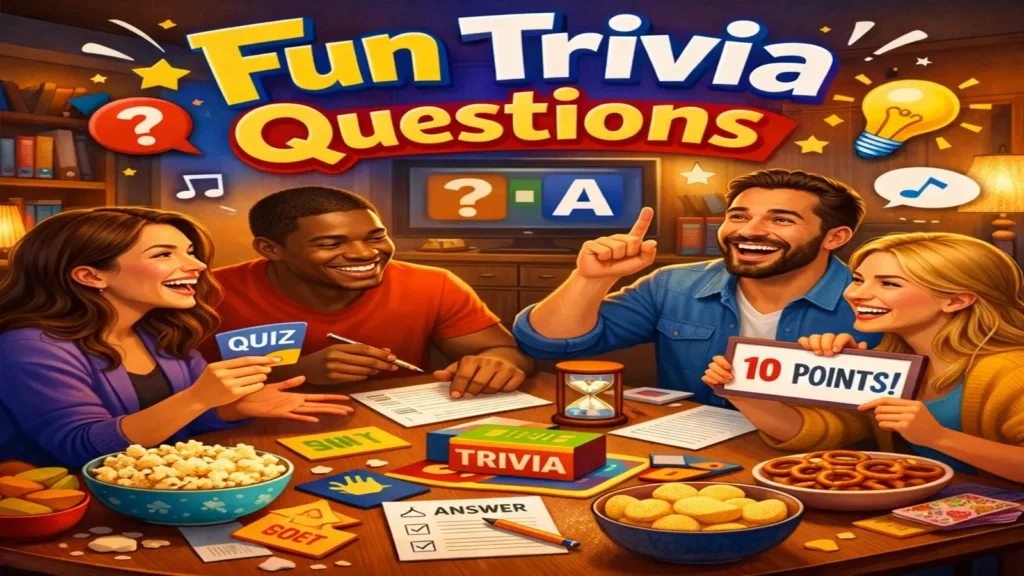
Getting a group to laugh, think, and join in can feel tricky. That is why the right question list matters. A strong set of Fun Trivia Questions gives everyone a chance to play, even if they are not quiz experts. This guide is for party hosts, families, teachers, and friend groups. You can use it to build a fast round, plan a full game night, or just spark conversation. The goal is simple: make trivia easy to start and hard to stop.
Quick Answer
Fun trivia questions are short, clear, and surprising. They should feel answerable, even when they make people think. The best fun trivia questions also fit the mood of the group.
TL;DR
• Use broad topics before niche ones
• Mix easy, medium, and surprise questions
• Match categories to the group’s age
• Keep answers short and easy to verify
• End each round with a fun closer
What Makes Trivia Questions Fun
Good trivia feels fair right away. Players should understand the question fast. However, the answer should still make them pause.
The best prompts create a small spark of surprise. They sound simple, yet they make people lean in.
• Clear wording beats clever confusion
• Familiar topics help shy players join
• Surprising answers create louder reactions
• Short questions keep the pace moving
• One fact per question works best
• Visual topics are easier to picture
• Funny details make answers memorable
• Balanced difficulty keeps teams engaged
• Strong categories reduce dead silence
• Fast reveals build better momentum
• Everyday facts feel less intimidating
• Variety keeps the round from dragging
General Knowledge Trivia That Works for Almost Anyone
General knowledge is the safest place to start. It gives every player a fair shot. As a result, the room warms up fast.
This category works well for families, parties, and mixed-age groups. It also helps new teams feel confident.
• Use capitals, planets, and landmarks
• Pick facts taught in school
• Choose famous inventions and symbols
• Include well-known holidays and customs
• Ask about common animals and habitats
• Use weather and season basics
• Mention iconic foods and dishes
• Bring in household brands sparingly
• Add simple world records carefully
• Choose famous books and characters
• Ask about common body facts
• Include easy transportation questions
Pop Culture Trivia That Feels Fresh and Playful
Pop culture brings fast energy to the room. People love questions they almost know. Meanwhile, small debates make the game livelier.
This section works best with friends, teens, and casual parties. Keep the references broad enough for most players.
• Use hit shows people binge-watch
• Ask about famous catchphrases and memes
• Include major award winners
• Mention blockbuster franchises with care
• Use celebrity facts everyone has heard
• Ask about viral songs or dances
• Bring in famous animated characters
• Choose iconic red carpet moments
• Use toy and gaming nostalgia
• Mention holiday movie favorites
• Ask about famous sidekicks
• Include popular streaming series
Movie and TV Trivia Everyone Wants to Answer
Movies and shows create instant recognition. Even quiet players usually jump in here. Because of that, this category feels social and warm.
Try a mix of old favorites and newer hits. That balance helps every age group contribute.
• Ask about famous movie settings
• Use memorable TV family names
• Mention iconic opening scenes
• Choose famous fictional schools
• Include beloved sitcom workplaces
• Ask about famous movie pets
• Use superhero alter ego basics
• Mention classic cartoon duos
• Ask about magical objects
• Include well-known space sagas
• Use holiday special moments
• Mention famous detective characters
Music Trivia That Gets the Room Talking
Music trivia feels personal in a good way. It sparks memories fast. Still, it works best when you keep the scope broad.
Pick artists, songs, and moments many people know. Then add one or two playful twists.
• Ask about band name origins
• Use chorus lines people recall
• Mention famous halftime performers
• Include chart-topping debut singles
• Ask about iconic music videos
• Use instruments everyone can name
• Mention famous duets and pairs
• Include soundtrack songs from hits
• Ask about holiday classics
• Use one-hit wonder examples
• Mention legendary stage names
• Include famous album cover clues
Sports Trivia That Adds Friendly Competition
Sports questions can wake up a quiet room. They bring quick answers and strong opinions. On the other hand, too many stats can slow things down.
Stay with famous teams, events, and rules. That keeps the game open to casual fans.
• Ask about Olympic sport basics
• Use famous championship trophies
• Mention simple scoring terms
• Include legendary athlete nicknames
• Ask about team mascot themes
• Use well-known stadium cities
• Mention major sports holidays
• Include common referee signals
• Ask about famous rivalries
• Use record-breaking moments lightly
• Mention popular ball shapes
• Include famous jersey numbers
Food Trivia That Is Easy, Funny, and Shareable
Food trivia is a crowd-pleaser. Almost everyone has an opinion about snacks, drinks, or desserts. So, this section often gets laughs.
Keep the questions light and familiar. Players should picture the answer before they say it.
• Ask about famous pizza toppings
• Use candy bar ingredients
• Mention breakfast cereal mascots
• Include holiday dessert basics
• Ask about classic soda flavors
• Use fruit and vegetable colors
• Mention famous sandwich names
• Include fast-food slogans carefully
• Ask about picnic side dishes
• Use coffee drink differences
• Mention spicy pepper rankings lightly
• Include world-famous comfort foods
Science and Nature Trivia That Sounds Smart but Simple
Science does not need to feel hard. In fact, it often becomes more fun when the facts are visual. Nature adds wonder without much effort.
Choose facts people can picture right away. That makes answers feel satisfying, not stressful.
• Ask about animal group names
• Use planet order memory tricks
• Mention weather tool basics
• Include body organ functions
• Ask about insect life stages
• Use ocean and river facts
• Mention tree and leaf types
• Include moon phase basics
• Ask about volcano and lava terms
• Use bird flight facts
• Mention desert survival features
• Include common gem colors
History and Geography Trivia With Broad Appeal
History and geography work well together. One gives stories, while the other gives place. Together, they feel rich but still easy to follow.
Focus on famous people, landmarks, and events. Avoid deep dates unless the group wants a challenge.
• Ask about national landmarks
• Use famous explorers and routes
• Mention ancient world wonders
• Include state or country nicknames
• Ask about flag color meanings
• Use major river locations
• Mention first presidents or leaders
• Include famous walls and bridges
• Ask about mountain range names
• Use map direction basics
• Mention historical inventions and dates
• Include city nickname clues
Family-Friendly Trivia for Kids and Mixed Ages
Family rounds should feel welcoming from the start. Young players need early wins. At the same time, adults should still have fun.
Choose topics that sound cheerful and safe. That way, everyone stays involved.
• Ask about zoo animal sounds
• Use fairy tale character names
• Mention school subject favorites
• Include cartoon friend groups
• Ask about colors in rainbows
• Use simple space facts
• Mention famous board game pieces
• Include farm animal babies
• Ask about holiday traditions
• Use superhero symbol basics
• Mention simple rhyme endings
• Include favorite ice cream flavors
Adult Trivia for Parties and Friend Groups
Adult trivia should feel lively, not awkward. It works best when the facts are clever and social. Instead of going too hard, aim for fast fun.
This category fits dinner parties, birthdays, and friend hangouts. Keep the tone smart, warm, and easygoing.
• Ask about famous vacation spots
• Use office culture references
• Mention famous ad slogans
• Include cocktail ingredient basics
• Ask about home design trends
• Use wedding tradition facts
• Mention dating app culture lightly
• Include travel packing essentials
• Ask about famous fashion pieces
• Use classic car brand clues
• Mention workplace buzzwords sparingly
• Include common phone app habits
How to Pick the Right Trivia Questions for Your Group
A great host reads the room. Some groups want easy laughs. Others want close competition and a little pressure.
Start broad, then adjust. If energy drops, switch categories fast.
• Begin with an easy warm-up round
• Save niche topics for later
• Mix serious facts with silly ones
• Use shorter rounds for kids
• Add one visual question sometimes
• Keep answer checks quick
• Rotate categories every few questions
• Avoid topics that split the room
• Let teams choose a category
• End with a stronger final round
• Write tie-breakers before starting
• Test unclear wording out loud
FAQs
What are fun trivia questions best used for?
They work well at parties, family nights, classrooms, and team events. They also help people talk more easily. A good question can turn a quiet room into a lively one.
How many trivia questions should one round have?
A short round often works best with 8 to 12 questions. That keeps the pace strong and attention high. Longer games can use several rounds instead.
Should trivia questions always be easy?
Not always. Easy questions help people join in early. However, a few harder ones make the game more exciting.
What categories are best for mixed groups?
General knowledge, food, movies, music, and simple geography usually work well. These topics feel familiar to many players. They also invite quick guesses.
How do I make trivia more fun for kids?
Use short questions, bright topics, and fast wins. Also, keep the answers easy to picture. That helps kids stay confident and involved.
Can adults and kids play the same trivia game?
Yes, as long as the questions stay clean and clear. A mixed game works better with broad categories. You can also split harder questions into a bonus round.
Conclusion
Great trivia does more than test memory. It helps people relax, laugh, and join the moment. That is why the best games feel simple at first. You do not need a huge setup to make it work. You just need the right mix of topics, pacing, and tone. Start broad, keep it moving, and let the room guide you. When you build around Fun Trivia Questions, game night becomes easier to host and more fun to remember.

A playful wordsmith with a knack for misdirection, I craft riddles that tease the brain. My puzzles blend clever clues, clean logic, and a dash of humor—built to challenge beginners and stump seasoned solvers alike. From short, punchy brainteasers to layered mysteries with hidden meanings, I love turning everyday ideas into mind-bending questions that invite curiosity and conversation. When I’m not twisting words into puzzles, I’m collecting strange facts, testing new clue styles, and fine-tuning the art of fair—but fiendish—fun.