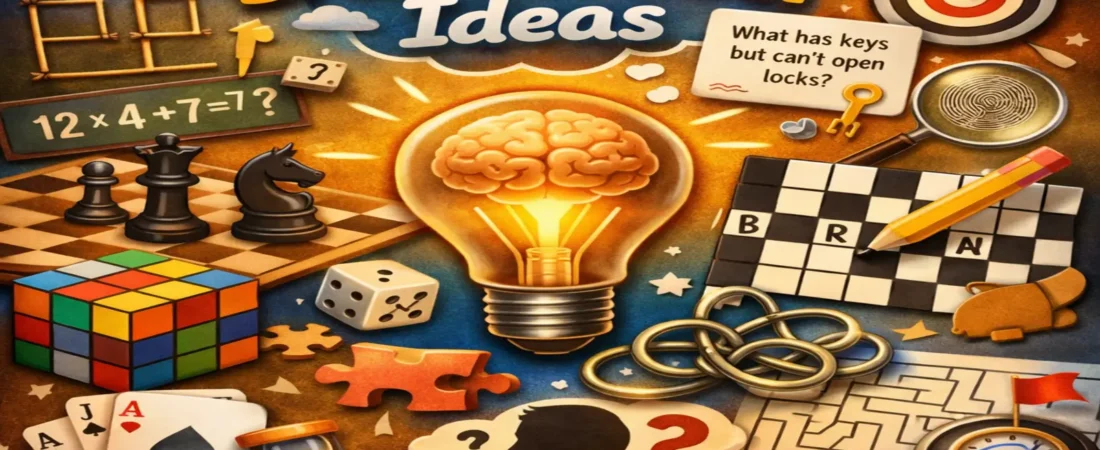
Sometimes you need a quick classroom warm-up. Other times, you want a smarter family-night activity or a better solo break. Meanwhile, many adults just want something more engaging than mindless scrolling.
That is where brain teaser ideas help. They are flexible, low-cost, and easy to fit into real life. This guide is for parents, teachers, group leaders, and curious adults who want practical options that actually work. You will see which types fit best, how to choose them, and how to keep things fun without turning it into a chore.
Quick Answer
Brain teaser ideas are simple challenges that make people think in a fresh way. They can be verbal, visual, logical, printed, digital, solo, or social. The best brain teaser ideas match the person, the setting, and the time available.
TL;DR
• Brain teaser ideas work in many settings
• Short rounds usually beat long sessions
• Kids need clarity and quick wins
• Adults often want challenge and variety
• Printables help when screens feel tiring
• Apps make daily practice easier
What Brain Teaser Ideas Really Include
Many people picture only riddles at first. However, the category is much wider than that.
It includes anything that pushes players to notice patterns, test logic, or rethink assumptions. Because of this, the best idea may change with the moment.
• Riddles stretch flexible word thinking
• Logic clues reward patient deduction
• Rebus prompts blend pictures and phrases
• Number twists suit math-minded players
• Pattern tasks build sequence spotting
• Visual puzzles sharpen observation skills
• Code clues support step-by-step thinking
• Matching games help younger learners start
• Card prompts suit grab-and-go play
• App challenges guide short daily rounds
• Worksheet packs support offline practice
• Team puzzles encourage shared reasoning
Best Types of Brain Teaser Ideas
Different formats shine for different reasons. For example, a picture clue can hook a group fast, while a logic page suits quiet time.
So, instead of searching for one perfect idea, match the format to the setting. That choice usually matters most.
• Word puzzles fit reading-heavy groups
• Visual teasers welcome mixed skill levels
• Number games suit math-loving minds
• Deduction tasks reward slower thinkers
• Trick questions spark fast laughter
• Hands-on puzzles please tactile learners
• Timed rounds raise energy quickly
• Open clues support creative guessing
• Partner tasks ease social pressure
• Daily drills build simple habits
• Printable packs save prep time
• Whiteboard prompts work for shared play
Brain Teaser Ideas for Adults
Adults usually want ideas that feel clever and worth their time. They also prefer options that fit busy schedules.
Because of that, the best adult picks balance challenge with convenience. A short session can still feel satisfying.
• Lateral prompts spark deeper conversation
• Logic books reward steady attention
• Daily crossword rounds feel familiar
• Sudoku brings calm structure
• Escape-page clues add tension
• Sequence tasks stretch pattern recognition
• Debate riddles fit lunch breaks
• Newspaper puzzles support routine
• Tangram builds hands-on focus
• Lumosity sessions suit packed days
• Peak workouts fit quick resets
• Elevate rounds mix reading and numbers
Brain Teaser Ideas for Kids
Kids often enjoy fast wins and clear rules. Long directions can flatten the fun right away.
That is why playful, short ideas work best. Also, visible progress keeps interest high.
• Picture riddles invite quick engagement
• Color patterns feel easy to enter
• Simple mazes keep attention moving
• Find-the-rule tasks build confidence
• Mini rebus clues add humor
• Matching pairs train memory gently
• Number tricks feel surprising
• Silly questions welcome brave guesses
• Cut-and-sort tasks add movement
• Puzzle jars support easy reuse
• Sticker clues motivate younger players
• Answer reveals should stay upbeat
Brain Teaser Ideas for Classrooms
Teachers need ideas that start fast and end cleanly. Meanwhile, students respond best when the goal feels clear.
Classroom teasers work well as openers, transitions, and early-finisher tasks. The strongest options need little prep and quick explanation.
• Bell-ringer puzzles start class calmly
• Morning prompts build focus early
• Whiteboard clues invite shared thinking
• Partner tasks support discussion skills
• Pattern work warms up math blocks
• Word twists energize language lessons
• Rebus cards help during transitions
• Logic sheets fit early finishers
• Team stations encourage cooperation
• Puzzle bins support independent practice
• Short timers keep pacing brisk
• Answer talks model clear reasoning
Brain Teaser Ideas for Groups
Group settings need easy rules and fast turns. Otherwise, energy drops before the fun begins.
Still, simple changes can make shared play much stronger. Quick pacing usually beats complicated structure.
• Round-robin riddles include everyone
• Team clue races lift excitement
• Mystery envelopes add suspense
• Guess-the-pattern rounds spark debate
• Family table prompts start conversation
• Party cards travel easily
• Small teams reduce performance pressure
• Hint tokens create fair support
• Scoreboards add friendly structure
• Twist rounds surprise returning players
• Mixed levels include more people
• One-minute limits curb overthinking
Brain Teaser Ideas for Solo Play
Solo ideas work best when they feel easy to begin. If setup drags, people often skip them.
Luckily, many strong options need only paper, a prompt, or a phone. Because of that, solo play fits tight schedules well.
• One-page logic feels manageable
• Daily riddles start instantly
• Pocket books travel well
• Solo escape sheets feel immersive
• Pattern notebooks allow custom practice
• Wooden wire puzzles slow the pace
• Chess problems sharpen planning
• Quiet timers add self-challenge
• Progress journals make wins visible
• Browser puzzles fill tiny gaps
• Repeats can reveal new moves
• Calm spaces improve focus
Online and App-Based Brain Teaser Ideas
Digital ideas win on convenience. You can start quickly, stop anytime, and return later.
However, not every digital format feels the same. Some lean playful, while others feel more structured.
• Browser games avoid install hassle
• Mobile rounds fit waiting rooms
• Brain Test favors quirky surprises
• Braindom leans into unexpected twists
• Lumosity organizes daily sets
• Peak offers fast skill drills
• Elevate personalizes short sessions
• Progress charts support consistency
• Notifications can reinforce routines
• Touch controls suit visual tasks
• Headphones help during travel play
• Short sessions limit screen fatigue
Offline and Printable Brain Teaser Ideas
No-screen options still matter for many families and teachers. They are easy to share and often easier to manage.
In addition, printed ideas travel well. One folder can cover a road trip, lesson gap, or quiet afternoon.
• Printable rebus pages cut prep
• Puzzle books suit long trips
• Flash cards support quick use
• Dry-erase sheets allow repeats
• Binder sets keep materials tidy
• Clipboard puzzles travel anywhere
• Wooden sets add tactile variety
• Math cards fit quiet practice
• Flights and cafes suit paper play
• Camping trips need no batteries
• Shared pages support side-by-side solving
• Printed keys simplify cleanup
How to Choose the Right Brain Teaser Idea
Choosing the right idea matters more than choosing the hardest one. A good fit feels fun, while a bad fit feels tiring.
So, start with a few simple filters. Age, energy, time, and setting usually tell you enough.
• Match challenge to current confidence
• Choose short rounds for tired minds
• Pick visual tasks for mixed abilities
• Use partner play for shy learners
• Save harder logic for calm moments
• Choose printables for structured settings
• Pick apps for habit-building goals
• Avoid dense text for young kids
• Look for quick recovery after mistakes
• Start easy, then raise challenge
• Keep the goal clear upfront
• Let interest guide the choice
How to Make Brain Teaser Ideas More Fun
Even a good idea can fall flat with the wrong setup. Often, one small tweak changes everything.
For example, you can add movement, a timer, or team play. As a result, the same prompt feels fresh again.
• Add music during fast rounds
• Rotate leaders each turn
• Offer hints after a pause
• Mix funny and serious prompts
• Use themes for special nights
• Let players write their own clues
• Try stations for bigger groups
• Celebrate clever guesses too
• Keep rounds short and lively
• Use rewards that stay simple
• End before energy fades
• Save favorites for rematches
A Simple 15-Minute Brain Teaser Plan
Many people stick with short routines better than big plans. A small habit feels easier to repeat.
So, build the week around variety. That way, the routine stays fresh without feeling random.
• Monday: one quick picture puzzle
• Tuesday: one short logic round
• Wednesday: one playful app session
• Thursday: one printable challenge page
• Friday: one family riddle moment
• Saturday: one tabletop puzzle activity
• Sunday: one quiet solo brain break
• Keep sessions under fifteen minutes
• Stop while interest stays high
• Track favorites in one notebook
• Switch formats when focus dips
• Repeat the easiest win first
FAQs
What are the easiest brain teaser ideas to start with?
Picture riddles, pattern games, and short trick questions are great first choices. They are easy to explain and feel less intimidating.
Are brain teaser ideas good for adults too?
Yes, many adults enjoy them because they offer a quick mental shift during busy days. Also, they often feel more engaging than passive screen time.
What brain teaser ideas work best in classrooms?
Bell-ringers, whiteboard clues, partner prompts, and early-finisher logic sheets work especially well. They are simple to launch and easy to manage.
Can brain teaser ideas work without screens?
Absolutely. Printable pages, puzzle books, card prompts, and wooden puzzles all work very well offline. Because of that, they fit travel, waiting rooms, and family time.
How long should a brain teaser session last?
Most people do best with short rounds, especially at first. Five to fifteen minutes is often enough to keep the challenge fun.
How do I make brain teaser ideas less frustrating?
Start below the hardest level, explain the goal clearly, and offer hints at the right time. In addition, switch formats when boredom starts to show.
Conclusion
Brain teaser ideas can fit almost any setting. They work at home, at school, during travel, and in quiet solo moments. What matters most is the match between the idea and the person. When that fit feels right, the challenge becomes inviting instead of draining. Start small, keep the rounds short, and mix formats as you go. With that approach, brain teaser ideas stay fresh, useful, and fun to repeat.

A modern riddle-maker who builds clever, pocket-sized puzzles with sharp wordplay and elegant misdirection. Her clues are clean, surprising, and designed to make you think twice—then smile when it clicks.