
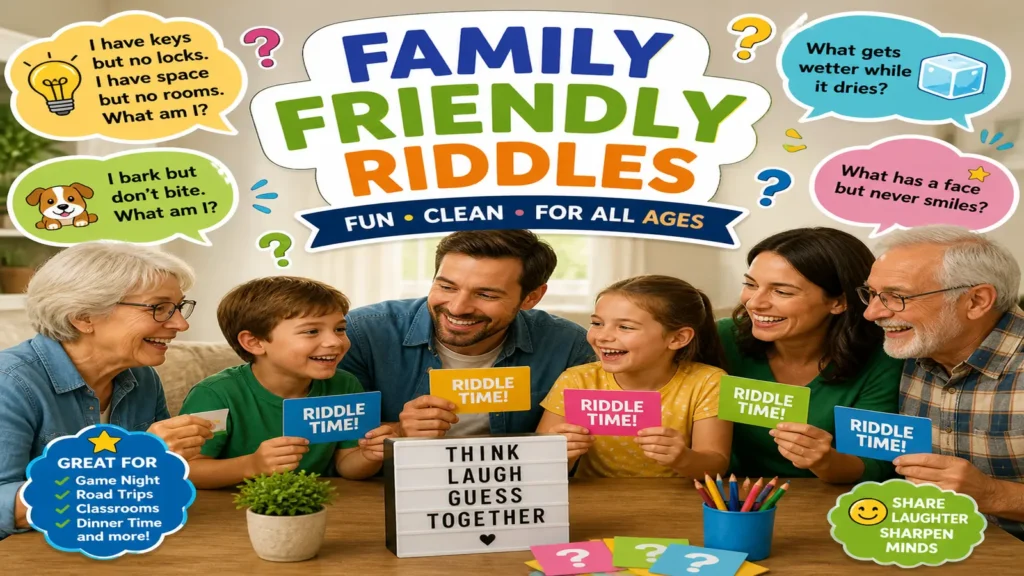
Riddles are small puzzles with big energy. They make people laugh, think, guess, and cheer together.
This guide is for parents, teachers, grandparents, and anyone planning simple fun. You will find family friendly riddles for game night, car rides, meals, parties, and class time.
Each section includes clean riddles with answers. Also, the riddles are grouped by use, so choosing one is easy.
Quick Answer
Family friendly riddles are clean brain teasers that kids and adults can enjoy together. They work best when they are short, fair, and fun to answer.
TL;DR
• Clean riddles work for mixed-age groups.
• Easy riddles help younger kids join.
• Tricky riddles keep adults engaged.
• Short riddles fit trips and meals.
• Game rules make guessing more exciting.
• Clear answers prevent family frustration.
Easy Family Friendly Riddles With Answers
Easy riddles are perfect when everyone is warming up. Also, they help younger players feel confident fast.
Use these when you want quick smiles. Then, move into trickier ones after everyone joins.
• What has hands but cannot clap? A clock.
• What gets wetter while it dries? A towel.
• What has keys but opens nothing? A piano.
• What has a face but never smiles? A clock.
• What has legs but never walks? A table.
• What can fill a room quietly? Light.
• What has teeth but cannot bite? A comb.
• What goes up but never returns? Age.
• What has one eye but cannot see? A needle.
• What has ears but cannot hear? Corn.
• What has a neck but no head? A bottle.
• What breaks before anyone uses it? An egg.
Funny Riddles for Family Game Night
Funny riddles work because the answer feels silly after guessing. However, the best ones stay clean and simple.
Read them with a playful voice. In addition, let kids explain why the answer works.
• Why did the banana visit school? To improve appeal.
• What room avoids every house? A mushroom.
• Why was the math book tired? Too many problems.
• What snack tells the best jokes? A pun-cake.
• Why did the cookie blush? It saw frosting.
• What fish loves music most? A tuna.
• Why did the broom rest? It felt swept away.
• What shoe tells secrets? A sneaker.
• Why did the orange stop rolling? It ran out of juice.
• What vegetable wins races? A runner bean.
• Why did the pencil dance? It had sharp moves.
• What cloud tells jokes? A laughing cumul-us.
Short Riddles for Kids and Parents
Short riddles are great for quick breaks. Also, they are easy to remember without cards.
Try these while waiting in line or setting the table. Because they are brief, everyone gets more turns.
• I fly without wings. What am I? Time.
• I shine at night. What am I? Moonlight.
• I bark without biting. What am I? A tree.
• I melt in warmth. What am I? Ice.
• I ring but lack fingers. What am I? Bell.
• I jump without legs. What am I? A spark.
• I fall but never trips. What am I? Rain.
• I open worlds silently. What am I? A book.
• I sleep during day. What am I? A star.
• I race without feet. What am I? Wind.
• I hide in shoes. What am I? Socks.
• I grow from words. What am I? A story.
Tricky Riddles That Are Still Fair
Tricky riddles should surprise people, not annoy them. So, keep the answer logical once revealed.
These are good for older kids and adults. Still, younger players can join with clues.
• What question can never be answered yes? Are you asleep?
• What travels everywhere while staying in place? A stamp.
• What begins with T, ends with T, and holds T? Teapot.
• What belongs to you but others use more? Your name.
• What has many rings but no fingers? A tree.
• What can be cracked, made, told, and played? A joke.
• What loses its head every morning? A pillow.
• What has cities but no people? A map.
• What has words but never speaks? A page.
• What can you catch but never throw? A cold.
• What is light yet hard to hold? A feather.
• What comes once in a minute? The letter M.
Animal Riddles for All Ages
Animal riddles bring instant interest because kids love guessing creatures. Also, adults enjoy the quick clues.
Use voices, sounds, or acting to add fun. Meanwhile, let younger kids make animal guesses first.
• I carry my home everywhere. What am I? Turtle.
• I roar loudly and wear a mane. What am I? Lion.
• I hop and keep babies tucked. What am I? Kangaroo.
• I buzz near flowers all day. What am I? Bee.
• I change colors to hide. What am I? Chameleon.
• I waddle, swim, and wear a tuxedo. What am I? Penguin.
• I spin webs without sewing. What am I? Spider.
• I have stripes and love grass. What am I? Zebra.
• I hoot at night from trees. What am I? Owl.
• I stretch my neck for leaves. What am I? Giraffe.
• I splash and carry a trunk. What am I? Elephant.
• I purr when I feel happy. What am I? Cat.
Food Riddles for Dinner Table Fun
Food riddles fit naturally at meals. In addition, they can turn a quiet dinner into a shared game.
Keep the mood relaxed. For example, let each person ask one riddle before dessert.
• I am yellow and peelable. What am I? Banana.
• I have layers and may cause tears. What am I? Onion.
• I am round, cheesy, and sliced. What am I? Pizza.
• I pop when heated. What am I? Popcorn.
• I am cold, sweet, and creamy. What am I? Ice cream.
• I crunch in salads and sandwiches. What am I? Lettuce.
• I wear a green crown. What am I? Pineapple.
• I come in shells for breakfast. What am I? Egg.
• I am long, orange, and crunchy. What am I? Carrot.
• I turn brown inside toasters. What am I? Bread.
• I swim in bowls with milk. What am I? Cereal.
• I hide seeds outside my skin. What am I? Strawberry.
Road Trip Riddles for Screen-Free Fun
Road trip riddles work best when they are short. Also, answers should not need paper or math.
Take turns by seat row or age order. As a result, everyone gets fair playtime.
• I guide cars without speaking. What am I? Road sign.
• I carry bags across miles. What am I? Trunk.
• I shows places before arrival. What am I? Map.
• I click before the car moves. What am I? Seatbelt.
• I spins while staying attached. What am I? Tire.
• I sweep rain from glass. What am I? Wiper.
• I shine ahead after sunset. What am I? Headlight.
• I hold drinks during bumps. What am I? Cup holder.
• I marks miles on highways. What am I? Marker.
• I waits where drivers refuel. What am I? Gas station.
• I carries songs through speakers. What am I? Radio.
• I follows cars on sunny roads. What am I? Shadow.
Classroom and Homeschool Riddles
Riddles make learning feel like play. Also, they help children listen closely and think flexibly.
Use one as a warmup before reading or math. Then, ask students to explain their reasoning.
• I hold lessons without talking. What am I? Whiteboard.
• I sharpens ideas and pencils. What am I? Sharpener.
• I carries homework safely home. What am I? Folder.
• I counts without fingers. What am I? Calculator.
• I has pages full of facts. What am I? Textbook.
• I draws lines without rulers. What am I? Pencil.
• I erases mistakes gently. What am I? Eraser.
• I rings when class changes. What am I? Bell.
• I stores lunches until noon. What am I? Lunchbox.
• I hangs around the classroom. What am I? Poster.
• I tells dates all year. What am I? Calendar.
• I helps words stand straight. What am I? Lined paper.
Holiday and Party Riddles
Holiday riddles make gatherings feel more playful. However, choose broad clues so guests are not left out.
These work for birthdays, family dinners, and seasonal parties. Also, they make easy icebreakers.
• I glow on birthdays before wishes. What am I? Candle.
• I wrap surprises in bright paper. What am I? Gift.
• I float above party chairs. What am I? Balloon.
• I falls from crackers and cards. What am I? Confetti.
• I sings before cake appears. What am I? Birthday song.
• I hides treats for seekers. What am I? Egg hunt.
• I sparkles on cold nights. What am I? Firework.
• I hangs with names at parties. What am I? Banner.
• I spins music for dancing. What am I? Speaker.
• I carries snacks around guests. What am I? Tray.
• I freezes smiles into memories. What am I? Camera.
• I ends parties with sweet slices. What am I? Cake.
Riddles for Siblings, Cousins, and Grandparents
Family groups often mix ages and energy levels. Because of this, riddles should welcome every voice.
Let younger kids answer first sometimes. Meanwhile, older relatives can give hints instead of answers.
• I share toys and sometimes blame. Who am I? Sibling.
• I visits and plays like family. Who am I? Cousin.
• I tells stories from long ago. Who am I? Grandparent.
• I fixes things and gives hugs. Who am I? Parent.
• I knows family recipes best. Who am I? Grandma.
• I tells tall tales with smiles. Who am I? Grandpa.
• I joins games during reunions. Who am I? Relative.
• I arrives with cousins and snacks. What am I? Family visit.
• I keeps names in branches. What am I? Family tree.
• I saves faces from old days. What am I? Photo album.
• I brings everyone to one table. What am I? Dinner.
• I grows stronger through kindness. What am I? Family bond.
How to Turn Riddles Into a Game
A few rules can make riddles feel like a real event. Still, keep the game light and friendly.
Use points only when they add fun. Otherwise, make teamwork the main goal.
• Make teams with mixed ages.
• Read each riddle slowly once.
• Give one hint after ten seconds.
• Let kids answer before adults sometimes.
• Award one point for each answer.
• Add bonus points for clear explanations.
• Use a timer for older players.
• Skip scoring for younger groups.
• Put riddles on folded cards.
• Let winners choose the next snack.
• Rotate the reader every round.
• End before players feel tired.
How to Choose the Right Riddle
The right riddle depends on age, mood, and setting. For example, car rides need shorter clues.
Game night can handle harder puzzles. However, a tired group needs easy wins.
• Choose easy clues for young children.
• Pick clean humor for mixed groups.
• Use short riddles during travel.
• Save tricky ones for focused players.
• Avoid clues needing private knowledge.
• Check that answers are simple.
• Mix animals, food, and objects.
• Read answers before sharing riddles.
• Offer hints when guessing stalls.
• Stop before the game drags.
• Let shy players answer quietly.
• Repeat favorites on future nights.
FAQs About Family Friendly Riddles
What are good family friendly riddles?
Good family friendly riddles are clean, clear, and fun for mixed ages. They usually use everyday things, silly twists, or simple wordplay.
What age can kids start enjoying riddles?
Many kids enjoy simple riddles around preschool age. However, younger children need clear clues and familiar answers.
Are riddles good for family game night?
Yes, riddles work well because everyone can play without special supplies. Also, they create quick turns and easy laughter.
How do I make riddles easier for kids?
Give one helpful hint after a few guesses. In addition, choose riddles about animals, food, toys, and home objects.
What makes a riddle too hard?
A riddle feels too hard when the clue is vague or unfair. Instead, use clues that make sense after the answer.
Can riddles help in classrooms?
Yes, riddles can support listening, vocabulary, and flexible thinking. They also make short breaks more engaging.
How many riddles should we play at once?
Start with five to ten riddles. Then, keep going only while people are still laughing and guessing.
Conclusion
Riddles make ordinary moments feel brighter. They also give families a simple way to connect without screens or supplies. The best family friendly riddles are clean, clear, and fun to solve together. Choose easy ones first, then add tricky ones when the group is ready. Finally, keep the mood light. A wrong guess can be just as funny as the right answer.

Christopher McLagan is a celebrated riddle maker known for crafting clever brain teasers and mind-bending puzzles. His work blends classic riddles, logic challenges, and lateral thinking brain teasers designed to spark curiosity and critical thinking. Widely admired in online puzzle communities, McLagan creates engaging riddle questions and answers for both kids and adults. His signature style delivers surprising twists, clean humor, and satisfying “aha” moments that keep readers coming back for more.