
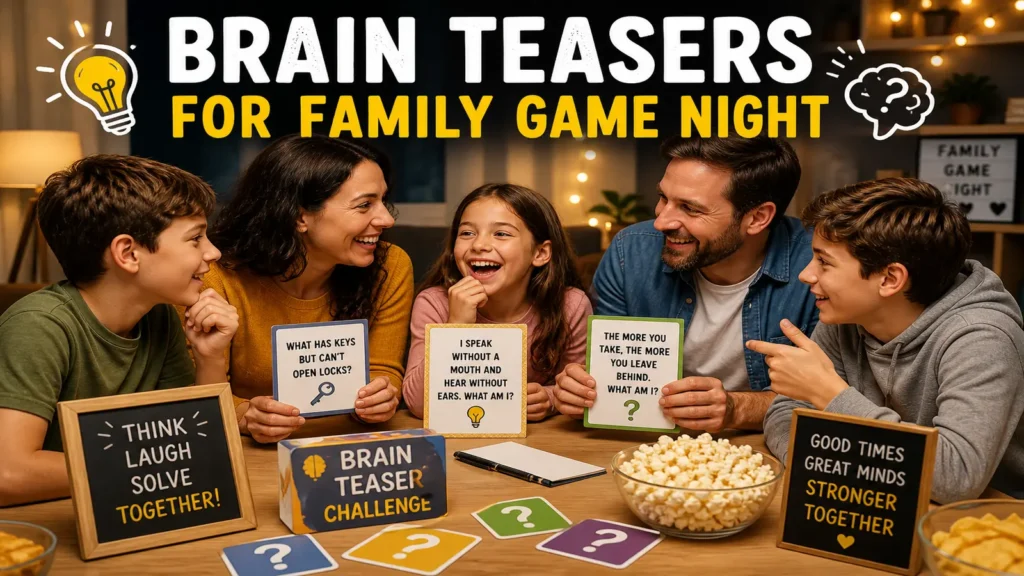
Family game night works best when everyone can join. You do not need fancy boards, long rules, or loud competition. That is why brain teasers for family game night are so useful. They are quick, clean, and easy to play anywhere. Use this guide to plan a night with laughs, teamwork, and clever surprises. You will find setup tips, puzzle types, and fair rules.
Quick Answer
The best brain teasers for family game night are short, clean, and mixed by difficulty. Use easy warm-ups, funny riddles, logic puzzles, and team rounds.
TL;DR
• Start with easy clues before tricky ones
• Keep each round short and lively
• Mix funny, logic, word, and visual puzzles
• Let teams ask for hints
• Choose clean answers everyone understands
• End before players feel tired
How to Set Up a Brain Teaser Game Night
A good setup makes the whole night smoother. Also, it keeps the focus on fun instead of rules.
Choose a clear plan before everyone sits down. Then, let the puzzles do the work.
• Pick a cozy table or floor space
• Print cards before guests arrive
• Use pencils for written answers
• Place snacks away from clue cards
• Set one basket for solved puzzles
• Make teams with mixed ages
• Keep the first round very simple
• Read every clue slowly aloud
• Let younger kids answer first sometimes
• Offer one hint per puzzle
• Skip any clue that feels confusing
• Celebrate creative guesses before correcting answers
Easy Brain Teasers to Warm Everyone Up
Easy puzzles help everyone relax quickly. Because of this, they are perfect for the first round.
These clues should feel bright, not stressful. In addition, they help shy players speak up.
• What has hands but cannot clap
• What gets wetter while drying you
• What has teeth but cannot bite
• What has keys but opens nothing
• What has legs but never walks
• What has a face and two hands
• What runs but has no feet
• What has rings but no fingers
• What has a neck but no head
• What has a bark but no bite
• What has pages but never speaks
• What grows smaller when used
Funny Brain Teasers That Make Everyone Laugh
Funny clues keep the room light. However, the best ones still make people think.
Use silly answers after harder rounds. Meanwhile, kids can enjoy feeling quicker than adults.
• Why did the calendar feel nervous
• Which room has no windows or doors
• What fruit always needs cheering up
• Why did the cookie visit a doctor
• What animal tells the best jokes
• Which vegetable wins every race
• What kind of tree fits your hand
• Why did the pencil take a nap
• What letter drinks the most water
• Which fish loves wearing a crown
• Why did the tomato blush brightly
• What snack tells the crunchiest stories
Tricky Brain Teasers for Bigger “Aha!” Moments
Tricky puzzles work best after everyone is warmed up. Still, they should feel fair once solved.
Read each one twice if needed. Then, let teams talk before sharing guesses.
• What can you break without touching it
• What belongs to you but others use
• What loses its head every morning
• What goes up but never returns
• What starts empty and ends full
• What gets bigger when something leaves
• What answer changes when spoken aloud
• What travels everywhere while staying home
• What has cities but no houses
• What has a bed but never sleeps
• What has a mouth but never eats
• What is bought to be shared
Logic Brain Teasers for Team Play
Logic puzzles are great for teamwork. They reward careful listening and smart questions.
For example, one player may catch a clue others missed. As a result, teams feel useful together.
• Two doors stand before one prize
• Three switches control one hidden bulb
• A farmer crosses with three items
• Five guests sit in secret order
• One coin lies about its age
• Four boxes hide only one treasure
• A bridge holds two people safely
• Three friends each tell one clue
• A pattern changes every third turn
• One guard always tells lies
• A clock loses minutes each hour
• Four cups hide matching symbols
Word Brain Teasers for Readers and Talkers
Word puzzles are perfect for families who enjoy language. Also, they are easy to play without supplies.
Keep the words common and clear. Otherwise, the puzzle may feel like a spelling test.
• Which word becomes shorter when letters grow
• What begins with T and ends inside T
• Which word is spelled wrong in dictionaries
• What has letters but never mails
• Which word sounds the same backward
• What word starts and ends with E
• Which month has twenty-eight days always
• What letter comes after a long wait
• Which word hides a tiny animal
• What word becomes louder when whispered
• Which sentence has no written words
• What name sounds like a question
Math Brain Teasers Without the Homework Feeling
Math teasers should feel like puzzles, not quizzes. So, keep numbers simple and playful.
Let players explain their thinking afterward. In addition, reward clever paths, not just fast answers.
• Add one line to fix this sum
• Count the squares before naming any
• Divide eight slices among three people
• Make ten using four matching digits
• Find the missing number in order
• Spot the pattern in these numbers
• Move one matchstick to solve it
• Share twelve coins without equal piles
• Guess the age from two clues
• Make twenty using only three fives
• Count backwards before adding forward
• Double half, then subtract the start
Visual and Rebus Brain Teasers
Visual puzzles add fresh energy to the night. They are especially helpful for younger players.
Use large cards so everyone can see. Also, let teams inspect each clue before answering.
• Draw words stacked to show meaning
• Show tiny text for small talk
• Place heart over head for feeling
• Write time twice for double time
• Put sand inside witch for sandwich
• Show one eye for simple “I”
• Place man over board for overboard
• Write cycle twice for bicycle clue
• Put star inside fish for starfish
• Show broken letters for mixed message
• Draw rain under bow for rainbow
• Place book beside worm for bookworm
Team Rules That Keep the Game Fair
Fair rules stop one player from taking over. Because of this, everyone gets a better night.
Explain the rules before the first clue. Then, keep them steady until the end.
• Rotate the reader after each puzzle
• Give every team equal thinking time
• Allow one guess before using hints
• Let teams pass without losing points
• Award bonus points for teamwork
• Keep score visible but relaxed
• Switch partners after two rounds
• Let quiet players choose clues
• Use applause instead of teasing
• Accept close answers when clearly fair
• Pause when younger players need help
• End disputes with a replay clue
Timed Rounds for Fast Family Fun
Timed rounds add excitement quickly. However, timers should create energy, not pressure.
Use shorter rounds with easier clues. Next, save harder puzzles for untimed play.
• Try thirty seconds for warm-ups
• Use one minute for logic clues
• Play speed rounds after snack breaks
• Let teams bank unused hint time
• Give bonus points for calm answers
• Stop the timer during rule questions
• Avoid timers for very young kids
• Use sand timers for quieter play
• Try lightning rounds with silly clues
• Let grandparents control the clock
• Add music for final seconds
• Reset quickly after missed answers
Brain Teasers for Kids, Parents, and Grandparents
The best family nights include every age. Therefore, avoid puzzles made for only one group.
Pair players across ages when possible. In addition, let each person shine in different rounds.
• Give kids first pick of categories
• Pair readers with younger guessers
• Let grandparents share classic riddles
• Use bigger print for clue cards
• Choose simple words for early rounds
• Save tricky logic for later
• Let teens run the timer
• Ask adults to model patience
• Invite small children to draw answers
• Use team names chosen together
• Mix silly clues with thoughtful ones
• Praise effort more than speed
Make Your Own Family Brain Teasers
Homemade clues make game night feel personal. Also, they often get the biggest laughs.
Start with everyday objects around your home. Then, add a twist that feels fair.
• Pick one object from the room
• List three surprising object traits
• Hide the answer inside wording
• Use family hobbies as clues
• Turn chores into silly puzzles
• Make snack names into wordplay
• Ask kids to invent endings
• Keep clues under two sentences
• Test each puzzle before playing
• Remove clues with unclear answers
• Save favorites for future nights
• Write answers on separate cards
FAQs
What are good brain teasers for family game night?
Good choices are short, clean, and easy to explain. Mix funny riddles, logic puzzles, word clues, and visual puzzles.
How many brain teasers do I need for one night?
Plan around 20 to 40 clues for most families. However, keep extras ready in case everyone wants more.
What age can play family brain teasers?
Many kids can join once they understand simple clues. For younger children, use pictures, rhymes, and very clear answers.
How do I stop adults from answering everything first?
Use turn rules and mixed-age teams. Also, let kids answer first during easier rounds.
Should brain teasers have prizes?
Small prizes can be fun, but they are not required. Instead, try team names, applause, or choosing the next snack.
Are hard brain teasers okay for families?
Yes, but use them carefully. Add hints, allow teamwork, and avoid puzzles that feel impossible.
Conclusion
Family game night does not need complicated planning. A stack of clean clues can create laughs, teamwork, and great memories. Start with easy puzzles, then add funny, tricky, and visual rounds. Also, keep rules kind and simple. With the right mix, brain teasers for family game night can become a favorite weekly tradition.

Christopher McLagan is a celebrated riddle maker known for crafting clever brain teasers and mind-bending puzzles. His work blends classic riddles, logic challenges, and lateral thinking brain teasers designed to spark curiosity and critical thinking. Widely admired in online puzzle communities, McLagan creates engaging riddle questions and answers for both kids and adults. His signature style delivers surprising twists, clean humor, and satisfying “aha” moments that keep readers coming back for more.