
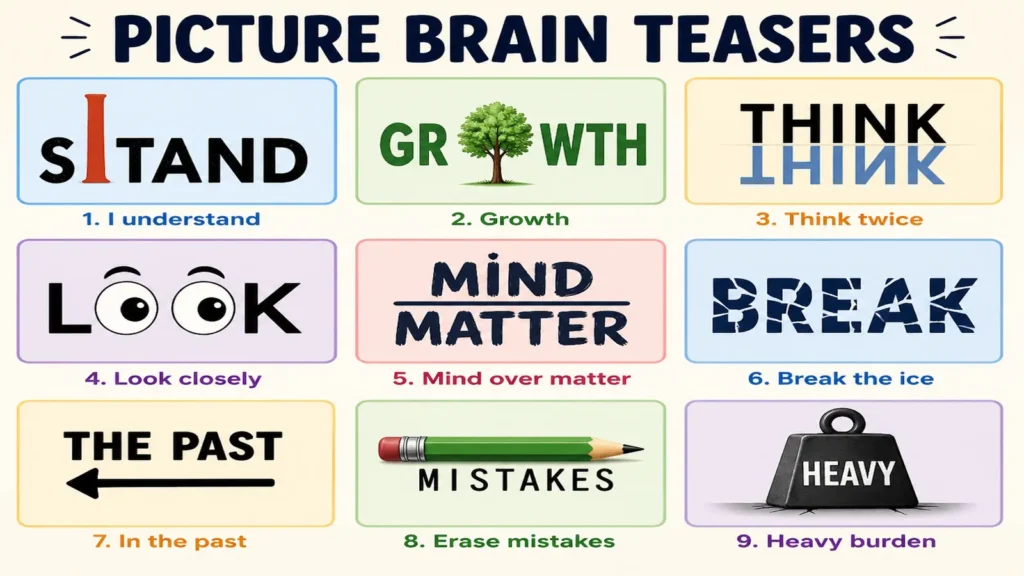
Picture brain teasers turn images into smart little challenges. They ask you to spot, compare, connect, and rethink what you see. They are great for kids, adults, teachers, parents, and puzzle fans. Also, they work well during breaks, road trips, parties, and classroom warm-ups. This guide explains picture brain teasers in a simple way. You will learn the main types, solving tips, and smart ways to enjoy them.
Quick Answer
Picture brain teasers are visual puzzles that use images, symbols, patterns, or hidden details. They challenge your eyes and your thinking at the same time.
TL;DR
• Picture puzzles build focus through playful challenges
• Rebus puzzles mix words, images, and placement
• Hidden object games reward careful scanning
• Optical illusions can trick first impressions
• Printable versions work well offline
• Good answers explain the solving path
What Are Picture Brain Teasers?
Picture brain teasers are puzzles built around what you see. However, the answer often needs more than a quick look.
Some use hidden details, while others use symbols or strange layouts. Because of this, they train both observation and logic.
• Hidden objects tucked inside busy scenes
• Odd-one-out pictures with tiny changes
• Rebus clues made from words
• Dingbats using position for meaning
• Shadow puzzles with matching shapes
• Pattern grids missing one piece
• Optical illusions hiding another view
• Spot-the-difference image pairs
• Number pictures with visual clues
• Emoji puzzles showing phrases
• Picture riddles with clever twists
• Map-style puzzles using direction clues
Why Visual Puzzles Are So Fun
Visual puzzles feel playful because they create surprise. At first, the answer may seem hidden in plain sight.
Then, one detail suddenly changes everything. That small “aha” moment makes people want another round.
• They feel like games, not homework
• Answers often appear with sudden clarity
• Friends can compare different guesses
• Small clues make big reveals possible
• Mistakes feel funny, not serious
• Images invite quick participation
• Short puzzles fit busy moments
• Kids and adults can play together
• Hard puzzles create friendly competition
• Easy puzzles build early confidence
• Visual clues cross language barriers
• Simple formats work almost anywhere
How to Solve Picture Brain Teasers Faster
Start by looking at the whole image. Next, slow down and check each part with purpose.
Avoid guessing too soon, because picture puzzles often hide clues near obvious spots. Instead, scan corners, spacing, colors, and repeated shapes.
• Read the question before viewing
• Scan from left to right
• Check corners before the center
• Notice colors that seem different
• Compare repeated shapes carefully
• Look for missing small details
• Cover distracting areas with paper
• Say the clue aloud once
• Count items only after scanning
• Watch for mirror-like tricks
• Try rotating the page mentally
• Step back for a fresh view
Easy Picture Brain Teasers for Beginners
Easy picture brain teasers should feel welcoming. They usually have fewer details and clear answer choices.
They are perfect for kids, new puzzle fans, and quick breaks. Also, they help people learn common visual tricks.
• Find one missing item
• Match a shadow to its object
• Choose the different animal face
• Pick the correct puzzle piece
• Spot one reversed letter
• Count simple shapes in rows
• Name the hidden fruit
• Follow arrows through a maze
• Match symbols to short clues
• Find a single color change
• Complete an easy picture pattern
• Choose the safest visual answer
Medium Picture Brain Teasers for Practice
Medium puzzles add more clutter and sharper tricks. Still, the answer should feel fair after careful looking.
These puzzles are great for building patience. In addition, they help players test new solving methods.
• Compare two crowded drawings
• Find several hidden objects
• Decode a short rebus phrase
• Complete a mixed shape pattern
• Notice swapped items in scenes
• Match footprints to animal pictures
• Follow a route through symbols
• Identify the wrong reflection
• Find a camouflaged number
• Sort clues by visual order
• Spot repeated objects with changes
• Connect icons into one phrase
Hard Picture Brain Teasers for a Real Challenge
Hard picture brain teasers use misdirection. They make your eyes follow the wrong detail first.
However, a fair hard puzzle still has a clear answer. The best ones feel tricky, not random.
• Hide clues inside repeated textures
• Use shadows that almost match
• Place answers near visual noise
• Mix real clues with distractions
• Use scale to mislead viewers
• Add patterns with one broken rule
• Make colors appear nearly identical
• Combine words and image placement
• Require several steps before solving
• Turn common objects into clues
• Hide meaning in empty space
• Reward checking every assumption
Picture Brain Teasers for Kids
Kids enjoy picture puzzles because they can start fast. They do not need long directions to begin.
For best results, choose bright, friendly images. Also, give hints before showing answers.
• Use animals, snacks, and toys
• Keep instructions short and clear
• Offer hints before solutions
• Avoid scary or mean images
• Let kids explain their thinking
• Praise careful looking over speed
• Pair younger children with partners
• Start with one-step puzzles
• Use puzzles as warm-ups
• Print large images for groups
• Rotate puzzle types weekly
• Celebrate creative wrong guesses
Picture Brain Teasers for Adults
Adults often enjoy tougher visual challenges. They work well during breaks, parties, and team games.
Many adult puzzles use subtle clues or wordplay. Meanwhile, social settings make guessing more fun.
• Use timers for friendly rounds
• Try harder rebus cards first
• Pick themes for party groups
• Share answers after everyone guesses
• Mix easy puzzles between hard ones
• Use picture riddles as icebreakers
• Challenge teams instead of individuals
• Choose clean humor for workplaces
• Save tricky ones for finales
• Discuss multiple possible paths
• Track scores only for fun
• Rotate hosts each game night
Printable Picture Brain Teasers and Worksheets
Printable puzzles are useful when screens are not ideal. They work well in classrooms, waiting rooms, and family trips.
A good worksheet should include enough white space. In addition, answer keys should explain the reason.
• Use large images for visibility
• Leave room for written guesses
• Add answer keys on separate pages
• Group puzzles by difficulty level
• Print in color when needed
• Use black-and-white friendly designs
• Include hints for younger players
• Avoid tiny details on copies
• Number each puzzle clearly
• Add short directions above images
• Keep solutions easy to check
• Store sets in labeled folders
Rebus Picture Puzzles and Dingbats
Rebus puzzles use words, letters, symbols, and placement. For example, a word’s position can become the clue.
Dingbats work in a similar way. Because of this, they are great for lateral thinking.
• Notice words above other words
• Check letters inside shapes
• Look for repeated words
• Watch for broken spacing
• Read symbols as sounds
• Think about common phrases
• Consider direction and movement
• Look at font size changes
• Treat placement as a clue
• Say the picture idea aloud
• Avoid reading too literally
• Test answers as familiar sayings
Spot-the-Difference and Hidden Object Teasers
Spot-the-difference puzzles ask you to compare images. Hidden object teasers ask you to search one busy scene.
Both formats reward steady scanning. Therefore, rushing usually causes missed details.
• Divide the image into sections
• Compare faces before backgrounds
• Check hands, feet, and eyes
• Look along edges and borders
• Search near repeated objects
• Notice items partly covered
• Compare shadows and reflections
• Mark found differences lightly
• Recheck areas already scanned
• Start with large objects first
• Move to smaller details later
• Pause when your eyes feel tired
Optical Illusion Brain Teasers
Optical illusions play with how we see. They can make lines, colors, or shapes feel confusing.
Often, your first look is not enough. So, change your viewing distance and inspect the image calmly.
• Step closer, then farther away
• Cover part of the picture
• Compare shapes against straight edges
• Notice background patterns first
• Check whether lines truly bend
• Watch for hidden second images
• Blink and look again slowly
• Turn the image upside down
• Use a ruler for line tricks
• Ignore labels until after viewing
• Separate color from shadow
• Let your eyes rest briefly
FAQs About Picture Brain Teasers
What are picture brain teasers?
They are puzzles that use images, symbols, or visual patterns. Usually, you solve them by noticing details and connecting clues.
Are picture brain teasers good for kids?
Yes, they can be fun learning tools. They help kids practice focus, patience, and careful observation.
What are picture brain teasers with answers?
They are visual puzzles that include solutions. The best ones also explain why the answer works.
How do you solve visual brain teasers faster?
Read the clue first, then scan the image in sections. Also, check corners, repeated objects, and small differences.
What is a rebus picture puzzle?
A rebus puzzle uses words, letters, pictures, or placement. Together, those clues point to a common phrase or answer.
Can adults enjoy picture brain teasers?
Absolutely. Adults often enjoy harder puzzles, timed rounds, and group challenges at parties or breaks.
Where can I use printable picture brain teasers?
You can use them in classrooms, road trips, waiting rooms, and family game nights. They are also great for screen-free fun.
Conclusion
Picture puzzles are simple to start and fun to share. They help people slow down, notice details, and think in fresh ways. Also, they fit many settings. You can use them at home, in class, at work, or during a quiet break. Most of all, picture brain teasers remind us that looking carefully can be exciting. One small clue can change the whole answer.

Christopher McLagan is a celebrated riddle maker known for crafting clever brain teasers and mind-bending puzzles. His work blends classic riddles, logic challenges, and lateral thinking brain teasers designed to spark curiosity and critical thinking. Widely admired in online puzzle communities, McLagan creates engaging riddle questions and answers for both kids and adults. His signature style delivers surprising twists, clean humor, and satisfying “aha” moments that keep readers coming back for more.