
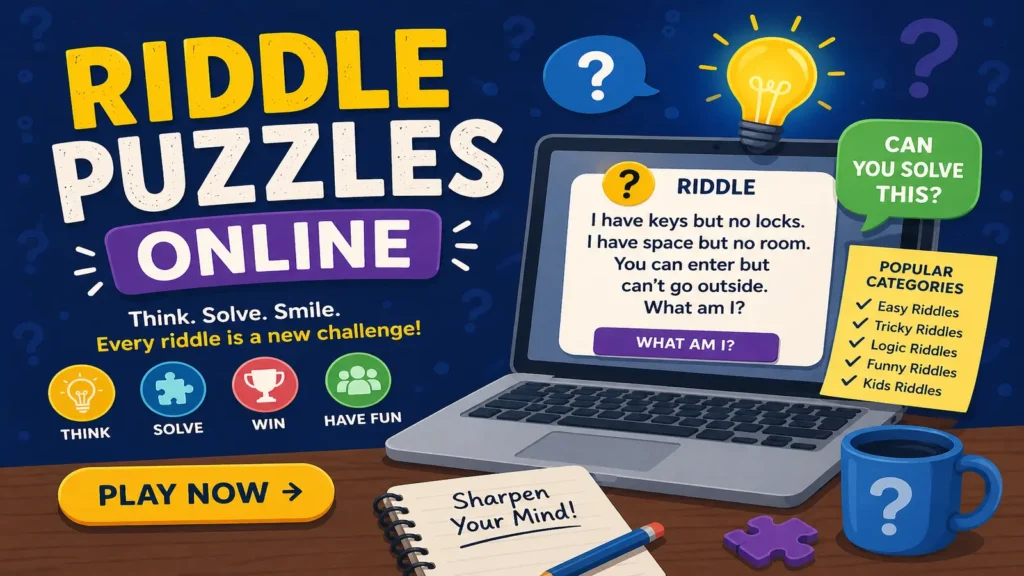
Riddles are small puzzles with a big payoff. They make people pause, laugh, think, and sometimes groan at the answer. Today, riddle puzzles online are easy to find and simple to share. Kids, adults, teachers, families, and friends can enjoy them anywhere. This guide shows how to pick better riddles, solve them faster, and use them for real fun.
Quick Answer
Riddle puzzles online are web-based brain games that ask clever questions with hidden answers. They are great for quick fun, family play, classroom warmups, and daily thinking practice.
TL;DR
• Pick riddles that match your mood
• Use hints before checking answers
• Choose safe pages for kids
• Try one daily puzzle habit
• Share favorites with friends
• Mix easy and hard challenges
What Are Riddle Puzzles Online?
Online riddles are short clue-based puzzles you solve on a website, app, or browser game. Some show answers right away, while others hide them behind a button.
Many pages also mix riddles with brain teasers, logic puzzles, word games, and quizzes. As a result, you can choose light fun or serious challenge.
• Short questions with hidden answers
• Wordplay clues with clever twists
• Logic problems needing careful thought
• Math riddles using simple numbers
• Funny riddles built for laughs
• Classic riddles with familiar patterns
• Visual puzzles using pictures
• Daily puzzles for steady practice
• Timed quizzes for quick play
• Hint buttons for extra help
• Answer reveals after guessing
• Share tools for group fun
Why People Love Solving Riddles on the Web
Online riddles fit into small moments. You can solve one during lunch, before class, or while waiting.
They also work well with other people. Because of this, riddles can turn a quiet room into a lively game.
• Fast entertainment without setup
• Easy access from most devices
• Fresh puzzles available often
• Simple fun for mixed ages
• Great icebreakers at gatherings
• Light practice for flexible thinking
• Low-pressure way to challenge yourself
• Handy break from scrolling feeds
• Laughs from surprising answers
• Good prompts for conversation
• Quick games during travel
• Friendly competition without equipment
Best Types of Online Riddle Puzzles to Try
Different riddles train different thinking habits. For example, word riddles reward careful reading, while logic riddles reward patient testing.
A good mix keeps the experience fresh. Meanwhile, variety helps beginners avoid getting stuck too soon.
• Word riddles for language play
• Logic riddles for clear reasoning
• Math riddles for number sense
• Funny riddles for easy laughs
• Hard riddles for bold solvers
• Kids’ riddles for gentle starts
• Mystery riddles for clue hunters
• Picture riddles for visual thinkers
• Trick riddles for careful readers
• Classic riddles for timeless fun
• Holiday riddles for themed moments
• Animal riddles for younger players
How to Choose a Good Riddle Website
A good riddle site should feel clear, safe, and easy to use. Answers should be simple to reveal, not buried under clutter.
Also, the best pages help you choose by level, topic, or age. That saves time and keeps frustration low.
• Clear categories for faster browsing
• Answers hidden until requested
• Difficulty labels that feel honest
• Mobile pages that load smoothly
• Few distractions around puzzle text
• Safe wording for younger readers
• Search tools for specific themes
• Updated collections with new entries
• Hints before full solutions
• Simple sharing without confusion
• Clean layout for classroom screens
• Respectful comments if community exists
Free Riddle Games vs. Riddle Collections
Free riddle games feel more interactive. They may track answers, unlock levels, or turn solving into a challenge.
Collections are better for browsing at your own pace. However, both formats can be useful, depending on your goal.
• Games create stronger momentum
• Collections allow relaxed reading
• Quizzes help test quick recall
• Lists work well for parties
• Levels guide new players gently
• Archives offer more topic choices
• Games may include timers
• Collections often print more easily
• Interactive pages feel more playful
• Simple lists load faster
• Score systems motivate repeat visits
• Answer pages support quiet practice
Riddle Puzzles Online for Kids and Families
Kids need riddles that match their reading level and humor. A riddle should challenge them without making them feel lost.
Families can use online riddles during meals, trips, or weekend downtime. In addition, adults can model calm guessing when answers feel tricky.
• Choose age-friendly clue wording
• Preview answers before group play
• Avoid pages with harsh jokes
• Start with animals or objects
• Let children explain guesses
• Use hints as teamwork tools
• Keep sessions short and cheerful
• Celebrate creative wrong answers
• Rotate who reads aloud
• Pick themes kids already know
• Save favorites for road trips
• Stop before frustration builds
Riddle Puzzles Online for Adults
Adults often enjoy riddles with sharper twists. These puzzles can make breaks feel more refreshing and social.
Still, harder does not always mean better. The best adult riddles feel fair after the answer appears.
• Try logic riddles during breaks
• Use hard clues for game nights
• Challenge friends through group chats
• Pick clever wordplay for laughs
• Save mystery riddles for parties
• Mix difficulty to avoid fatigue
• Replay favorites with new groups
• Compare reasoning after each answer
• Look for fair clue design
• Avoid overly vague questions
• Share clean riddles at work
• Keep score only for fun
How to Solve Riddles Faster
Solving improves when you slow down first. Read every word, then decide which clues matter most.
Next, look for double meanings, hidden assumptions, and simple traps. Often, the answer is easier than your first guess.
• Read the riddle twice slowly
• Notice unusual word choices
• Ask what the clue hides
• Test the most literal answer
• Watch for double meanings
• Separate facts from assumptions
• Picture the scene clearly
• Try opposite interpretations
• Say the clue aloud
• Ignore distracting extra details
• Use hints before answers
• Learn from missed solutions
Common Riddle Mistakes to Avoid
Most missed riddles come from rushing. People often answer the question they expect, not the one written.
Another mistake is making the puzzle too complex. Instead, start simple before chasing wild ideas.
• Skipping small but important words
• Assuming every clue is literal
• Forcing math where none exists
• Checking answers too quickly
• Ignoring the exact question
• Treating jokes like logic tests
• Missing everyday object clues
• Forgetting about word sounds
• Overthinking simple setups
• Rejecting odd answers too early
• Letting timers cause panic
• Comparing yourself too harshly
Fun Ways to Share Online Riddles
Riddles become better when shared. A single clever question can start a long, funny exchange.
You can use them in chats, classrooms, family events, or parties. Meanwhile, short riddles work especially well because everyone can join fast.
• Send one riddle each morning
• Open meetings with light puzzles
• Use riddles during family dinner
• Create a weekend clue hunt
• Add riddles to birthday cards
• Host a five-minute challenge
• Pair kids with older relatives
• Post answers after guesses arrive
• Build a themed puzzle jar
• Use riddles between road songs
• Start party rounds with teams
• Turn favorites into trivia cards
How Teachers Can Use Online Riddles
Teachers can use riddles as quick warmups. They get students reading closely without making the task feel heavy.
Riddles also encourage students to explain their thinking. As a result, they support speaking, listening, and teamwork.
• Begin class with one clue
• Ask students to justify answers
• Let groups compare strategies
• Match riddles to vocabulary lessons
• Use math riddles for review
• Choose clean, age-fit examples
• Display puzzles on shared screens
• Invite students to write clues
• Discuss why answers work
• Reward teamwork over speed
• Keep answer reveals calm
• Save hard riddles for Fridays
Building a Daily Riddle Habit
A daily riddle habit should feel easy. One good puzzle is enough to keep your mind engaged.
Try saving favorite riddles in a note or folder. Later, you can reuse them for friends, students, or family games.
• Solve one puzzle after breakfast
• Keep a favorite riddle list
• Track themes you enjoy most
• Alternate easy and hard days
• Share weekly winners with friends
• Review missed answers calmly
• Set a five-minute limit
• Skip days without guilt
• Try new categories monthly
• Collect clean jokes separately
• Revisit older puzzles later
• End sessions on success
FAQs About Riddle Puzzles Online
What are the best riddle puzzles online?
The best ones match your age, mood, and skill level. Look for clear clues, hidden answers, useful hints, and clean page design.
Where can I play free riddle games online?
Many puzzle sites offer free riddle games in a browser. Choose pages that load quickly, explain rules clearly, and do not require downloads.
Are online riddles good for kids?
Yes, they can be great for kids when adults choose safe pages. Start with easy topics, short clues, and answers children can understand.
How do I get better at solving riddles?
Read slowly, watch for wordplay, and test simple answers first. Also, review missed riddles so you learn common clue patterns.
What is the difference between riddles and brain teasers?
Riddles often use tricky wording and hidden meanings. Brain teasers may also include logic, math, patterns, or visual problems.
Can I use online riddles in the classroom?
Yes, online riddles can work well as warmups or group activities. Pick age-fit examples and ask students to explain their reasoning.
Conclusion
Online riddles are simple, flexible, and fun. They can help people laugh, think, and connect in just a few minutes. For the best experience, choose safe sites, clear clues, and fair answer reveals. Then, mix easy puzzles with harder ones as your skills grow. Whether you play alone or with others, riddle puzzles online can turn spare moments into smart fun.

Christopher McLagan is a celebrated riddle maker known for crafting clever brain teasers and mind-bending puzzles. His work blends classic riddles, logic challenges, and lateral thinking brain teasers designed to spark curiosity and critical thinking. Widely admired in online puzzle communities, McLagan creates engaging riddle questions and answers for both kids and adults. His signature style delivers surprising twists, clean humor, and satisfying “aha” moments that keep readers coming back for more.