
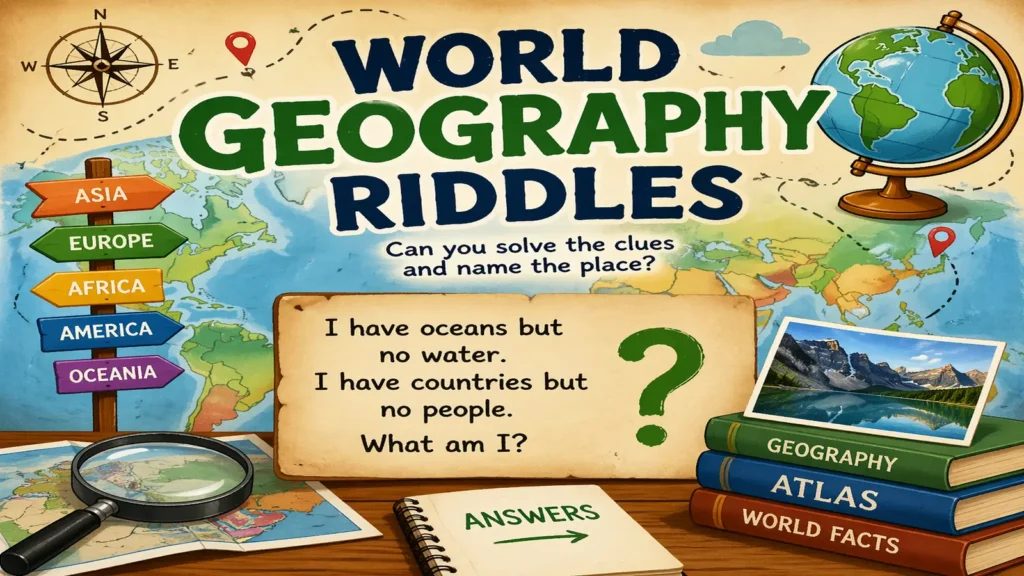
Geography can feel huge at first. However, riddles make the world feel smaller, friendlier, and more exciting. This guide helps parents, teachers, students, and puzzle fans enjoy world geography riddles in a simple way. You will learn what makes them fun, which types work best, and how to create your own. Along the way, you will get practical ideas for kids, adults, and group play. So, this article is built to be useful from start to finish.
Quick Answer
World geography riddles are playful clues about countries, cities, maps, landforms, and famous places. They turn facts into puzzles, so learning feels more like a game. Because of that, world geography riddles work well for classrooms, family nights, and solo fun.
TL;DR
• Geography riddles mix learning with play
• Kids and adults can enjoy them
• Good clues feel fair and surprising
• Maps and landmarks make strong topics
• Simple wording helps every reader
• Homemade riddles can be the most fun
Why World Geography Riddles Are So Fun
Geography already has built-in mystery. After all, the world is full of borders, landmarks, routes, and hidden patterns. Riddles add one more layer by turning each fact into a small challenge.
That mix keeps people curious. Also, it gives readers a reason to slow down and think instead of just memorizing names. As a result, the topic feels lively instead of heavy.
• They turn facts into mini adventures
• Each clue invites active thinking
• Players notice details they miss
• The world feels wider and richer
• Answers create a satisfying click
• Short puzzles fit busy schedules
• Group play adds laughter fast
• Wrong guesses still teach something
• Familiar places gain fresh mystery
• New places feel less intimidating
• The challenge stays light and playful
• Curiosity grows with every clue
Who Enjoys World Geography Riddles Most
Many groups enjoy this kind of puzzle. For example, families use them at dinner, while teachers use them in warm-ups. Meanwhile, adults enjoy them during trips, parties, and trivia nights.
The best part is flexibility. A simple clue can fit younger kids, yet a layered clue can challenge grown-ups. So, the same topic can serve many readers.
• Kids enjoy quick wins and guessing
• Teachers use them for lesson breaks
• Parents like screen-free fun options
• Travelers enjoy place-based brain games
• Homeschool groups use them easily
• Trivia fans love the challenge
• Adults like clever clue chains
• Siblings can play in teams
• Classrooms use them for review
• Friends enjoy road-trip guessing rounds
• Libraries can host puzzle circles
• Camp leaders use them indoors
What Makes a Great Geography Riddle
A strong riddle feels clear but not obvious. It gives enough detail to guide the guess, yet it hides the answer until the end. Still, the clue should make sense once solved.
Good geography riddles also pick the right detail. Instead of stuffing in facts, they spotlight one or two memorable traits. Because of this, the answer feels earned.
• Start with one strong identifying feature
• Add a second clue for balance
• Keep the wording easy to follow
• Avoid facts only experts know
• Use images readers can picture
• Build toward one clear answer
• Make the twist feel fair
• Choose details people remember well
• Trim extra words from clues
• Test clues on another person
• Replace vague hints with specifics
• Keep the answer short when possible
Country Riddles That Make Players Think
Country riddles are often the easiest starting point. They can use flags, food, shapes, landmarks, language, or famous traditions. However, the best ones avoid lazy stereotypes.
A strong country riddle narrows the field without giving away the name. So, it should hint at something unique, but still leave room for a smart guess.
• Use famous foods with care
• Mention one landmark, not three
• Hint at shape without overdoing it
• Add climate for extra direction
• Use capital clues sparingly here
• Focus on something widely recognized
• Avoid outdated cultural shorthand
• Keep the country answer unmistakable
• Mix modern and natural details
• Use celebrations as soft clues
• Flag colors can support clues
• Border hints can raise difficulty
Capital City Riddles With Clever Twists
Capital cities give riddles a sharper edge. They are often tied to monuments, rivers, skylines, or government roles. Because of that, they can feel fast and memorable.
These riddles work best when clues point to place and personality. A city can be busy, historic, coastal, or political. That range gives writers many angles.
• Link the city to one symbol
• Use rivers, hills, or coastlines
• Mention famous public buildings gently
• Add history without sounding textbook-like
• Keep tourism clues from overpowering
• Use weather as a subtle nudge
• Let neighborhoods inspire clue flavor
• Pair motion with place identity
• Avoid repeating country-level clues here
• Focus on what feels city-specific
• Make scale part of the hint
• Use sound and rhythm in wording
Continent and Ocean Riddles for Bigger Picture Play
These riddles feel bigger right away. They ask players to think about regions, direction, size, and shared features. As a result, they are great for map awareness.
They also help beginners build strong basics. Once players know the wider world, smaller clues become easier later. So, these puzzles are useful stepping stones.
• Use north, south, east, west wisely
• Compare size without exact numbers
• Mention nearby regions for context
• Highlight climate zones as clues
• Use coastline language for oceans
• Keep continent clues broad and fair
• Mention crossing or surrounding patterns
• Connect oceans to travel routes
• Use animal habitats carefully
• Show how regions relate spatially
• Keep the final guess singular
• Let scale create the challenge
Map and Compass Riddles That Build Direction Skills
Map riddles are practical and fun. They teach symbols, routes, legends, scale, and direction through simple clues. Meanwhile, compass riddles sharpen left-right and north-south thinking.
These puzzles help readers use geography, not just name it. Because of this, they work especially well for classrooms and travel-themed games.
• Turn symbols into guessing games
• Use legends as clue material
• Ask about routes, not just places
• Build clues around true north
• Mention grids without sounding technical
• Use treasure-hunt language for energy
• Connect maps to real-life planning
• Keep direction words consistent
• Make compass clues action-based
• Use distance in playful ways
• Fold in landmarks for orientation
• Reward careful reading of clues
Landmark and Wonder Riddles With Instant Appeal
Famous places grab attention fast. A landmark can spark a guess from one vivid detail, like height, shape, age, or purpose. So, these riddles often feel exciting from the first line.
Still, famous places need careful wording. If the clue is too broad, many places fit. If it is too exact, the answer appears too soon.
• Choose landmarks people can visualize
• Start with one striking trait
• Use setting as a support clue
• Mention human-made or natural status
• Let the location stay hidden briefly
• Use texture, height, or color
• Keep wonder clues vivid and short
• Avoid stacking too many famous facts
• Save the strongest clue for last
• Let the place reveal itself slowly
• Pick landmarks across many regions
• Balance challenge with quick recognition
Landform, River, and Weather Riddles
Nature gives geography riddles depth. Mountains, deserts, rivers, islands, forests, and storms all offer clear images. Because of that, these clues feel concrete and memorable.
This category also adds variety. If every answer is a country or city, readers may tire quickly. Natural features keep the pace fresh.
• Mountains work well with height clues
• Rivers fit journey and flow language
• Deserts suit heat and dryness hints
• Islands invite isolation-based twists
• Valleys support shape-based descriptions
• Forest clues can suggest color and sound
• Storm clues create movement and mood
• Volcanoes add drama and tension
• Glaciers fit slow-motion imagery nicely
• Plains work through openness and scale
• Waterfalls give action to clues
• Seasons can sharpen weather riddles
Easy World Geography Riddles for Kids
Kid-friendly riddles should feel welcoming. They work best with simple words, one idea at a time, and familiar topics. Also, short clues help younger readers stay focused.
Fun matters more than difficulty here. A child who solves one good riddle often wants five more. So, early success is important.
• Pick answers children hear often
• Use clean and concrete language
• Keep each clue line short
• Focus on maps, oceans, and flags
• Use rhyme only when natural
• Let pictures support the puzzle
• Avoid trick answers for beginners
• Give one clue per sentence
• Repeat the theme, not the wording
• Choose colorful places kids know
• Keep reading level friendly and light
• Celebrate guesses before revealing answers
Challenging World Geography Riddles for Adults
Adult riddles can go deeper. They may combine history, direction, culture, and place identity in one compact puzzle. However, they should still feel fair.
A hard riddle works best when every clue matters. If one line can be removed, the puzzle may feel loose. So, tighter writing usually means better challenge.
• Layer clues from different angles
• Use contrast to hide the answer
• Hint at borders or neighboring seas
• Blend nature with human geography
• Use double meanings with care
• Delay the obvious clue intentionally
• Keep the answer logically reachable
• Reward broad world knowledge gently
• Add one misdirection, not many
• Use rhythm to mask the twist
• Make wrong guesses feel reasonable
• End on the cleanest clue
How to Write Your Own World Geography Riddles
Writing your own riddles is easier than it looks. First, choose one answer, such as a country, river, or city. Then, list five details people might know.
Next, pick two or three of those details and turn them into clues. After that, test the riddle on someone else. If they are lost, simplify it. If they guess too quickly, hide the strongest hint.
• Choose one answer before writing
• List visible and memorable traits
• Pick clues with clear mental pictures
• Remove clues that feel too obvious
• Keep one surprise until the end
• Say the clue aloud once
• Test with both kids and adults
• Revise any awkward line breaks
• Avoid repeated clue patterns
• Use place names only as answers
• Save your best riddles in sets
• Build by topic for easier reuse
FAQs
What is a world geography riddle?
It is a puzzle built around places, maps, regions, or natural features. Instead of asking directly, it gives clues that lead to the answer.
Are world geography riddles good for classrooms?
Yes, they work well in class because they feel active and social. Also, teachers can use them as warm-ups, reviews, or quick team games.
What ages can enjoy geography riddles?
Almost any age can enjoy them with the right wording. Younger kids need simple clues, while adults usually enjoy layered hints.
How are geography riddles different from geography trivia?
Trivia asks straight questions and expects recall. Riddles hide the answer behind clues, so the fun comes from figuring it out.
What topics work best in geography riddles?
Countries, capitals, maps, continents, landmarks, rivers, mountains, and oceans all work well. The best topic depends on the reader’s age and knowledge.
How do I make a geography riddle harder?
Use clues from more than one angle, such as culture and location together. Still, keep the answer fair and the wording clean.
Conclusion
World puzzles can do more than fill time. They can spark curiosity, build confidence, and make learning feel playful. That is why they work for families, classrooms, and solo readers alike. The best part is how flexible they are. You can keep them easy, make them tricky, or build whole game rounds around them. So, once you start using world geography riddles, it becomes easy to keep going.
Christopher McLagan is a celebrated riddle maker known for crafting clever brain teasers and mind-bending puzzles. His work blends classic riddles, logic challenges, and lateral thinking brain teasers designed to spark curiosity and critical thinking. Widely admired in online puzzle communities, McLagan creates engaging riddle questions and answers for both kids and adults. His signature style delivers surprising twists, clean humor, and satisfying “aha” moments that keep readers coming back for more.