Some readers want quick riddles for class. Others want game-night ideas or better prompts for adult groups. That is why this guide keeps things practical, simple, and fun. You will find fresh ways to use USA leadership riddles without making them feel stiff. Along the way, you will also get writing tips, theme ideas, and ready-to-use examples. By the end, you should know which style fits your audience best.
Quick Answer
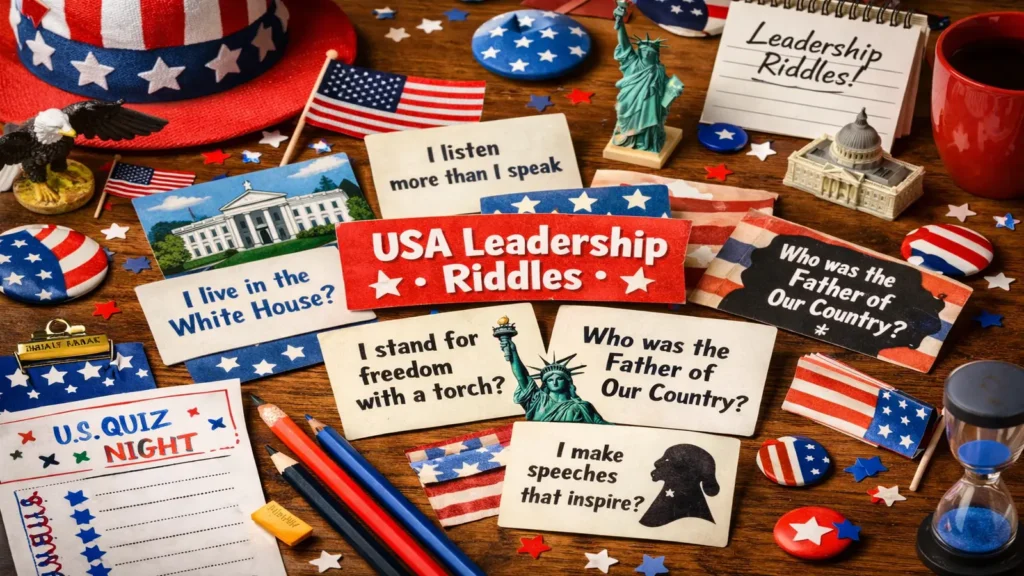
USA leadership riddles are short puzzles built around American leaders, civic symbols, and leadership traits. They work well for teachers, families, trivia fans, and team hosts. Most of all, USA leadership riddles turn history and leadership into a more playful challenge.
TL;DR
• Best themes mix leaders, values, and symbols
• Easy clues work better for mixed groups
• Harder riddles need fair, layered hints
• Classrooms benefit from answer-and-discuss rounds
• Teams enjoy quick, timed puzzle play
• Respectful humor keeps participation high
Why USA Leadership Riddles Work
Riddles feel lighter than lectures. Because of that, people join in faster. They also remember ideas better when a clue makes them stop and think.
• They turn facts into playful challenges
• They reward attention, not just memorization
• They spark discussion after each answer
• They fit classrooms, clubs, and meetings
• They work in short or long rounds
• They give history a lively voice
• They help shy players join in
• They create easy moments of laughter
• They support mixed-age group play
• They make leadership feel more human
• They invite guessing without heavy pressure
• They pair well with trivia games
Popular Themes Readers Expect
Most readers expect familiar hooks first. So it helps to start with ideas they already recognize. Then you can branch into broader leadership themes.
• Presidents and famous commanders in chief
• Founders, speeches, and big decisions
• The White House and national symbols
• Honesty, courage, and steady judgment
• Teamwork during hard public moments
• Voting, service, and public trust
• Flags, eagles, and patriotic imagery
• History class warm-up questions
• Holiday play around Presidents’ Day
• Workplace icebreakers with civic flavor
• Family quiz cards for weekends
• Smart wordplay around American leadership
President-Inspired Riddles
President-themed riddles are often the easiest entry point. Readers know the topic right away. As a result, the game feels inviting instead of confusing.
• I lead a nation, not a class
• My house is white, but I’m not paint
• I sign laws, yet I am no pen
• I ride in parades after elections
• I speak to the nation in crisis
• I sit in an office, not a cubicle
• My picture may hang in schools
• I campaign hard before I serve
• I protect the people through decisions
• I greet guests from around Earth
• I move with agents, not classmates
• I inherit problems every four years
Founder and Symbol Riddles
Not every clue needs a president. In fact, symbols and early American figures add variety. They also help younger players guess with more confidence.
• I soar above seals and coins
• I wave in schools and stadiums
• I crack, yet I also inspire freedom
• I ring for liberty, not lunch
• I am stripes, stars, and shared pride
• I wear no crown, yet helped begin a nation
• I am inked ideals on old parchment
• I stand for justice with balanced hands
• I welcome visitors with a torch held high
• I point to the capital from many souvenirs
• I carry the nation in one sharp symbol
• I remind players that leadership has roots
Leadership Trait Riddles
Trait-based riddles widen the topic. That matters because leadership is more than office titles. Meanwhile, these clues work in school, work, and home settings.
• I listen first and speak with care
• I stay calm when plans go sideways
• I own mistakes instead of hiding
• I guide others without grabbing credit
• I choose fairness over easy favors
• I keep promises when pressure rises
• I see tomorrow while solving today
• I welcome ideas from quiet voices
• I act with courage before comfort
• I build trust one choice at a time
• I help teams move through uncertainty
• I serve the group beyond myself
Classroom-Friendly Formats
Teachers need formats that feel simple to run. So the best approach is short rounds with clear answers. After that, students can explain the clue in their own words.
• Start with five warm-up cards
• Read one clue at a time
• Let pairs discuss before answering
• Use picture cards for younger learners
• Add writing prompts after each solve
• Compare literal clues and hidden clues
• Invite students to create new riddles
• Sort cards by difficulty level
• Tie clues to a history lesson
• Reward reasoning, not just speed
• Keep answer reveals brief and cheerful
• End with a class-made riddle challenge
Team-Building and Workplace Play
Adults like riddles when they feel quick and social. However, nobody wants a round that drags. That is why short bursts work better than long quiz marathons.
• Use them as meeting openers
• Rotate readers across the room
• Create timed partner solve rounds
• Mix leadership traits with office humor
• Offer bonus points for explanation
• Keep clues inclusive and low-stress
• Avoid niche political arguments entirely
• Encourage teams to defend guesses
• Use buzzer rounds for energy
• Add scoreboards only if helpful
• Let winners write the next clue
• Close with one reflection question
Family Game Night Ideas
Family play works best with mixed difficulty. Younger kids need clear images. Older players enjoy layered clues and a little misdirection.
• Shuffle easy and tricky cards together
• Let kids draw clue illustrations
• Use kitchen timers for fast rounds
• Play teams of two or three
• Add candy points for solved cards
• Include patriotic symbol picture clues
• Let grandparents explain older references
• Write answers on mini whiteboards
• Switch hosts every five turns
• Build a final lightning round
• Keep debates playful and short
• Save hardest cards for the end
How to Write Easy Riddles
Easy riddles still need craft. First, choose one clear answer. Then build clues around features most readers already know.
• Pick one obvious subject trait
• Use simple words over fancy phrasing
• Limit each clue to one idea
• Make the answer feel reachable
• Avoid stacking too many hints
• Choose images readers recognize quickly
• Keep rhythm smooth when read aloud
• Test the clue on one friend
• Cut anything that causes confusion
• Prefer concrete details over abstractions
• Reveal answers right after guesses
• End with a satisfying little twist
How to Write Harder Riddles
Hard riddles should challenge, not frustrate. So the clue needs layers without becoming muddy. A strong answer should feel surprising but fair.
• Hide the answer behind metaphor
• Use contrast to mislead gently
• Blend role, place, and action
• Delay the clearest hint until last
• Replace names with vivid images
• Add one clue that flips meaning
• Remove any clue that gives away too much
• Keep the final answer unmistakable
• Aim for one clean aha moment
• Test on both experts and beginners
• Revise dull clues into sharper pictures
• Balance mystery with enough direction
Keep the Tone Fun and Respectful
Leadership topics can feel heavy if handled poorly. Still, the solution is simple. Use broad humor, light wordplay, and welcoming language.
• Joke about situations, not identities
• Prefer cleverness over sarcasm
• Skip insults aimed at real people
• Keep clues usable in schools
• Avoid loaded language during play
• Focus on values more than fights
• Let history feel lively, not hostile
• Use shared symbols with care
• Write for mixed opinions in the room
• Keep punchlines gentle and upbeat
• Leave space for many age groups
• Choose fun over cheap shock value
Common Mistakes to Avoid
Many riddles fail for the same reasons. Usually, the clue is either too vague or too narrow. A quick edit can fix both problems.
• Making the answer impossibly obscure
• Repeating the same clue pattern
• Using facts nobody can infer
• Writing clues that sound identical
• Giving away the answer too soon
• Forgetting the audience’s age level
• Cramming too many ideas together
• Relying on stiff textbook wording
• Turning riddles into trivia lists
• Ignoring rhythm during read-aloud play
• Using humor that excludes players
• Skipping test runs before sharing
FAQs
What makes a good USA leadership riddle?
A good one has a clear answer, strong images, and fair clues. It should feel smart, but it should also feel solvable.
Are these riddles only about presidents?
No. They can also cover founders, civic symbols, teamwork, honesty, courage, and public service. That broader mix keeps the topic fresh.
Can kids use leadership riddles in class?
Yes, especially when clues use simple words and familiar images. Teachers can also follow each answer with a short discussion.
Do these work for adult team events?
They do, because adults often enjoy short puzzle rounds that break routine. In addition, leadership themes fit workshops and meetings well.
How many clues should one riddle include?
Three to five clues is a solid range for most groups. Fewer clues feel brisk, while more clues can support harder puzzles.
Should I use real political debates in the clues?
Usually, no. Broad themes and shared symbols keep the mood lighter and help more people join in comfortably.
Conclusion
USA-themed leadership riddles work because they blend learning, play, and conversation. They can fit a classroom, a break room, or a family table with equal ease. The best sets mix famous leaders, civic symbols, and human traits. That balance keeps the game lively while giving each player a fair chance. If you want a topic that feels familiar, flexible, and easy to share, USA leadership riddles are a strong pick. Start simple, test your clues, and let the best answers spark the next round.

A playful wordsmith with a knack for misdirection, I craft riddles that tease the brain. My puzzles blend clever clues, clean logic, and a dash of humor—built to challenge beginners and stump seasoned solvers alike. From short, punchy brainteasers to layered mysteries with hidden meanings, I love turning everyday ideas into mind-bending questions that invite curiosity and conversation. When I’m not twisting words into puzzles, I’m collecting strange facts, testing new clue styles, and fine-tuning the art of fair—but fiendish—fun.