
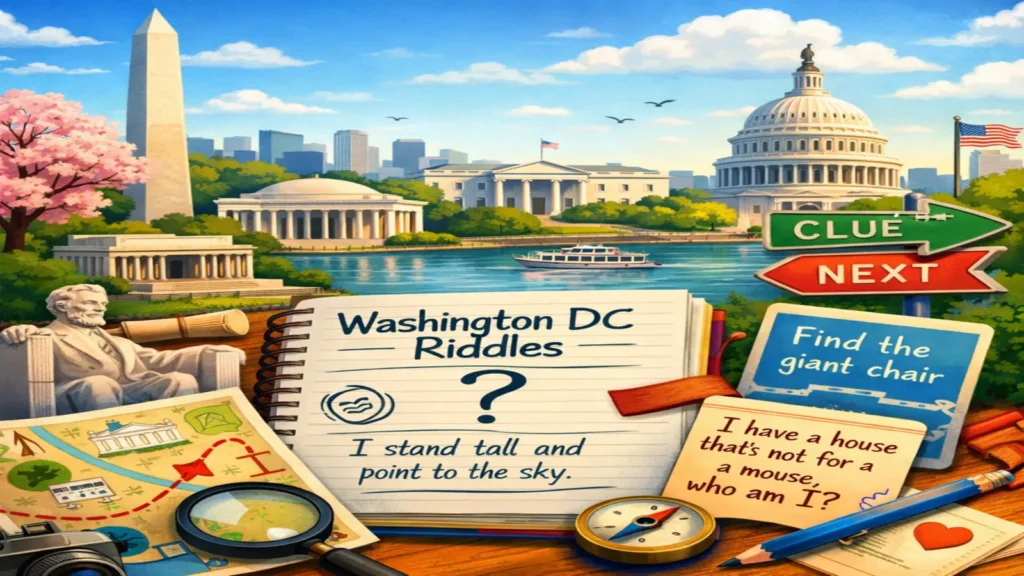
Washington, DC gives puzzle fans a lot to work with. The city has famous buildings, strong symbols, and clear routes. Because of that, clue games feel natural here. This guide is for families, teachers, travelers, and event planners. It also helps writers who want better clue ideas. If you want Washington DC riddles that feel smart and fun, this article gives you a full playbook.
Quick Answer
Washington DC riddles work best when they point to famous places, clear symbols, or memorable stories. The strongest clues feel local, easy to picture, and fun to solve.
TL;DR
• Use famous places for faster recognition
• Mix easy clues with tougher twists
• Keep every answer clear and fair
• Match clue style to your group
• Short routes usually feel more fun
Why Washington DC Works So Well for Riddles
Washington, DC feels made for clue games. Many places already carry strong images, names, and stories. As a result, writers can build clues that feel vivid right away.
The city also offers variety. You can write about monuments, museums, parks, bridges, streets, and neighborhoods. That range keeps a clue set from feeling repetitive.
• Famous places are easy to picture
• Strong symbols spark quick recognition
• History adds depth without extra props
• Walkable routes support clue-based outings
• Memorials create dramatic clue settings
• Museums bring art and science themes
• Neighborhoods add food and street flavor
• Seasonal events inspire fresh clue ideas
• School groups can learn while playing
• Tourists enjoy clues tied to landmarks
• Locals like clues with hidden details
• Day or night can change tone
What Makes a Great DC Riddle
A strong riddle feels clever, not messy. It hints at one answer and rewards close reading. Meanwhile, it avoids random tricks that frustrate players.
Good DC clues usually lean on a visual detail, a nickname, or a purpose. That helps the answer feel earned. Clear language matters more than fancy wording.
• One answer should stand out
• Visual hints beat vague descriptions
• Local details create stronger flavor
• Rhythm helps clues sound memorable
• Short lines often feel more punchy
• Fair clues beat tricky wording
• Strong endings sharpen the reveal
• Nicknames can guide the solver
• Physical shape makes clues stronger
• Purpose-based hints add direction
• Famous quotes should stay paraphrased
• Test clues with fresh readers
Easy Washington DC Riddles for Beginners
Beginner clues should feel welcoming. They work best when the place is famous and the hint is concrete. For example, shape, color, and purpose all help.
Easy riddles are great for families and first-time visitors. They also fit classrooms and quick party games. Keep the answer obvious once revealed.
• Start with major landmark answers
• Use one big clue idea
• Mention shape, size, or role
• Avoid deep dates and names
• Pick places kids already know
• Use friendly, playful wording
• Keep each clue under control
• Prefer outdoor answers for walks
• Build confidence with early wins
• Save trickier clues for later
• Repeat structure across the set
• Give a small hint option
Hard Washington DC Riddles for Puzzle Fans
Hard clues need more layers. Still, they should remain fair. A good challenge uses history, symbolism, and place details without becoming a guessing game.
Harder sets feel best after an easy opening. That way, players stay engaged before the challenge rises. Balanced difficulty makes the whole experience smoother.
• Combine image and history clues
• Hide answers behind indirect wording
• Use contrast between old and new
• Reference purpose instead of name
• Add one misleading surface detail
• Build clues around famous events
• Lean on symbolic features carefully
• Use double meanings with restraint
• Make solvers connect two facts
• Require observation, not random luck
• Reward knowledge with elegant answers
• Keep final wording clean
Landmark Clues That Feel Instantly Local
Landmarks give DC riddles instant identity. Even one hint can sound unmistakably local. That makes clues feel grounded and memorable.
Good landmark riddles often rely on shape, location, or reputation. Players enjoy clues that paint a scene in seconds. Strong images do most of the work.
• Monuments create bold visual clues
• Memorials support emotional storytelling
• Domes and obelisks feel iconic
• Reflecting water adds scene-setting depth
• Grand steps suggest ceremonial spaces
• Flags can signal national themes
• Columns point toward classical designs
• Stone surfaces imply lasting memory
• Open lawns fit civic imagery
• River views inspire movement clues
• Statues help with character-based prompts
• Sunrise settings boost dramatic tone
Museum and Culture Riddles That Add Variety
Museum clues shift the mood. They feel curious, playful, and less formal than monument clues. Because of that, they work well in mixed-age groups.
Culture-based riddles also widen your topic range. You can hint at art, science, animals, flight, inventions, or portraits. Variety keeps the game lively.
• Use exhibit themes over exact labels
• Art clues can focus on mood
• Science clues can stress discovery
• Animal clues feel great for kids
• Space themes add wonder fast
• Portrait clues fit famous faces
• History rooms support time-travel wording
• Fossil clues feel big and visual
• Air-and-space hints sound adventurous
• Hands-on exhibits inspire action words
• Cultural clues broaden audience appeal
• Indoor stops help rainy-day plans
Neighborhood Riddles Beyond the National Mall
Neighborhood riddles feel more personal. They capture local flavor, not just postcard spots. As a result, the game can feel fresh even for repeat visitors.
These clues can use food, street art, rowhouses, bridges, or market energy. They often feel warmer and less formal. That change helps the set breathe.
• Cafes can anchor cozy clues
• Waterfront paths suggest movement themes
• Brick streets add texture hints
• Rowhouses create visual consistency
• Murals support color-based riddles
• Markets fit sound and smell clues
• Bookshops inspire literary clues
• Stairways can guide vertical prompts
• Street names may suggest wordplay
• Parks soften dense clue routes
• Historic alleys add mystery mood
• Music venues support nightlife themes
Washington DC Riddles for Kids
Kids need clues that feel playful and clear. Short lines work best. Also, answers should connect to things they can picture quickly.
Young players enjoy action words and fun images. They usually respond well to clues about shapes, animals, flags, and big buildings. Keep the mood light.
• Use simple words throughout
• Pick bright, easy-to-see answers
• Add playful sound patterns
• Favor animals, planes, and statues
• Avoid heavy political references
• Offer clues in short bursts
• Let teams solve together
• Use maps with picture icons
• Celebrate every correct answer
• Add movement between clue stops
• Keep challenge low at first
• End with a cheerful finale
Washington DC Riddles for Adults
Adult clue sets can go a bit sharper. They can handle subtle references and layered wording. However, the set should still move cleanly.
Adults often enjoy clues tied to history, architecture, and irony. Date nights, group walks, and team outings all benefit from smarter phrasing. Clever beats obscure every time.
• Use wit without sounding smug
• Add layers through symbolism
• Build in local cultural nods
• Include architecture-based clue angles
• Let clues invite discussion
• Balance challenge across the route
• Work in food or drink stops
• Use themes for special events
• Create pairs of linked clues
• Hide answers behind tone shifts
• Keep pacing lively for groups
• Finish with a satisfying payoff
How to Build a DC Scavenger Hunt Route
A good route matters as much as the clues. The stops should flow naturally and avoid wasted walking. So, start with a clear area.
Shorter routes usually feel more fun than oversized ones. Players stay focused when the path feels smooth. Good pacing keeps energy high.
• Choose one core area first
• Limit total stops for focus
• Start near an easy landmark
• Alternate easy and harder clues
• Avoid backtracking whenever possible
• Add rest spots between challenges
• Keep transitions easy to explain
• Use obvious meeting points
• Think about crowd levels
• Plan a clean ending spot
• Build backup clues for delays
• Test the route on foot
How to Write Your Own Washington DC Riddles
Writing gets easier with a system. First, choose the answer. Next, list what makes it memorable. Then turn those details into a clue.
The best original riddles avoid copying common lines. Instead, focus on what your group will notice. Fresh observation beats borrowed phrasing.
• Pick the answer before writing
• List three standout details
• Choose one main clue angle
• Add one supporting hint
• Remove words that over-explain
• Read the clue aloud
• Check for only one answer
• Swap flat verbs for vivid ones
• Make the final line snap
• Cut any repeated idea
• Test with one outsider
• Revise after real use
Mistakes That Make DC Riddles Fall Flat
Many clues fail because they try too hard. They become either too vague or too obvious. Good editing fixes both problems fast.
Another common issue is sameness. If every clue sounds alike, the game gets dull. Variety keeps players alert and entertained.
• Avoid clues with two answers
• Skip private jokes nobody shares
• Do not overload one clue
• Cut extra words aggressively
• Avoid repeating the same pattern
• Do not force awkward rhymes
• Skip facts few people know
• Avoid unclear directional language
• Do not depend on luck
• Keep tone consistent enough
• Watch for accidental spoilers
• Never confuse hard with unfair
Best Times and Settings to Use These Riddles
DC riddles fit many situations. You can use them on family trips, field days, dates, birthdays, and team outings. Because of that, one set can serve many needs.
The best setting depends on your group. Some players want a quick laugh. Others want a full challenge. Match the clue style to the moment.
• Weekend walks suit casual clue sets
• School trips need simpler pacing
• Birthday groups enjoy playful competition
• Date nights like smart humor
• Team events need shared solving
• Rainy days fit indoor versions
• Holiday themes add extra charm
• Sunrise outings feel calm and fresh
• Evening games can feel dramatic
• Museum days reward culture clues
• Park picnics pair with mini rounds
• Road trips need printable clues
FAQs
What are Washington DC riddles usually about?
Most focus on landmarks, museums, memorials, and local symbols. Many also use neighborhood details, street life, or civic history to make clues feel rooted in place.
Are Washington DC riddles good for scavenger hunts?
Yes, they work especially well for walking games. The city gives you clear landmarks, memorable routes, and many easy visual clues.
Can kids solve Washington DC riddles?
Yes, as long as the wording stays simple. Clues about shapes, statues, flags, animals, and famous buildings tend to work best.
How do I make a DC riddle harder?
Use layered hints instead of longer wording. You can combine a visual clue with a story clue and still keep the answer fair.
Should I use monuments only?
No, that can make the set feel repetitive. Mixing museums, neighborhoods, parks, and food stops creates a more interesting experience.
How many clues should a DC riddle game have?
Small sets often feel strongest. A short run usually keeps energy high and gives each clue more room to shine.
Conclusion
Great city riddles feel local, clear, and playful. Washington, DC gives you famous places, strong images, and endless clue material. That makes it one of the easiest cities to build around. You can keep things simple or make them more layered. Either way, the best clues stay fair and memorable. With the right mix, Washington DC riddles can turn any walk, class, or gathering into a smart little adventure.

Joseph Morgan is an enigmatist known for creating clever and mysterious riddles. Born in Scotland, he spent his life challenging people to think deeply through puzzles and brainteasers. He became famous for his creative mind and love of mystery.