
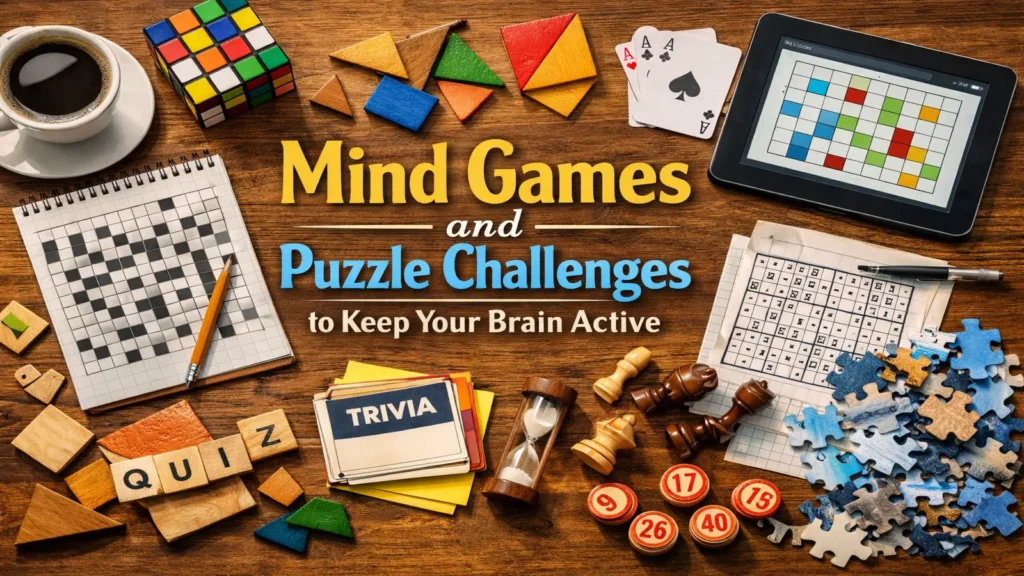
Mind games can make your day feel sharper and more fun. They give your brain a job, even during short breaks. This guide is for adults who want simple ways to think, focus, and enjoy a good challenge. It explains how to use Mind Games and Puzzle Challenges to Keep Your Brain Active without turning it into hard work.
Quick Answer
Mind games and puzzle challenges help keep your brain busy, alert, and engaged. The best approach is to mix game types and play often enough to make it a habit. Small sessions work better than waiting for perfect conditions.
TL;DR
• Mix puzzle types across the week
• Short sessions are easier to maintain
• Easy games still count as practice
• Social play adds extra motivation
• Screen-free options reduce mental clutter
• Variety helps prevent boredom fast
Why Mind Games Matter
Mind games work well because they feel like play, not pressure. They also fit into small parts of the day. That makes them easier to keep doing.
• They turn idle minutes into active thinking
• They make challenge feel more approachable
• They give your attention a clear target
• They break up passive scrolling habits
• They add novelty to routine days
• They reward patience in small steps
• They help you notice thinking patterns
• They support steady mental engagement
• They create satisfying problem-solving moments
• They offer progress without heavy setup
• They fit many ages and skill levels
• They make practice feel less formal
How Puzzle Challenges Help Focus
Focus gets stronger when you ask it to stay with one task. Puzzle challenges do that in a simple way. As a result, they can help you settle into deeper attention.
• They train you to track details carefully
• They reduce attention drift during short tasks
• They encourage one-step-at-a-time thinking
• They reward careful observation over speed
• They help you ignore background noise
• They improve comfort with unfinished problems
• They build patience during mental effort
• They strengthen follow-through on tricky clues
• They teach you to restart calmly
• They keep your mind inside one lane
• They support longer stretches of concentration
• They make quiet thinking feel natural
The Best Types of Mind Games to Try
Not all mind games feel the same. Some test memory, while others push logic or word skills. Because of that, trying several types makes sense.
• Crosswords stretch vocabulary and recall
• Sudoku builds number pattern awareness
• Riddles spark flexible thinking
• Jigsaw puzzles sharpen visual matching
• Memory cards train quick recall
• Logic grids reward deduction skills
• Word searches support scanning speed
• Trivia games test stored knowledge
• Chess strengthens planning ahead
• Tangrams improve spatial reasoning
• Escape puzzles encourage clue linking
• Matching games build recognition speed
Online Games vs Offline Puzzles
Online games are easy to access and quick to start. Offline puzzles often feel calmer and less noisy. Still, both can work well when you use them at the right time.
• Apps fit short breaks well
• Paper puzzles reduce alert fatigue
• Browser games offer fast variety
• Books feel better for deep focus
• Digital play tracks streaks easily
• Print pages travel without chargers
• Touch screens suit quick casual rounds
• Tabletop puzzles invite slower pacing
• Online options update with new content
• Offline sets cut notification interruptions
• Mobile games help during commutes
• Physical pieces feel more hands-on
Daily Habits That Keep Your Brain Active
A good brain-play habit should feel realistic. You do not need a big schedule. Instead, small repeatable steps do the heavy lifting.
• Start with ten quiet minutes
• Link play to your morning coffee
• Keep one puzzle within reach
• Use lunch breaks for quick rounds
• Swap doomscrolling for one challenge
• Set a simple weekly target
• Rotate formats every few days
• Stop before frustration takes over
• Leave puzzles visible on purpose
• Save harder games for peak energy
• Track effort, not perfect scores
• End sessions while still interested
Easy Ways to Start if You Feel Rusty
Many people quit because they start too hard. A better plan is to begin with easy wins. Then confidence grows on its own.
• Pick familiar games first
• Use beginner level settings
• Try five-minute sessions only
• Choose large-print puzzle books
• Solve with a friend at first
• Replay formats you already enjoy
• Skip timed modes in the beginning
• Celebrate completion over speed
• Keep one backup game handy
• Start with one clue, not all
• Use hints without guilt
• Build challenge slowly each week
How to Make Brain Play More Fun
The habit lasts longer when it feels enjoyable. So it helps to add playful twists. You can make brain play feel fresh without making it harder.
• Create themed puzzle nights
• Pair games with favorite music
• Try friendly score challenges
• Reward streaks with small treats
• Switch formats before boredom hits
• Use seasonal puzzle collections
• Invite someone to race lightly
• Keep a solved-puzzle notebook
• Share favorite riddles at dinner
• Turn waiting time into game time
• Mix solo and group sessions
• Choose games that match your interests
Social Puzzle Challenges That Build Connection
Some brain games work even better with other people. They create laughter, teamwork, and shared momentum. Meanwhile, the challenge still keeps your mind busy.
• Host a weekly crossword meetup
• Try board games after dinner
• Join local trivia nights
• Solve escape kits together
• Trade riddles in group chats
• Play memory games with kids
• Start a family puzzle table
• Use team logic games at work
• Compare strategies, not just scores
• Take turns reading clues aloud
• Build jigsaws during weekend visits
• Celebrate group wins together
Screen-Free Mind Games for a Better Break
Screen-free puzzles can feel restful after a long day online. They also slow the pace in a good way. Because of this, many people find them easier to stick with.
• Keep a crossword book nearby
• Carry pocket puzzle cards
• Use a deck for memory drills
• Build small jigsaws on trays
• Solve pen-and-paper logic grids
• Try wooden disentanglement puzzles
• Play chess on a real board
• Use tangram sets at home
• Read riddle collections before bed
• Keep travel puzzles in bags
• Set up a puzzle corner
• Leave phones in another room
Common Mistakes That Make Brain Games Less Helpful
Mind games should challenge you, not wear you down. Trouble starts when the habit turns rigid or frustrating. Luckily, a few simple changes fix most problems.
• Repeating one format too often
• Playing only when energy is low
• Treating every session like a test
• Chasing speed before accuracy
• Ignoring breaks during hard rounds
• Choosing games that feel punishing
• Quitting after one rough day
• Measuring progress too harshly
• Using noise-filled environments constantly
• Skipping easy wins completely
• Comparing your pace with others
• Turning fun into a chore
How to Choose the Right Challenge for Your Mood
Your energy changes from day to day. So the best game today may not be the best one tomorrow. Matching the challenge to your mood makes the habit easier.
• Pick word games for quiet evenings
• Use trivia when you feel social
• Choose Sudoku for orderly thinking
• Try riddles when you want novelty
• Grab jigsaws during stressed moments
• Use memory games for quick bursts
• Pick chess when you want strategy
• Choose tangrams for visual play
• Try crosswords when you feel curious
• Use board games for shared downtime
• Pick simple puzzles on busy days
• Save expert levels for calm hours
A Simple Weekly Plan Anyone Can Follow
A weekly plan keeps brain play steady. It also helps you avoid doing the same thing every day. Here is a simple rhythm that feels realistic.
• Monday: one short crossword session
• Tuesday: quick memory card round
• Wednesday: medium Sudoku after lunch
• Thursday: one riddle set with friends
• Friday: relaxing jigsaw time
• Saturday: strategy board game night
• Sunday: mixed puzzle sampler
• Keep each session under twenty minutes
• Add extra time only when engaged
• Missed days do not ruin progress
• Change the plan when life shifts
• Repeat what feels easy to keep
FAQs
Do mind games really help keep your brain active?
They can help by giving your brain regular work to do. The biggest payoff usually comes from doing them often and mixing the types you play.
What are the best puzzle challenges for adults?
The best ones are the ones you will actually keep doing. Crosswords, Sudoku, trivia, riddles, chess, and jigsaws are all strong options.
How often should I play brain games?
A short session most days is a solid goal. Even ten to twenty minutes can feel useful when the habit stays consistent.
Are online brain games better than paper puzzles?
Neither one wins for everyone. Online games are quicker to start, while paper puzzles often feel calmer and less distracting.
Which games are best for focus?
Logic puzzles, Sudoku, crosswords, and jigsaws work well for focus. They ask you to stay with one task and notice small details.
Can brain games be relaxing too?
Yes, many can feel calming as well as challenging. Jigsaws, word searches, and gentle crossword sessions are great examples.
Conclusion
Mind games do not need to be intense to matter. They work best when they fit your life, mood, and energy. A few minutes of steady play can do more than rare marathon sessions. The real goal is not perfection. It is building a habit you enjoy and return to often. That is what makes Mind Games and Puzzle Challenges to Keep Your Brain Active feel useful, simple, and fun.

Christopher McLagan is a celebrated riddle maker known for crafting clever brain teasers and mind-bending puzzles. His work blends classic riddles, logic challenges, and lateral thinking brain teasers designed to spark curiosity and critical thinking. Widely admired in online puzzle communities, McLagan creates engaging riddle questions and answers for both kids and adults. His signature style delivers surprising twists, clean humor, and satisfying “aha” moments that keep readers coming back for more.