
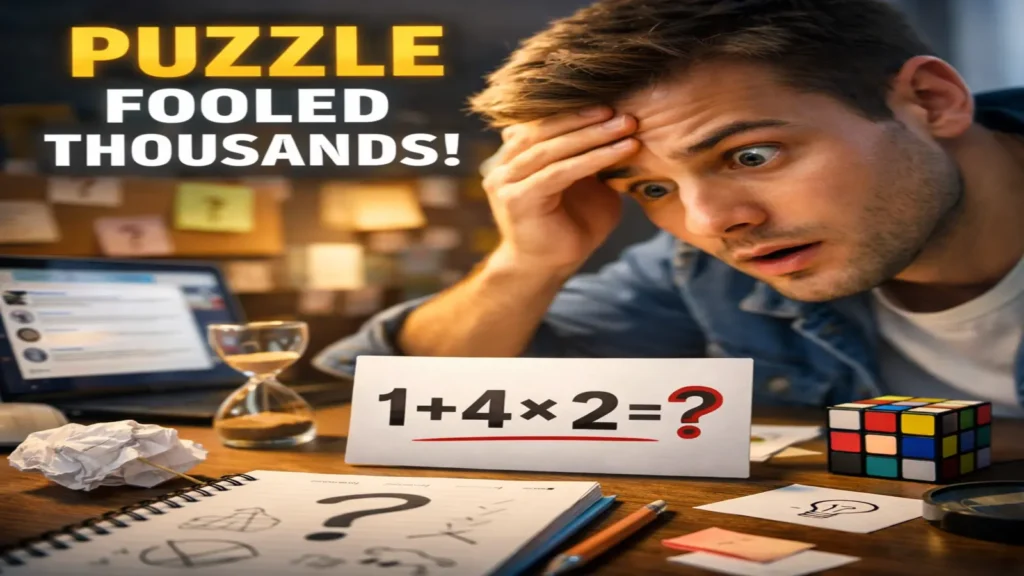
Puzzles are fun, but some feel almost unfair. They look simple, sound simple, and still trip people up. That is why the phrase puzzle fooled thousands keeps getting attention. This article is for readers who love brain teasers, short riddles, and viral logic posts. You will see why these puzzles spread so fast, why smart people miss them, and how to solve them with less frustration.
Quick Answer
A puzzle fooled thousands because it pushed readers toward an easy guess. However, the real answer usually sits in one overlooked word, symbol, or layout detail.
TL;DR
• Easy-looking puzzles invite fast, careless guesses
• One hidden clue often changes everything
• Short wording creates bigger misunderstandings online
• Visual spacing can nudge the wrong answer
• Slower reading usually beats quicker confidence
What “puzzle fooled thousands” usually means
When people search this phrase, they rarely want one puzzle only. Instead, they want the answer, the trick, and the reason the trick worked. That wider goal shapes how this topic should be explained.
Most viral puzzles share the same pattern. They look friendly at first, then punish assumptions. As a result, readers feel both fooled and fascinated.
• Simple prompt, sneaky twist
• Easy words, tricky meaning
• Fast read, slow realization
• Clear surface, hidden catch
• Short puzzle, long debate
• Common idea, uncommon answer
• Familiar symbols, strange outcome
• Obvious clue, ignored detail
• Quick guess, wrong result
• Tiny wording, huge effect
• Friendly tone, sharp trap
• Easy share, endless arguing
Why simple puzzles spread so fast
Simple puzzles spread because they feel beatable. People think they can solve them in seconds, so they click, guess, and share. Meanwhile, the short format keeps attention high.
They also trigger pride. Nobody wants to be the person who missed something “easy.” Because of that, comments fill up fast.
• Feels solvable in one glance
• Sparks instant personal challenge
• Fits neatly into social feeds
• Invites quick public guesses
• Creates playful comment battles
• Rewards the reveal moment
• Makes friends challenge friends
• Sounds easy enough for anyone
• Works well in screenshots
• Builds suspense with little text
• Encourages “I got it” replies
• Turns confusion into entertainment
The first answer people blurt out
The first answer is often not the best answer. In fact, it is usually the answer that arrives before careful reading begins. That is the real trap.
Fast guesses feel smart because they arrive quickly. However, quick does not mean correct. Viral puzzles count on that gap.
• Brain grabs nearest pattern
• Familiar answer feels safest
• First impression seems complete
• Quick certainty hides weak reading
• Speed replaces close inspection
• Habit answers beat fresh thinking
• Memory fills missing details
• Assumptions arrive before logic
• Confidence rises too early
• Surface clues dominate attention
• Simple guesses sound elegant
• Rush makes mistakes feel reasonable
The hidden clue most readers miss
Most tricky puzzles contain one clue that does the heavy lifting. It may be a word, a symbol, or a phrase that changes the whole reading. Still, readers skip it because the rest looks normal.
That missed clue is why the answer feels obvious afterward. Once you see it, the trap loses its power. Before that, it feels invisible.
• A single word redirects meaning
• One symbol changes the rule
• Tiny phrase narrows the answer
• Missing punctuation shifts interpretation
• Odd spacing suggests false grouping
• Extra detail signals the trick
• Plain wording masks the clue
• Repeated terms distract attention
• Small inconsistency points outward
• Literal reading beats expected reading
• Context hides the sharp turn
• Quiet clue wins the puzzle
Why wording changes everything
Wording matters because riddles depend on how we imagine the setup. One phrase can push the mind toward the wrong picture. Then the wrong answer feels natural.
Many famous riddles work this way. They do not hide information. Instead, they guide you toward the wrong frame.
• Double meanings split attention
• Everyday language invites shortcuts
• Implied facts feel official
• Ambiguous terms widen confusion
• Metaphors hide literal answers
• Familiar phrases bias interpretation
• Singular words suggest false limits
• Descriptions build wrong scenes
• Tone can imply extra rules
• Human-centered words mislead object answers
• Readers assume missing context
• Plain wording creates clever surprise
How visual layout can trick the eye
Layout shapes thinking more than people expect. A line break, spacing choice, or stacked number can suggest a false relationship. So the eyes help create the mistake.
This is especially common in shared images. Social posts often compress text for effect. That design can subtly steer the answer.
• Line breaks imply wrong grouping
• Crowded symbols blur order
• Large text boosts false confidence
• Boxes suggest missing patterns
• Arrows hint at fake logic
• Color emphasis misdirects focus
• Equal signs attract overreading
• Vertical layout changes scanning
• Repetition creates fake consistency
• Image crops remove key hints
• Neat formatting feels trustworthy
• Design makes traps look fair
The biggest logic traps in viral puzzles
Logic traps repeat across many puzzle types. Once you know them, you start spotting them faster. That does not kill the fun. It sharpens it.
Some traps target language. Others target habit. Either way, they push the brain to finish the puzzle too soon.
• Assuming facts not stated
• Ignoring one awkward detail
• Treating examples as rules
• Mixing clues from different frames
• Believing difficulty equals depth
• Expecting math over wordplay
• Forcing symmetry where none exists
• Reading too fast for nuance
• Choosing elegance over evidence
• Trusting instinct without checking
• Missing exception-based answers
• Confusing pattern with coincidence
How math puzzles create false confidence
Math puzzles feel safer because numbers look objective. Yet many viral ones depend on notation, spacing, or reading order. That is why arguments explode under them.
Readers often trust the numbers more than the wording. However, a clean-looking equation can still hide a nasty trap. That mix makes math versions especially sticky.
• Numbers create instant authority
• Symbols feel more exact
• Familiar operations lower caution
• Old school rules blur online
• Spacing can suggest shortcuts
• Implied grouping starts debates
• Readers skip left-to-right checks
• Memory of class gets fuzzy
• Fast arithmetic beats full reading
• Tiny notation changes outcomes
• Confident solvers post too soon
• Disagreement fuels more sharing
A clean step-by-step solving method
You do not need a genius routine. You need a calm one. A repeatable method lowers mistakes and makes tricky puzzles more fun.
Start slower than your instincts want. Then move in order. Next, test each clue against the answer.
• Read once without solving
• Read again word by word
• Circle unusual wording mentally
• Separate facts from assumptions
• Ask what is actually asked
• Check every symbol twice
• Ignore comments before solving
• Write the obvious answer first
• Challenge that first answer
• Try one literal reading
• Rebuild the puzzle slowly
• Confirm the final fit
How to test your answer before posting it
Testing your answer matters because many puzzle mistakes feel correct. A quick check saves embarrassment and teaches the real lesson. Besides, it makes the final answer stronger.
Think like a critic, not a fan. Try to break your own answer. If it survives, you are probably right.
• Match every clue directly
• Remove extra invented facts
• Re-read the final question
• Compare literal and assumed meanings
• Look for ignored punctuation
• Check whether wording stays consistent
• See if another answer fits
• Verify units and symbols
• Reverse the logic chain
• Explain it out loud
• Pause and return later
• Post only after rechecking
Ways to use this puzzle with friends or students
A good viral puzzle is more than a solo challenge. It can start conversations, warm up a class, or liven up a group chat. That makes it useful beyond the answer itself.
The best use is not humiliation. Instead, it is discussion. People remember the lesson better when they see why they missed it.
• Start class with one challenge
• Use it as an icebreaker
• Let teams defend answers
• Ask kids to find the trap
• Compare quick and careful reads
• Turn comments into discussion prompts
• Use timers for extra fun
• Reveal clues one at a time
• Ask for alternative explanations
• Connect it to reading skills
• Practice respectful disagreement
• End with the solving lesson
Similar puzzle types people search next
Once someone solves one viral puzzle, they usually want more. Search behavior often moves toward similar formats with the same “gotcha” feel. That is where curiosity keeps rolling.
Readers usually branch into short, shareable puzzle types. They want more surprises, but they also want a better shot next time.
• Short riddles with answers
• Tricky math equation posts
• Spot-the-mistake puzzles
• Wordplay brain teasers
• Lateral thinking challenges
• Pattern puzzles with twists
• Visual illusion questions
• Logic grid mini-games
• Comment-war challenge prompts
• Family-friendly stumpers
• Hard riddles for adults
• Quick classroom brain breaks
FAQs
Why do smart people miss easy puzzles?
Smart people often rely on fast pattern matching. That helps in many situations. However, trick puzzles punish speed and reward close reading instead.
Are viral puzzles really about intelligence?
Not usually. Most of them test patience, framing, and attention. Because of that, a careful reader can outperform a rushed expert.
Why does the answer feel obvious after I see it?
Once the hidden clue becomes clear, the puzzle frame changes. Then the right answer seems simple. That after-the-fact clarity is part of the fun.
Do math puzzles fool people more than word riddles?
They often create louder arguments online. Numbers look precise, so wrong answers feel more defensible. Still, wording-based riddles can be just as sneaky.
What is the best way to solve trick puzzles faster?
Slow down at the start. Read the full prompt twice, and question your first answer. That small pause prevents many common mistakes.
Should I trust the comments under a viral puzzle?
Not right away. Comments often repeat the fastest guesses. It is better to solve first, then compare your reasoning later.
Conclusion
A viral puzzle works because it feels easy before it feels clever. That gap is what pulls people in. It also explains why the wrong answer spreads so quickly. The next time a puzzle fooled thousands appears in your feed, do one simple thing first. Slow down. Read every word. Then let the trick reveal itself on your terms.

Christopher McLagan is a celebrated riddle maker known for crafting clever brain teasers and mind-bending puzzles. His work blends classic riddles, logic challenges, and lateral thinking brain teasers designed to spark curiosity and critical thinking. Widely admired in online puzzle communities, McLagan creates engaging riddle questions and answers for both kids and adults. His signature style delivers surprising twists, clean humor, and satisfying “aha” moments that keep readers coming back for more.