
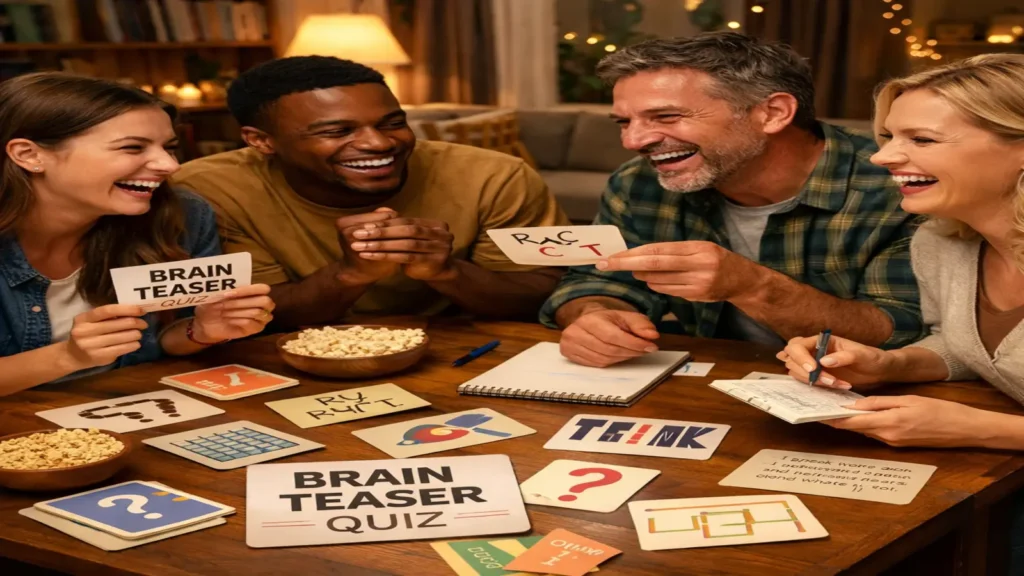
Brain teaser quizzes work for more than trivia fans. They also help teachers, parents, hosts, and coworkers start lively conversations. If you want brain teaser quiz questions that feel fresh and easy to use, this guide is for you. It brings together clear categories, hosting tips, and simple ways to match each question to your group.
Quick Answer
Brain teaser quiz questions are short puzzles that test logic, language, or flexible thinking. The best ones feel surprising, fair, and fun to solve aloud.
TL;DR
• Start easy, then raise the challenge slowly.
• Mix logic, words, numbers, and humor.
• Pick questions that fit your audience.
• Keep answer reveals quick and clear.
• Save hardest puzzles for the end.
What Makes a Brain Teaser Quiz Worth Playing
A strong quiz feels clever without feeling mean. Players should miss the answer, then smile when they hear it. That balance matters because it keeps the room engaged.
Good quiz questions also sound clear when read aloud. In addition, they invite discussion before the reveal.
• Short setup, strong payoff
• Clear wording beats fancy wording
• One satisfying answer works best
• Surprise matters more than obscurity
• Fast questions keep momentum moving
• Varied formats prevent mental fatigue
• Fair clues make misses enjoyable
• Simple language widens player access
• Memorable twists boost replay value
• Room debate adds social energy
• Answer reveals should feel earned
• Fresh categories stop boredom early
Easy Starters for Mixed-Age Groups
Easy questions help everyone join in fast. They lower stress and build early confidence before tougher puzzles appear.
That is why warm-up questions should sound familiar. However, they still need a small twist.
• Use everyday objects as answers
• Favor pictures made by words
• Choose clues children can follow
• Let adults solve without overthinking
• Keep solutions under three words
• Avoid niche cultural references
• Open with concrete, visual prompts
• Pick riddles with obvious hindsight
• Reward listening more than background knowledge
• Use cheerful topics and settings
• Give first-round points generous weight
• End warm-ups before they drag
Logic Questions That Reward Careful Reading
Logic brain teasers shine when each word matters. Players must slow down and notice what the question actually says.
Because of this, these questions work well after easy starters. They train attention without requiring outside facts.
• Hide clues in plain language
• Test precision rather than trivia memory
• Remove extra details that distract
• Ask one thing at a time
• Build tension through small assumptions
• Reward players who reread mentally
• Use time clues with care
• Let logic outrank guessing luck
• Keep the trick fair and clean
• Favor patterns over random leaps
• Read these questions slowly aloud
• Pause before revealing any hint
Wordplay Teasers That Flip Meaning
Wordplay questions add sparkle to a quiz. They depend on sound, spelling, or double meaning instead of strict reasoning.
As a result, they often land well with groups. Even wrong guesses can be funny.
• Lean on homophones and puns
• Twist common phrases unexpectedly
• Use everyday words with double meanings
• Keep grammar simple and direct
• Avoid jokes needing long setup
• Pick answers players recognize instantly
• Let pronunciation drive the trick
• Try opposites hiding inside phrases
• Use letters as playful clues
• Build around common sayings
• Keep puns light, not groan-heavy
• Reveal why the wording misled
Number Puzzles Without Heavy Math
Number questions can scare casual players. Still, the best ones feel like patterns, not homework.
So keep calculation light and the insight sharp. That way, more people stay engaged.
• Favor counting tricks over equations
• Use sequences with visible rhythm
• Keep mental math under ten seconds
• Turn quantity into a wording trap
• Ask about order, not formulas
• Mix coins, clocks, and ages
• Make the pattern discoverable aloud
• Avoid school-test energy entirely
• Use round numbers for clarity
• Let observation solve the puzzle
• Frame numbers with real situations
• End with a neat aha moment
Lateral Thinking Questions With Surprise Endings
Lateral thinking questions change the frame. The answer often appears only after players drop a hidden assumption.
That surprise makes these questions memorable. Meanwhile, they create the loudest answer reveals.
• Break the first obvious interpretation
• Challenge the most natural assumption
• Reward imagination over routine thinking
• Use ordinary scenes with odd outcomes
• Keep the solution logically defensible
• Let silence build before guesses
• Save the sharpest twist for last
• Choose reveals that sound obvious later
• Avoid solutions needing secret facts
• Give hints only after several tries
• Watch for overcomplicated dead ends
• Celebrate unexpected correct guesses loudly
Funny Brain Teasers That Keep Energy High
Humor can rescue a quiet room. A funny teaser resets the mood and keeps people listening.
For that reason, sprinkle these between harder rounds. They work like quick palate cleansers.
• Use animals for playful misdirection
• Pick punchlines safe for all ages
• Keep joke answers short and crisp
• Avoid sarcasm that feels confusing
• Place humor after dense logic rounds
• Favor silly images over harsh tricks
• Let laughter matter as much
• Use one-liner style delivery
• Choose questions easy to repeat later
• Mix absurdity with simple wording
• Keep the room relaxed and curious
• Never explain the joke twice
Brain Teasers for Adults at Parties
Adult groups usually enjoy sharper twists and stronger debate. Still, party questions should stay easy to follow in a noisy room.
Witty prompts work better than long stories. Also, the best party questions spark side conversations.
• Use social settings as clue material
• Choose answers people blurt out
• Favor confident misdirection over complexity
• Let couples and teams collaborate
• Keep each question under twenty seconds
• Add tie-breakers with clever endings
• Use bar, office, and dinner themes
• Avoid references only one guest knows
• Build rounds around mood changes
• Offer bonus points for explanations
• Read punchy questions with rhythm
• Pick topics adults meet every day
Family-Friendly Questions for Game Night
Family game night works best with broad questions. Everyone should feel welcome to guess, laugh, and learn.
Because ages vary, keep clues clear and answers harmless. That creates shared fun instead of frustration.
• Use household items and routines
• Choose bedtime, kitchen, and school themes
• Keep language kind and simple
• Let siblings solve together sometimes
• Avoid scary or rude punchlines
• Favor answers younger players know
• Add rounds where grandparents shine
• Keep turns moving at steady speed
• Choose timeless objects over trends
• Celebrate creative wrong answers too
• Make rule explanations super brief
• End with a crowd-pleasing finale
Classroom-Safe Questions for Students
In class, brain teasers should support focus and discussion. They work best as warm-ups, transitions, or quick speaking prompts.
Teachers also need questions that are easy to manage. So clarity matters more than cleverness alone.
• Tie questions to listening practice
• Ask students to explain reasoning
• Use pair talk before whole-class answers
• Keep frustration low with scaffolding
• Choose inclusive, school-safe examples
• Limit tricky wording for younger grades
• Use timers for gentle urgency
• Let teams earn shared points
• Encourage multiple solution attempts first
• Pick prompts that spark discussion
• Use brain breaks between subjects
• End with a short reflection
Hard Brain Teasers for Serious Solvers
Hard questions should feel challenging, not random. The best ones ask players to notice structure, not hunt blindly.
Therefore, save these for later rounds. Players enjoy them more once the room feels warmed up.
• Require two-step thinking, not five
• Hide depth behind simple wording
• Let advanced players feel stretched
• Avoid impossible gotcha constructions
• Use precision to raise difficulty
• Create tougher rounds with fewer hints
• Allow longer think time here
• Mix deduction with clean misdirection
• Reward careful elimination strategies
• Keep answers elegant, not messy
• Use hard questions sparingly
• Finish with your strongest closer
How to Host a Smooth Brain Teaser Quiz
A great quiz needs more than good questions. Hosting style shapes the energy, pacing, and fairness of the whole event.
Luckily, the basics are simple. With a few habits, your quiz will feel polished fast.
• Group questions by rising difficulty
• Print answers on a separate sheet
• Read every prompt once clearly
• Repeat only the exact wording
• Set a visible round timer
• Keep score in large writing
• Alternate quiet and lively rounds
• Use teams for bigger gatherings
• Reveal answers before attention drops
• Prepare one spare tie-break question
• Test pronunciation before game night
• End while energy still feels high
Common Mistakes That Give Answers Away
Even good questions can flop when delivery slips. Small hosting mistakes often remove the fun before players can think.
Fortunately, each problem is easy to fix. A little discipline keeps the mystery alive.
• Stressing clue words too much
• Smiling at the correct guess
• Paraphrasing the riddle mid-round
• Adding examples that narrow answers
• Choosing answers nobody would know
• Letting one player dominate early
• Mixing easy and brutal questions randomly
• Explaining rules for too long
• Reading too fast under pressure
• Correcting wrong guesses with extra hints
• Using repeated trick formats often
• Dragging reveals after interest fades
FAQs
What is a brain teaser quiz question?
A brain teaser quiz question is a short puzzle with a clever twist. It usually tests logic, wording, or flexible thinking rather than simple fact recall.
How many brain teaser questions should a quiz have?
Most casual quizzes feel best with 10 to 20 questions. That range keeps energy high without making the round feel long.
Are brain teaser quiz questions good for adults?
Yes, adults often enjoy them at parties, team events, and dinners. They work especially well when the questions are witty, short, and easy to hear aloud.
Can kids do brain teaser quizzes too?
Absolutely. Start with simple, visual, and familiar topics so younger players can join without pressure.
Should I include answers right away?
Yes, reveal answers after each question or short round. Fast reveals keep the pace moving and stop frustration from building.
What types of brain teasers work best in groups?
Logic, wordplay, and funny lateral-thinking prompts usually work best. They invite discussion, which makes the game feel social.
Conclusion
The best quizzes mix easy wins, clever twists, and a few bold stumpers. That blend keeps everyone involved, from first-time players to puzzle lovers. Brain teaser quiz questions work in classrooms, living rooms, offices, and parties because they turn thinking into shared fun. So start simple, vary the style, and let each round build a little more surprise.

Christopher McLagan is a celebrated riddle maker known for crafting clever brain teasers and mind-bending puzzles. His work blends classic riddles, logic challenges, and lateral thinking brain teasers designed to spark curiosity and critical thinking. Widely admired in online puzzle communities, McLagan creates engaging riddle questions and answers for both kids and adults. His signature style delivers surprising twists, clean humor, and satisfying “aha” moments that keep readers coming back for more.