
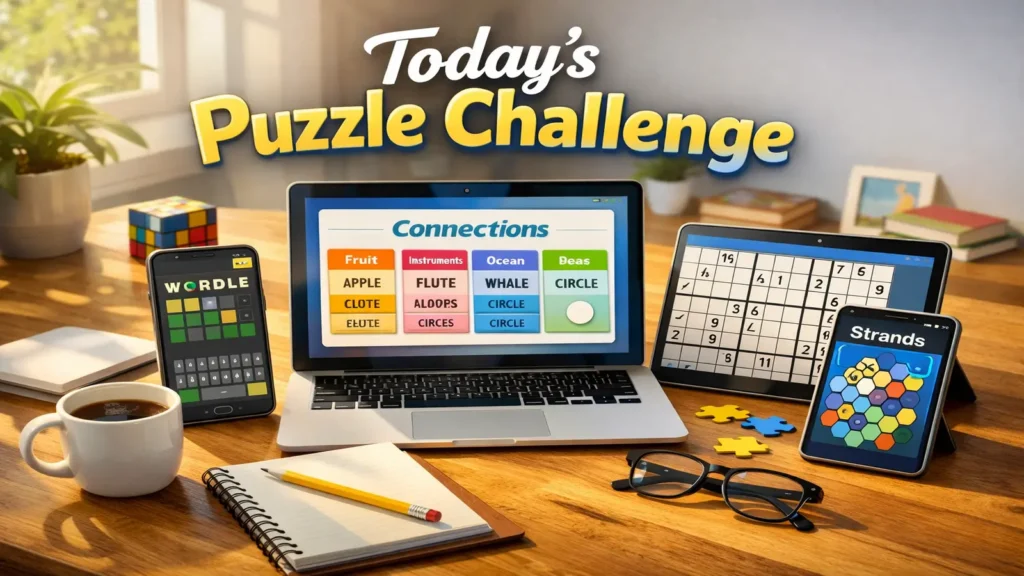
Daily puzzles are everywhere now. Yet many people still search one simple phrase. They type “today’s puzzle challenge” and want one clear place to start. This guide is for casual players, streak keepers, and curious beginners. It explains what that search usually means today. It also shows how to pick a puzzle, use hints wisely, and solve with less stress. You will not find spoilers here. Instead, you will get a smarter way to play.
Quick Answer
Today’s puzzle challenge usually means a fresh daily word, logic, number, or picture puzzle. In most cases, people want a same-day game, a hint, or a spoiler-free way to solve it.
TL;DR
• The phrase usually covers many daily puzzle types
• Word games get the most search attention
• Hints work best after your own first pass
• Shared daily puzzles make score comparisons fun
• The right puzzle depends on your mood
What “today’s puzzle challenge” usually means
People use this phrase when they do not know the exact game name. Sometimes they mean Wordle. Other times, they mean Connections, Strands, Sudoku, or a daily jigsaw.
That broad intent matters. Because of it, search results often mix official play pages, hint pages, and answer pages. So the best first step is figuring out what kind of challenge you want.
• A same-day puzzle with one fresh reset
• A word game with quick rounds
• A logic grid that rewards patience
• A number puzzle with steady deduction
• A visual puzzle for relaxed play
• A shared challenge friends can compare
• A browser game with no install
• A mobile option for commute play
• A clue page without instant spoilers
• A full answer page for stuck moments
• A streak-based game with daily pressure
• An archive for missed puzzle days
Where most players look first
Most players start with a search engine, then choose speed over loyalty. They want the puzzle fast. If they get stuck, they often jump to a help page.
That split creates two clear paths. One path is play-first. The other is hint-first. Knowing which one you want saves time.
• Official game pages for direct access
• News-style hint pages for quick help
• Puzzle hubs covering several brands
• App pages for mobile-only formats
• Browser sites with mixed daily games
• Archive pages for earlier challenges
• Community threads for shared reactions
• Score-sharing pages for social comparison
• Beginner guides with simple rules
• Explanation pages for new formats
• No-signup sites for instant play
• Multi-game portals for variety seekers
Why daily puzzles keep pulling people back
Daily puzzles feel small, but they create a strong rhythm. You get one fresh challenge, one clean finish, and one reason to return tomorrow.
That pattern fits busy days. It also gives players a tiny win before work, after lunch, or before bed.
• A new puzzle feels fresh each day
• Short sessions fit crowded schedules
• Clear rules lower the barrier fast
• One daily shot creates useful focus
• Shared timing builds quiet community
• Streaks add gentle personal stakes
• Results feel earned, not random
• Small wins improve your mood
• Hard days still feel beatable
• Progress shows up in real time
• Variety keeps boredom from settling in
• Routine turns play into habit
The main puzzle types you’ll see today
Not all daily puzzles ask for the same skill. Some test vocabulary. Others reward pattern spotting or step-by-step elimination.
Once you know the type, your approach gets much better. You stop guessing blindly and start solving with purpose.
• Five-letter deduction games test letter placement
• Category games test grouping and association
• Theme grids reward hidden pattern spotting
• Four-answer formats stretch attention management
• Classic crosswords reward clue reading
• Sudoku-style boards favor number logic
• Kakuro-style puzzles blend sums and structure
• Nonograms test visual deduction patiently
• Jigsaws reward shape sorting and scanning
• Codeword games combine substitution and patterning
• Riddle prompts reward lateral thinking
• Mixed portals let you rotate formats
How to begin without burning early guesses
A rushed start causes most puzzle pain. Players often jump in before reading the full board, clue, or constraint.
Instead, use the first minute to gather information. That pause feels slow, yet it often saves the whole run.
• Read every visible rule before touching anything
• Scan the full board for easy anchors
• Note repeats, limits, and odd patterns
• Mark obvious wins before tough spots
• Start with high-confidence moves only
• Keep one clean area for testing
• Avoid random taps during uncertainty
• Use process of elimination early
• Save risky guesses for later
• Check whether color cues matter
• Watch for hidden theme language
• Treat the first minute as setup
Better opening moves for word games
Word games reward information, not drama. Your first move should reveal useful patterns, not chase a lucky solve.
After that, narrow the field with purpose. Strong openings build control, even when the answer stays hidden.
• Open with common letters, not rare ones
• Balance vowels and strong consonants early
• Avoid duplicate letters on turn one
• Test new positions before forcing a theme
• Use feedback colors as hard limits
• Keep dead letters out immediately
• Separate confirmed letters from possible letters
• Try structure before searching fancy words
• Watch endings like plural traps carefully
• Notice when repeated letters become likely
• Protect final guesses from panic choices
• Let evidence lead every next word
Smarter tactics for logic and number games
Logic and number puzzles are less about inspiration. They reward order, patience, and accurate elimination.
Because of that, messy play hurts fast. A neat method usually beats raw speed.
• Fill forced entries before optional ones
• Use margins for temporary notes
• Check rows, columns, and zones separately
• Eliminate impossibilities one pass at a time
• Revisit locked sections after each placement
• Look for pairs that limit choices
• Use symmetry when a puzzle suggests it
• Break giant boards into smaller chunks
• Stop when you start forcing moves
• Return to the simplest unsolved area
• Confirm each step before building on it
• Value accuracy over flashy speed
When hints help and when they hurt
Hints can rescue a puzzle day. Still, the wrong hint at the wrong time can flatten the fun.
The sweet spot is a gentle nudge. You want movement, not a full reveal.
• Try one honest solo pass first
• Use rule reminders before solution clues
• Prefer category nudges over exact answers
• Choose a single hint, then stop
• Avoid scrolling past spoiler warnings casually
• Check letter counts before final reveals
• Use theme help only when stuck
• Save answer pages for true dead ends
• Keep friends from blurting full solutions
• Pause before chasing every clue online
• Let partial progress stay satisfying
• Protect discovery whenever possible
Mistakes that make daily puzzles feel harder
Many puzzles feel harder because of habits, not design. Players repeat weak choices, then blame the puzzle.
A few small fixes can change your results fast. That is good news for beginners and veterans alike.
• Starting before understanding the objective
• Ignoring feedback from earlier moves
• Reusing failed letters too often
• Chasing clever words over useful words
• Guessing under time pressure unnecessarily
• Forgetting to scan the whole board
• Missing small clue wording changes
• Treating every puzzle like Wordle
• Overusing hints after one setback
• Playing tired and rushing anyway
• Refusing to reset your approach
• Letting streak fear drive bad decisions
How streaks, resets, and clocks shape play
Daily puzzles are not just puzzles. They are also routines. Reset times, local clocks, and streak counters change how people play.
That pressure can feel exciting. However, it can also create sloppy choices if you chase the clock too hard.
• Midnight resets create next-day anticipation
• Local-time rollovers change spoiler risk
• Streak counters can boost commitment
• Missed days feel bigger than they are
• Morning play often feels calmer
• Lunch breaks suit shorter formats
• Evening sessions fit slower puzzles
• Notifications can help or distract
• Shared reset windows spark group chatter
• Archives reduce fear of missing out
• Weekly patterns reveal your best time
• Healthy streaks should support fun
How the biggest daily puzzle brands differ
Big daily puzzle brands do not all scratch the same itch. Some are fast and wordy. Others are slower, broader, or more visual.
That is why brand hopping makes sense. Your favorite on Monday may annoy you on Friday.
• Wordle-style games reward deduction efficiency
• Connections-style games test category judgment
• Strands-style puzzles lean on theme spotting
• Quordle-style rounds raise cognitive load
• Crosswords reward clue knowledge depth
• Sudoku favorites suit methodical thinkers
• Jigsaw dailies favor relaxed pacing
• Multi-game hubs suit curious dabblers
• Hint-led sites help recovering streaks
• Official pages feel cleaner to play
• Community spaces add reaction and humor
• Archive-rich sites support catch-up sessions
How to choose the right challenge for your mood
Your best daily puzzle depends on energy, not identity. A tired brain wants one kind of challenge. A sharp brain wants another.
So pick based on the moment. That simple shift keeps the hobby fun instead of frustrating.
• Choose word games for quick coffee breaks
• Pick logic grids for focused quiet
• Try visual puzzles when you need calm
• Use crosswords when you want depth
• Select easy modes on stressful days
• Save harder modes for fresh mornings
• Rotate formats to prevent mental fatigue
• Skip spoilers when you want pride
• Use hints when fun starts dropping
• Play solo for peace and flow
• Share scores when you want community
• End with a win, not frustration
FAQs
What is today’s puzzle challenge, exactly?
It is usually a broad search for a fresh daily puzzle. Most often, people want a word game, hint page, or same-day challenge.
Is the daily puzzle the same for everyone?
Often, yes. Many popular daily games give all players the same challenge that day. That is why score sharing feels fair.
When should I use a hint?
Use one after your first honest attempt stalls. A small nudge helps most when it keeps the puzzle alive.
Which daily puzzle is best for beginners?
Simple word games and easy Sudoku modes are strong starting points. They teach feedback fast and do not need long setup.
Do streaks actually help?
They help when they keep you consistent. They hurt when they make you rush or feel guilty.
What should I do if a puzzle format frustrates me?
Switch formats for a day or two. A different puzzle style often resets your confidence.
Conclusion
Daily puzzles work best when they stay simple, fun, and just challenging enough. You do not need to master every format. You only need a better way to start. That is the real win with today’s puzzle challenge. Once you know what you are looking for, the search gets easier. So does the solving.

Joseph Morgan is an enigmatist known for creating clever and mysterious riddles. Born in Scotland, he spent his life challenging people to think deeply through puzzles and brainteasers. He became famous for his creative mind and love of mystery.