
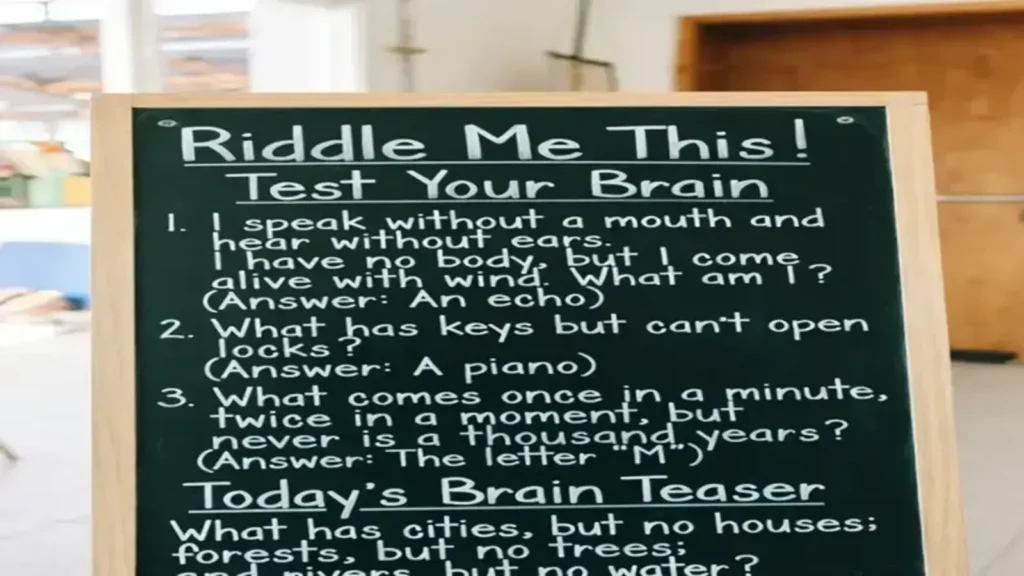
Many people search for a quick puzzle before work, school, or bed. They want a fun challenge, not a long test. That is why today’s brain teaser has become such a popular daily search. This guide is for adults, teens, parents, teachers, and anyone who likes a smart break. You will learn what counts as a daily teaser, how to solve one faster, and where to look next. Along the way, you will also see why small puzzles feel so satisfying.
Quick Answer
Today’s brain teaser usually means a fresh daily riddle, logic puzzle, word trick, or short math challenge. In most cases, people want a quick puzzle with hints, an answer, or both.
TL;DR
• Daily teasers are short, varied, and easy to start
• Most answers hide inside simple wording
• Logic beats speed on tricky puzzle days
• Hints help most after one real attempt
• Good teaser habits make solving feel easier
What Counts as Today’s Brain Teaser
A daily brain teaser is usually short, self-contained, and meant for quick play. However, the format can change a lot from one day to the next.
Some are pure riddles. Others lean on logic, math, patterns, or wordplay. Because of that, the first step is naming the puzzle type.
• Short riddle with a hidden meaning
• One-question logic puzzle with constraints
• Number prompt using basic arithmetic ideas
• Pattern challenge based on sequence recognition
• Visual prompt built around shape changes
• Word puzzle using sound-alike terms
• Lateral thinking question with an unexpected twist
• Everyday scenario that hides a clue
• Trick question that rewards careful reading
• Mini mystery solved through elimination
• Timed teaser meant for quick mental play
• Daily challenge posted on a puzzle hub
Why Daily Teasers Keep People Hooked
Small puzzles feel manageable, so people return often. Also, a fast win can brighten an ordinary day.
There is another reason. Daily teasers give you closure in minutes, which feels rare online.
• They fit into coffee-break routines
• Success brings a quick sense of progress
• Short puzzles feel less intimidating
• New prompts create daily curiosity
• Solving feels playful instead of heavy
• Friends can compare answers fast
• Kids and adults can join easily
• One puzzle never takes all night
• Fresh formats prevent boredom from building
• Wrong guesses still feel low-stakes
• Tiny challenges break up screen fatigue
• Daily streaks add light motivation
Common Types You’ll See Today
Not every teaser works the same way. So, knowing the main types saves time and frustration.
Once you spot the format, the right solving style becomes clearer. That is often half the battle.
• Classic riddle built on metaphor
• Deduction puzzle using true-false clues
• Math teaser hiding order rules
• Letter puzzle based on word shape
• Anagram prompt with shuffled terms
• Analogy challenge comparing related ideas
• Sequence item asking what comes next
• Visual odd-one-out with subtle differences
• Counting puzzle with hidden repeats
• Lateral setup that bends assumptions
• Direction puzzle using left-right movement
• Family relation teaser with tricky phrasing
How to Read a Teaser Without Missing Clues
Most puzzle mistakes happen before any solving starts. People rush the wording, then chase the wrong path.
Instead, slow down on the first read. Often, the clue is not hidden deeply at all.
• Read the full prompt twice
• Circle unusual or repeated words
• Notice every number and unit
• Check whether tense affects meaning
• Separate facts from your assumptions
• Watch for absolute words like always
• Ask what the prompt never says
• Mark any relationship between objects
• Test literal meanings before clever ones
• Pause at punctuation for structure
• Ignore extra story details first
• Restate the question in plain words
A Simple Step-by-Step Solving Method
You do not need a genius moment. Instead, use a small routine that works across many puzzle types.
A repeatable method lowers pressure. It also helps when a teaser looks harder than it is.
• Identify the puzzle category first
• Rewrite the goal in one line
• List the facts you know
• Cross out details that distract
• Try the obvious answer briefly
• Ask what makes that answer fail
• Look for hidden word meanings
• Build two or three possibilities
• Eliminate choices that break clues
• Check the prompt from the end
• Take a short mental reset
• Verify the final answer against every clue
Word Tricks That Change the Answer
Word-based teasers love ordinary language. Yet the ordinary meaning is often the trap.
A single word can point in two directions. Because of that, flexible reading matters.
• Same word can hold two meanings
• Sound-alike words create false confidence
• Plurals may change the whole clue
• Possessives can redirect ownership logic
• Pronouns sometimes hide the subject
• Negative wording can flip expectations
• Common sayings may work literally
• Homophones can mask the real target
• Verb choice may signal motion
• Articles like a or an matter
• Time words can hint at sequence
• Labels may describe function, not form
Logic Clues That Narrow the Field
Logic teasers reward patience more than flash. Usually, each clue removes one bad option.
That makes the puzzle smaller with every check. Soon, the answer stands out on its own.
• Start with the strongest clue
• Match facts that cannot change
• Use elimination before guessing
• Keep one note line per option
• Combine clues only after listing them
• Watch for mutually exclusive details
• Test each answer against all facts
• Remove choices that fail once
• Look for pairings and opposites
• Use tables for complex setups
• Recheck hidden constraints before locking in
• Trust consistency over intuition
Math Teasers Without the Panic
Math teasers scare many people for no reason. Usually, the hard part is the wording, not the math.
So, keep your pace calm. Most daily puzzles use simple operations in tricky ways.
• Write the numbers in order
• Check whether zero changes anything
• Confirm the operation before solving
• Follow order rules step by step
• Estimate first to catch nonsense
• Translate words into symbols slowly
• Watch for missing units or labels
• Break large numbers into chunks
• Compare patterns before calculating everything
• Try a simpler sample case
• Question any hidden shortcut impulse
• Review whether the answer is reasonable
Pattern Puzzles and Visual Traps
Pattern teasers test what your brain expects to see. However, the true rule may sit in a smaller detail.
That is why first impressions can mislead. Looking again often changes the whole puzzle.
• Search for movement before quantity
• Compare rows and columns separately
• Track color, shape, and position
• Count edges, not just objects
• Look for rotation between frames
• Notice mirrored or flipped elements
• Check whether spacing forms a rule
• Test odd-even changes in sequence
• Spot repeats before chasing complexity
• Ask what changes least often
• Zoom out after close inspection
• Consider that one feature may be irrelevant
When to Use Hints and When to Wait
Hints are not cheating. In fact, a good hint teaches you where to look.
Still, timing matters. Use help too early, and you skip the best part.
• Give yourself one honest attempt
• Set a short time limit first
• Take a break before peeking
• Read only the smallest hint
• Use clues to restart thinking
• Avoid full answers on the first struggle
• Save reveals for true dead ends
• Study why the hint worked
• Compare your path with the solution
• Keep notes on repeated blind spots
• Return later if frustration spikes
• Treat hints as training tools
How Families, Teachers, and Teams Use Them
Daily teasers work well in groups because they invite talk. Also, one short puzzle can warm up a room.
That makes them useful beyond solo fun. They fit homes, classrooms, clubs, and meetings.
• Morning class opener before lessons
• Family dinner game with turns
• Team meeting icebreaker with laughs
• Study hall break between tasks
• Road trip challenge without screens
• Lunch table puzzle swap tradition
• Library board question of the day
• Homeschool writing prompt starter
• Youth group activity with discussion
• Office chat challenge for morale
• Grandparent-grandchild bonding through riddles
• Party table card for easy fun
Where to Find a Fresh Daily Challenge
You do not need one perfect source. Instead, pick a place that matches your mood and skill.
Some readers want pure riddles. Others prefer logic grids, visual puzzles, or mixed daily games.
• Daily riddle pages for quick laughs
• Logic sites for structured clue solving
• Puzzle hubs with mixed challenge types
• Family magazines with broad difficulty
• Teacher blogs with classroom-friendly prompts
• Brain game apps for streak lovers
• Newspaper game sections with routines
• Printable worksheets for offline moments
• Video channels that explain solutions
• Community forums with user-made puzzles
• Social feeds sharing one daily challenge
• Email newsletters with morning prompts
FAQs
What is the difference between a brain teaser and a riddle?
A riddle is one kind of brain teaser. Usually, riddles lean on language, while brain teasers can also use logic, math, or patterns.
Are daily brain teasers good for kids and adults?
Yes, because the format is flexible. You can pick easier prompts for kids and tougher ones for adults.
Why do I miss the answer even when it looks simple?
Most people add assumptions that the prompt never gave them. Reading more slowly often fixes that problem.
Should I solve a teaser fast or carefully?
Carefully wins more often. Speed helps later, but accuracy comes from understanding the clue first.
Do hints ruin the challenge?
Not when you use them well. A small hint can teach you how to think without handing over everything.
What should I do if I get stuck every day?
Change your routine, not your confidence. Try naming the puzzle type first, then use the same solving steps each time.
Conclusion
A good daily puzzle does not need to be huge. It just needs to spark curiosity, slow your thinking, and reward careful reading. That is the real appeal of today’s brain teaser. It gives you a short, satisfying challenge that fits real life. So, start small and stay consistent. With a little practice, tricky clues feel less random and much more fun.

A modern riddle-maker who builds clever, pocket-sized puzzles with sharp wordplay and elegant misdirection. Her clues are clean, surprising, and designed to make you think twice—then smile when it clicks.