
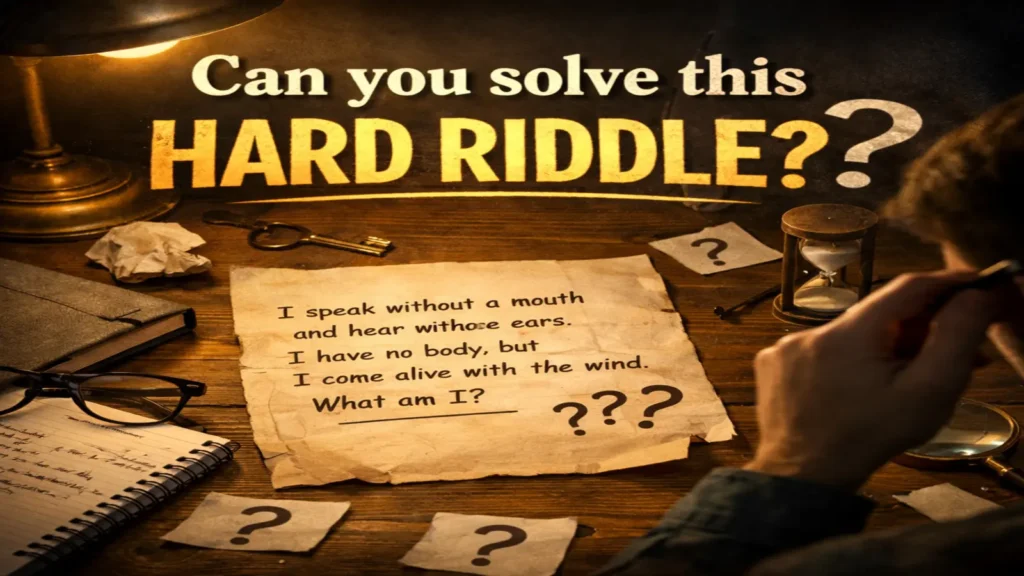
Hard riddles can feel exciting, annoying, and fun at the same time. Many people love the challenge, but they also want a smarter way through it. That is exactly what this guide gives you. If you have ever asked, can you solve this hard riddle, you are in the right place. This article shows you how tricky riddles work, why they fool people, and how to answer them with more confidence.
Quick Answer
Yes, you can solve this hard riddle when you slow down and test each clue. Most hard riddles hide a simple twist.
Usually, the best answer is not the first one. Instead, it is the answer that fits every word.
TL;DR
• Slow down before guessing
• Check every word for a second meaning
• Look for hidden assumptions first
• Test answers against all clues
• Use logic before outside facts
• Practice with different riddle types
What Makes a Hard Riddle Feel So Tough
Hard riddles feel difficult because they push your brain toward the wrong path. They sound simple, yet they hide a twist.
Many readers also rush. Because of that, they miss a clue that changes everything.
• Small words can carry the trick
• Familiar phrases invite wrong guesses
• Simple questions often hide double meanings
• The obvious answer is often bait
• A time word may shift the whole meaning
• One detail may cancel another clue
• Everyday objects become puzzle pieces
• The riddle may reward careful listening
• Some clues point to sounds, not facts
• Others depend on spelling, not logic
• A strange answer may still be correct
• Short riddles can be the hardest
• Missing context creates false confidence
• Clever phrasing makes patterns feel natural
The First Thing to Do Before You Guess
First, stop and reread the riddle slowly. A fast guess usually locks you into the wrong idea.
Next, notice the exact wording. Then ask what the riddle is truly asking.
• Read the line out loud once
• Circle unusual words in your mind
• Separate facts from decoration
• Notice tense, number, and order
• Ask what is being compared
• Check whether size really matters
• Watch for hidden limits or rules
• Break one long clue into parts
• Restate the prompt in plain language
• Ignore flashy details at first
• Ask what answer fits all lines
• Pause before naming a person
• Treat each clue like a filter
• Start wide, then narrow down
How to Spot Wordplay Fast
Wordplay makes hard riddles tricky because it bends normal meaning. A word may point to sound, shape, or spelling.
So, do not trust the first definition that comes to mind. Look for the less obvious one.
• Listen for homophones and sound swaps
• Check whether a word names a letter
• Ask if the clue points to shape
• Think about prefixes and suffixes
• Try reading the phrase literally
• Then read it like a joke
• Watch for words with two jobs
• Notice if “light” means weight or brightness
• Test whether “left” means departed
• Ask if “fall” means season
• Consider if a key is musical
• Look for clues about silence
• Spot verbs that act like nouns
• See whether punctuation changes meaning
When Logic Beats Trivia
Many hard riddles do not need outside knowledge. They need clear reasoning instead.
That matters because trivia sends you searching too far. Logic brings you back to the clue itself.
• Assume the answer is self-contained
• Trust the wording more than memory
• Use elimination before guessing wildly
• Ask what must be true
• Notice what cannot be true
• Build from the strongest clue
• Remove answers that break one line
• Prefer simple fits over clever stretches
• Check whether the answer stays consistent
• Avoid bringing in random facts
• Look for internal cause and effect
• Use contradiction to narrow choices
• Ask which answer explains everything
• Keep the puzzle inside the puzzle
Why Lateral Thinking Changes Everything
Lateral thinking means you step sideways instead of forward. You stop asking only what is normal.
That shift helps because many riddles reward imagination, not routine. A weird answer may be the right one.
• Flip the scene in your head
• Imagine the opposite situation
• Ask what everyone assumes automatically
• Test an object, not a person
• Try a sound, not a thing
• Consider a shadow or reflection
• Treat the clue like a metaphor
• Picture the riddle as a scene
• Ask what changes with perspective
• Look for invisible but real answers
• Consider time as part of the twist
• Let impossible details signal abstraction
• Explore symbolic meanings carefully
• Try the least expected category
The Most Common Traps in Hard Riddles
Most people miss hard riddles for the same reasons. They guess too early or cling to one reading.
However, once you know the traps, you can dodge them. That alone improves your odds.
• Guessing before checking each clue
• Ignoring a tiny but vital word
• Assuming the speaker means literally
• Thinking only about objects
• Forgetting letters can be answers
• Overcomplicating a simple puzzle
• Using real-world rules too strictly
• Missing the joke in the line
• Treating one clue as the whole riddle
• Forgetting singular versus plural
• Reading too fast to notice contrast
• Forcing a favorite answer to fit
• Expecting the answer to sound serious
• Assuming every clue is equal
A Simple Step-by-Step Method That Works
You do not need a fancy system. You need a repeatable one.
This method keeps you calm and focused. It also helps when the riddle feels impossible.
• Read once for the big picture
• Read again for exact wording
• Mark the oddest clue mentally
• List three possible answer types
• Test the literal reading first
• Then test the playful reading
• Remove any answer with one mismatch
• Ask what assumption fooled you
• Check whether the answer is elegant
• Say the answer with the question
• See if the pair sounds natural
• Revisit the opening clue last
• Make one final fit check
• Accept simple answers without guilt
Classic Hard Riddle Types You Should Know
Different riddle types need different strategies. Once you know the type, solving gets faster.
That is why naming the pattern helps. It gives your brain a better starting point.
• Word riddles hide meaning in language
• Logic riddles depend on strict reasoning
• Letter riddles use spelling tricks
• Math riddles test number patterns
• Lateral riddles reward odd viewpoints
• Object riddles describe common things cleverly
• Time riddles twist sequence and order
• Family riddles confuse relationships on purpose
• Sound riddles lean on spoken clues
• Metaphor riddles compare unlike things
• Trick questions punish quick assumptions
• Visual riddles describe shape or form
• Story riddles hide one missing detail
• Classic riddles survive because they travel well
How to Practice Without Getting Frustrated
Practice matters, but mood matters too. If every riddle feels like a test, fun disappears.
Instead, build range and patience. Skill grows faster when the pressure stays low.
• Start with short puzzles first
• Mix easy and hard sets
• Set a timer, then stop
• Check answers only after effort
• Write down the missed clue
• Learn the pattern, not just result
• Retry old riddles after weeks
• Practice with a friend sometimes
• Read answers without feeling embarrassed
• Notice your favorite trap type
• Switch categories to stay fresh
• Keep one puzzle notebook handy
• Celebrate partial progress often
• End on a win when possible
Can You Use Hard Riddles With Friends or Students
Hard riddles work well in groups because they start conversation quickly. People enjoy testing ideas together.
They also fit classrooms, family nights, and road trips. The key is choosing the right level.
• Use one riddle as an icebreaker
• Let teams defend their guesses
• Choose age-appropriate clue difficulty
• Give hints instead of full answers
• Ask why each guess fits
• Turn wrong guesses into lessons
• Use riddles to teach close reading
• Make students explain their logic
• Pick fast puzzles for warmups
• Save longer ones for group debate
• Rotate who reads the clue
• Encourage creative but supported answers
• Keep the tone playful, not harsh
• End with a strong reveal moment
Signs You Are Close to the Right Answer
A good answer usually feels clean. It snaps the clues together without forcing them.
You may also notice relief. Suddenly, the weird wording starts to make sense.
• Every clue points one direction
• No line needs special pleading
• The twist feels surprising yet fair
• The answer sounds obvious afterward
• You can explain it simply
• Another person understands it quickly
• The wording now feels intentional
• A hidden assumption becomes visible
• The title question fits naturally
• Extra details stop seeming random
• The odd clue becomes the key
• Competing guesses start falling apart
• The answer survives rereading cleanly
• The puzzle feels complete at last
How to Write Your Own Hard Riddle
Writing a hard riddle teaches you how solving works. You start seeing where the trick lives.
Begin with a plain answer. Then wrap it in honest misdirection.
• Choose one clear answer first
• List real traits of that answer
• Hide the easiest trait carefully
• Emphasize a less obvious feature
• Add one fair twist only
• Use simple words with double meaning
• Keep the clue count tight
• Remove any line that overexplains
• Test it on one friend
• Check whether the answer is unique
• Make sure the reveal feels earned
• Avoid clues that need niche facts
• Revise until each word matters
• Read it aloud for rhythm
Famous Examples and Why They Work
Classic riddles last because they are short, fair, and memorable. They also teach useful patterns.
For example, many famous riddles rely on time, identity, or hidden meaning. Once you see that, they feel less random.
• The sphinx riddle uses life stages
• Friday horse riddles twist naming assumptions
• Echo riddles hide in plain language
• Candle riddles depend on changing states
• Piano riddles trick with “keys”
• River riddles turn action into image
• Letter riddles reward sound awareness
• Shadow riddles play with presence
• Footstep riddles use implied movement
• Mirror riddles flip expectation neatly
• Family riddles exploit relationship confusion
• Door riddles test logical structure
• Silence riddles lean on absence
• Best classics feel impossible, then obvious
FAQs
What is the hardest part of solving a riddle?
Usually, the hardest part is dropping the first idea. Your brain wants a quick answer, but hard riddles reward patience. A second reading often changes everything.
Are hard riddles based more on logic or language?
They can use both, but many lean heavily on language. Even logic riddles still depend on careful wording. That is why reading slowly helps so much.
Why do I miss riddles that seem easy later?
That happens because the trick feels invisible at first. After you know the answer, the clue suddenly looks clear. This is normal and part of the fun.
Do hard riddles make you smarter?
They can sharpen attention, pattern spotting, and flexible thinking. Still, the main benefit is practice, not magic. You get better by solving more of them.
What should I do if I feel stuck?
Step away for a minute and come back fresh. Then try a different angle, such as sound, spelling, or metaphor. A short break often helps more than more force.
Are hard riddles good for kids too?
Yes, if the wording matches their age. Kids enjoy challenge when the clues feel fair. Start with shorter riddles and give gentle hints.
Conclusion
Hard riddles stop feeling impossible once you learn their habits. Most of them rely on misdirection, not mystery. So, the better you read, the better you solve. That is why a simple method works so well. Slow down, test each clue, and stay open to unusual answers. The next time you ask, can you solve this hard riddle, you will have a real plan. And with practice, more of those tricky answers will start showing up faster.

Joseph Morgan is an enigmatist known for creating clever and mysterious riddles. Born in Scotland, he spent his life challenging people to think deeply through puzzles and brainteasers. He became famous for his creative mind and love of mystery.