
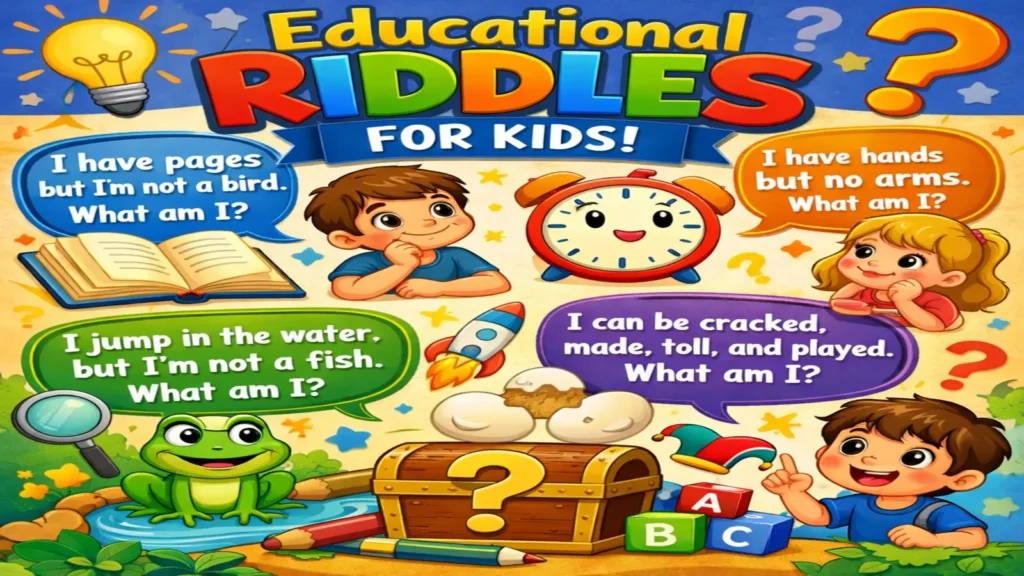
Some kids learn best when the activity feels like play. That is why riddles can be so useful. They turn simple clues into lively little puzzles that hold attention without feeling heavy. This guide is for parents, teachers, and caregivers who want learning ideas that stay fun. Inside, you will find educational riddles for kids grouped by subject, age fit, and everyday use. So whether you need a quick class warm-up or a smart road trip game, you will have plenty to choose from.
Quick Answer
Educational riddles for kids are playful clues that also teach something useful. They can build number sense, word awareness, observation, and reasoning. The best ones feel fun first, while still giving kids a chance to learn.
TL;DR
• Start with clues kids already understand
• Match subjects to your child’s interests
• Keep answers short and satisfying
• Use riddles during transitions and breaks
• Mix easy wins with bigger challenges
Why Educational Riddles Work So Well
Riddles make learning feel light. Kids listen, guess, and test ideas without pressure. Because of that, even a short clue can become a meaningful thinking moment.
They also fit almost anywhere. You can use them at breakfast, in class, or while waiting in line. Meanwhile, children stay engaged because the answer feels like a prize.
• They turn learning into a game
• Short clues fit busy attention spans
• Answers reward careful listening
• Kids practice noticing small details
• Quick wins boost confidence fast
• Word twists encourage flexible thinking
• Group guessing supports teamwork
• Familiar topics make learning feel safe
• Fast rounds work in spare moments
• Surprises keep curiosity alive
• Kids remember playful challenges longer
• No fancy materials are required
What Makes a Riddle Educational
A learning riddle does more than hide an answer. It connects the clue to something children know or are learning. In other words, it gives the brain something useful to grab.
Good educational riddles feel clear after the reveal. They may twist the wording, yet the answer still makes sense. That balance keeps the fun strong.
• Clues connect to real knowledge
• Answers feel fair after thinking
• Topics match the child’s age
• Everyday words keep entry easy
• Simple twists make ideas stick
• Clear images help younger kids
• Subject links deepen understanding gently
• Short clues support read-aloud use
• Familiar answers lower frustration
• Repetition helps build confidence
• Variety keeps interest from fading
• Clean humor adds extra appeal
How to Pick the Right Riddle by Age
Age matters, but patience matters too. Some younger kids love quick guessing games. Others need very simple clues before they feel ready.
Start with topics children see every day. Then add stronger twists as they improve. As a result, the challenge grows without hurting the fun.
• Ages five to seven need concrete clues
• Ages eight to ten like simple twists
• Older kids enjoy layered wordplay
• Start with home or school items
• Keep clue length short at first
• Use animal themes for new learners
• Try number riddles with counters nearby
• Read aloud before independent solving
• Give hints before full answers
• Mix easy and medium rounds
• Watch energy, not just age
• Stop before frustration takes over
Easy Educational Riddles for Beginners
These starter riddles help kids feel successful fast. They work best with familiar objects and simple ideas. So they are great for first tries.
Read each clue slowly. Next, give a few seconds for guesses before revealing the answer. That short pause makes the game more exciting.
• What has pages but no tree? Book
• What has hands but cannot clap? Clock
• What gets wetter while drying? Towel
• What has teeth but never bites? Comb
• What has a neck, no head? Bottle
• What has one eye, no sight? Needle
• What has keys, not doors? Piano
• What runs but never walks? Water
• What has legs, cannot move? Table
• What can you catch, not throw? Cold
• What has a ring, no finger? Phone
• What rises while getting older? Age
Math Riddles That Build Number Thinking
Math riddles work best when the numbers stay friendly. A simple pattern or counting twist can do a lot. Because of this, kids practice thinking without feeling buried in work.
Use these during homework breaks or class warm-ups. You can also pair them with blocks or fingers for support. That added help makes success feel closer.
• I am even. Add one, become odd
• What comes after nine? Ten
• I have three sides. Triangle
• I am round with no corners. Circle
• Two plus two makes what? Four
• Count five apples, eat one. Four remain
• What number rhymes with heaven? Seven
• Double three gives what total? Six
• What shape has four equal sides? Square
• I come before one hundred. Ninety-nine
• Half of ten equals what? Five
• Add me to myself. I double
Science Riddles That Spark Curiosity
Science riddles help kids notice the world around them. They are especially fun because many answers can be seen outdoors or in daily life. So the clues feel real right away.
A simple science riddle can start a bigger conversation. For example, one clue about rain may lead to weather talk. That is part of the magic.
• I shine by day and warm Earth. Sun
• I glow softly in the night. Moon
• I fall, but never get hurt. Rain
• I rumble before a storm. Thunder
• I flash across dark clouds. Lightning
• I grow from tiny seeds. Plant
• I have petals and need sunlight. Flower
• I float and look fluffy. Cloud
• I blow but stay unseen. Wind
• I cover grass on cold mornings. Frost
• I sparkle in daytime puddles. Water
• I am red, hot, and flowing. Lava
Reading and Word Riddles for Language Skills
Word riddles train the ear as much as the mind. Kids listen for sounds, meanings, and small language shifts. Meanwhile, the answers stay short enough to remember.
These are especially useful for read-aloud time. They also fit spelling lessons and literacy stations. Keep the pace calm so the twist can land.
• What word becomes shorter? Short
• Which month has twenty-eight days? All months
• What starts with E, ends letter? Envelope
• What comes once in minute? M
• What word is always spelled wrong? Wrong
• What has a tongue, never talks? Shoe
• What has a bark, no bite? Tree
• What has pages, not feathers? Notebook
• What word begins with every dictionary? D
• What has a sole, not fish? Sneaker
• What begins with T, ends tea? Teapot
• What can be told, never touched? Story
School and Classroom Riddles for Daily Use
School-themed riddles feel easy to picture. That makes them perfect for brain breaks, morning meetings, or quick transitions. In addition, they help kids connect clues to real classroom life.
Teachers can use one before a lesson starts. Parents can use them during homework time too. Both settings get a nice burst of energy.
• I write, erase, and get sharpened. Pencil
• I hold stories on a shelf. Library
• I ring between busy classes. Bell
• I carry books on shoulders. Backpack
• I measure lines without moving. Ruler
• I erase chalk and dust. Board eraser
• I keep papers flat and safe. Folder
• I show dates on the wall. Calendar
• I hold lunch till noon. Lunchbox
• I spin maps of the world. Globe
• I cut paper with care. Scissors
• I stick notes to metal. Magnet
“What Am I?” Learning Riddles
This format works because kids love building a picture clue by clue. Each line makes the answer feel closer. Then, the final guess feels rewarding.
Use these in pairs, teams, or solo turns. They are easy to read aloud and easy to reuse later.
• I wake sleepers with loud beeps. Alarm clock
• I hold milk and close cold. Refrigerator
• I cover feet inside shoes. Socks
• I light dark rooms at night. Lamp
• I carry rain above heads. Umbrella
• I clean teeth every morning. Toothbrush
• I show faces and family moments. Picture frame
• I zip open for school supplies. Pencil case
• I hold books with many pages. Bookshelf
• I keep drinks hot longer. Thermos
• I pop toast in the morning. Toaster
• I help you see far away. Binoculars
Logic Riddles for Careful Thinking
Logic riddles ask kids to slow down. Instead of grabbing the first answer, they check the wording. That extra pause builds better thinking habits.
These work well for older kids or mixed-age groups. Still, younger children can enjoy them with hints. Keep the mood light and playful.
• How many months have 28 days? Twelve
• What always comes, never arrives? Tomorrow
• Break me before using me. Egg
• What belongs to you, others use? Name
• What speaks back without a mouth? Echo
• What building has most stories? Library
• What can fill a room? Light
• More you take, more left behind. Footsteps
• What falls but never breaks? Night
• What breaks but never falls? Day
• Which side of turkey has feathers? Outside
• What goes through towns, never moves? Road
Printable and Group-Friendly Riddle Ideas
Riddles become even handier when you shape them into simple activities. A few cards or slips of paper can go a long way. Because of that, adults can reuse the same set often.
Groups also make riddles more lively. Teams can guess together, explain answers, and laugh over near misses. That social part adds extra fun.
• Make a classroom riddle jar
• Print cards for learning stations
• Tape clues around a room
• Use answer cards for matching games
• Create partner guess-and-reveal rounds
• Put one riddle on each desk
• Build a scavenger hunt with clues
• Add riddles to morning bins
• Use pocket charts for sorting
• Let teams vote on answers
• Try silent solving on mini boards
• Save favorites in a binder
Smart Ways to Use Riddles at Home and on Trips
A good riddle fits many little moments. It can brighten a long drive or make a wait feel shorter. So keep a few favorites nearby.
You do not need much setup. A phone note, sticky notes, or index cards all work well. Small tools make it easier to use riddles often.
• Start breakfast with one quick clue
• Keep travel riddles in the car
• Slip one into a lunch note
• Use them during homework breaks
• Try a bedtime riddle routine
• Play team rounds at dinner
• Use waiting rooms for short puzzles
• Pack cards for restaurant waits
• Make a weekend family challenge
• Let siblings take reader turns
• Reward great guesses with next turn
• Ask kids to create one too
FAQs
What are educational riddles for kids?
They are short, playful clues that also build useful thinking. Some focus on words, while others connect to math, science, or observation. The best ones make learning feel natural.
What age is best for educational riddles?
Most children can enjoy them once they understand basic clues and familiar objects. Usually, ages five and up do well. Still, younger kids can join when adults read aloud and keep answers simple.
Are educational riddles good for classrooms?
Yes, they work well for warm-ups, transitions, and brain breaks. They also invite quick participation without much prep. Because answers are short, they fit busy school days.
Can riddles help with reading and language skills?
They can, especially when the clues rely on sounds, meanings, or simple word twists. Kids learn to listen closely and think about language in a playful way. That makes reading practice feel less stiff.
How many riddles should kids do at once?
A short set usually works best. Try three to five for younger children, then stop while the interest is still high. Older kids may enjoy a longer round.
What makes a riddle educational but still fun?
A strong riddle uses a fair clue and a satisfying answer. It teaches or reinforces an idea without sounding like a lesson. That balance keeps children curious and eager to keep going.
Conclusion
Educational riddles can turn tiny moments into useful learning time. They ask kids to listen, picture, guess, and rethink. Because of that, they fit both school and home very well. Start small with easy clues and familiar topics. Then move into math, science, words, and logic as confidence grows. Little by little, kids begin to enjoy the challenge more. Most of all, educational riddles for kids make learning feel lively. Pick a section, read one aloud, and let the guessing begin.

A playful wordsmith with a knack for misdirection, I craft riddles that tease the brain. My puzzles blend clever clues, clean logic, and a dash of humor—built to challenge beginners and stump seasoned solvers alike. From short, punchy brainteasers to layered mysteries with hidden meanings, I love turning everyday ideas into mind-bending questions that invite curiosity and conversation. When I’m not twisting words into puzzles, I’m collecting strange facts, testing new clue styles, and fine-tuning the art of fair—but fiendish—fun.